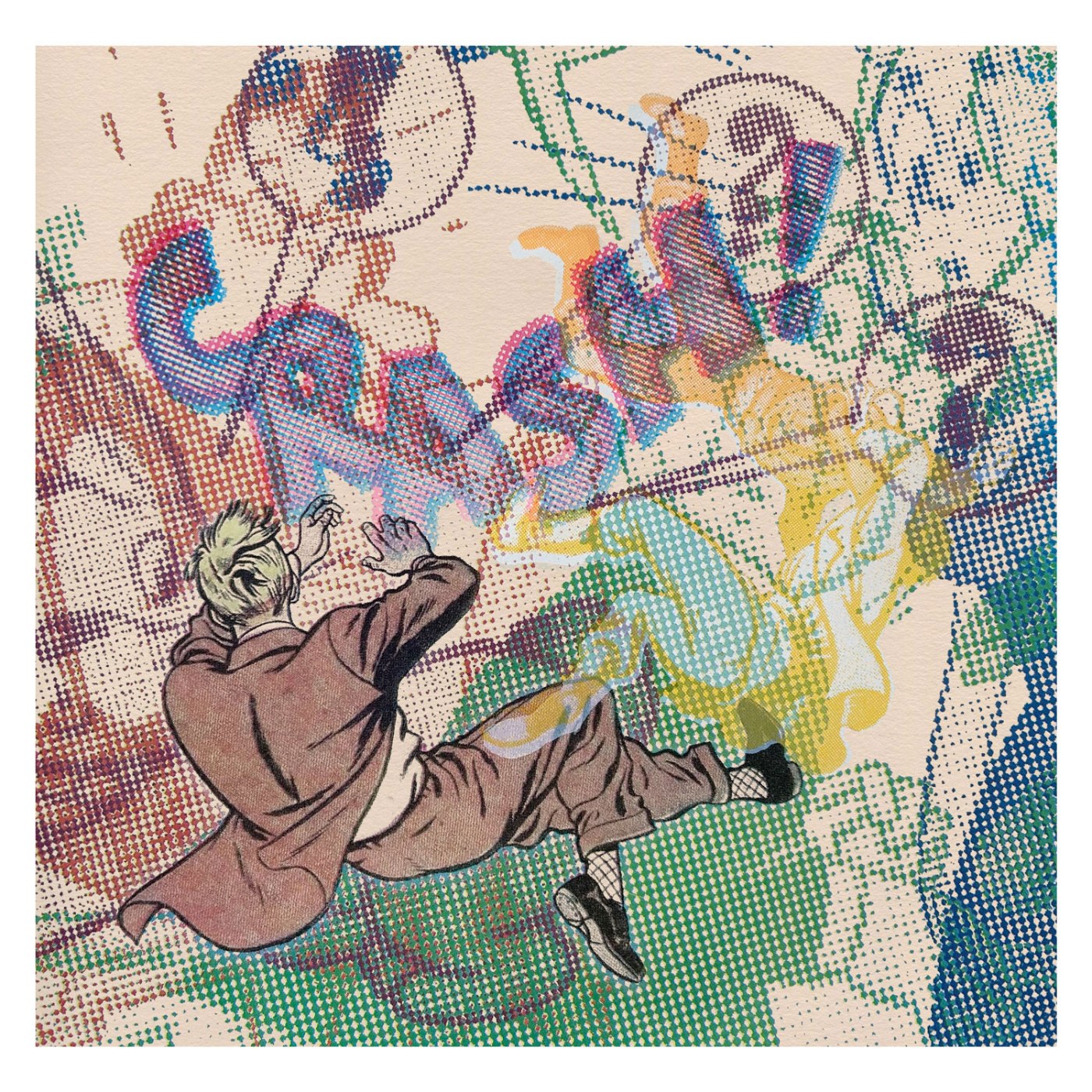
Joseph Lupo lives and works in Morgantown, WV where he is a professor at West Virginia University.
His most recent body of work utilizes appropriated imagery taken from an inventory of public domain comic books, specifically focusing on characters expressing exacerbation, confusion, or tripping and falling. Though not explicitly expressed in the work, this series is a self-reflection of feelings of uncertainty, hubris, and the fallacy of stability.
He has taught various mini-comics workshops over the years to kids in all levels of school, elementary to college; and to K-12 art teachers and art professors in higher education. These workshops range from making non-fiction comics about topics like local pollinators and their environments to autobiographical short stories. A favorite workshop, usually taught to university students, involves cutting up older comics to make new narratives.
You can see more of Joseph’s work online at: josephlupo-portfolio.com and on Instagram at: @lupo_joseph
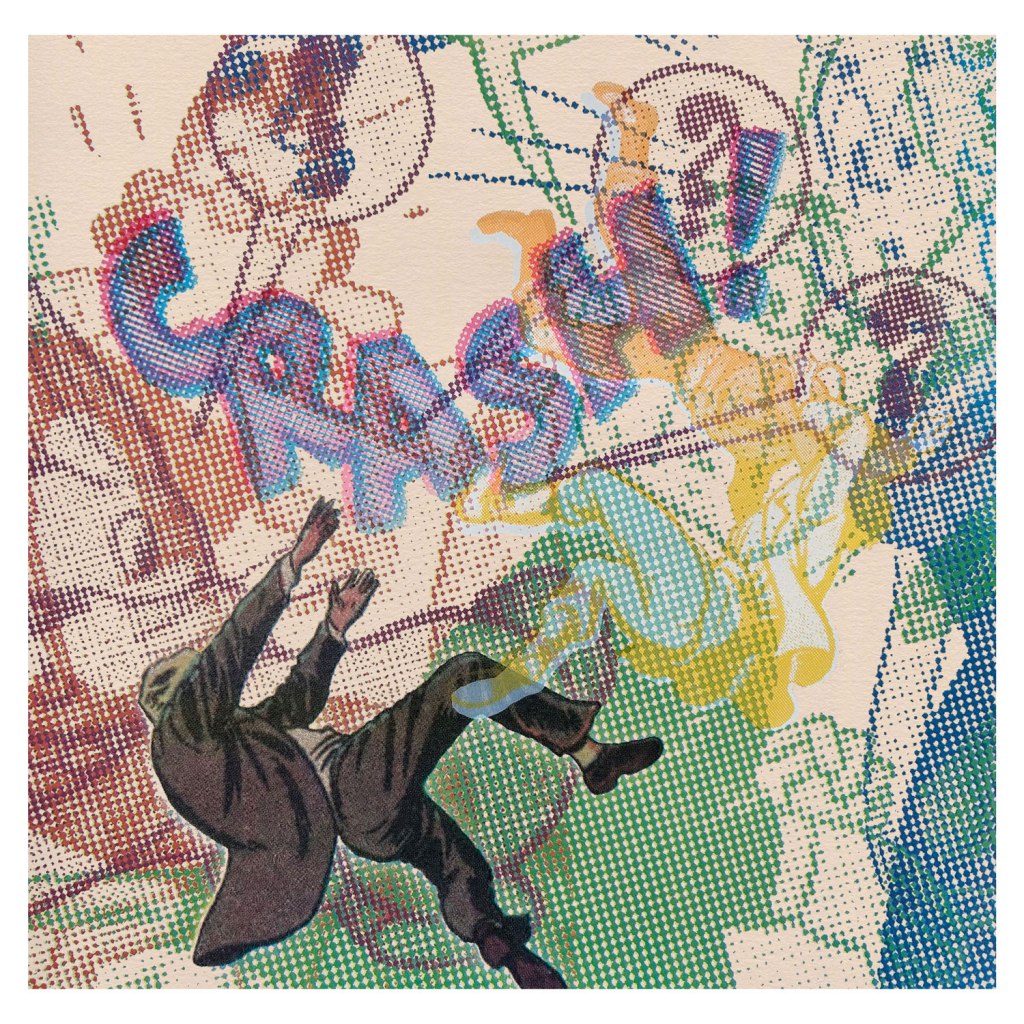
Screen print
20″x20″
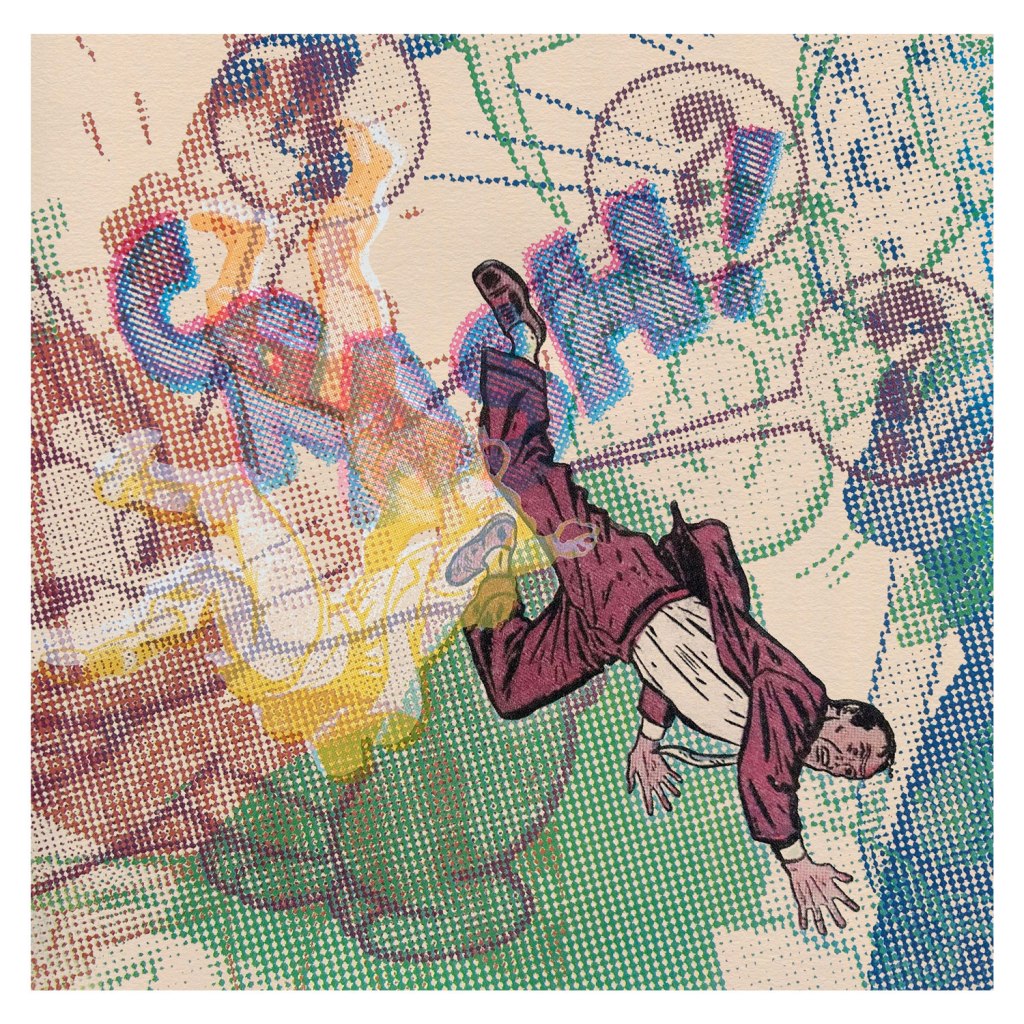
Screen print
20″x20″
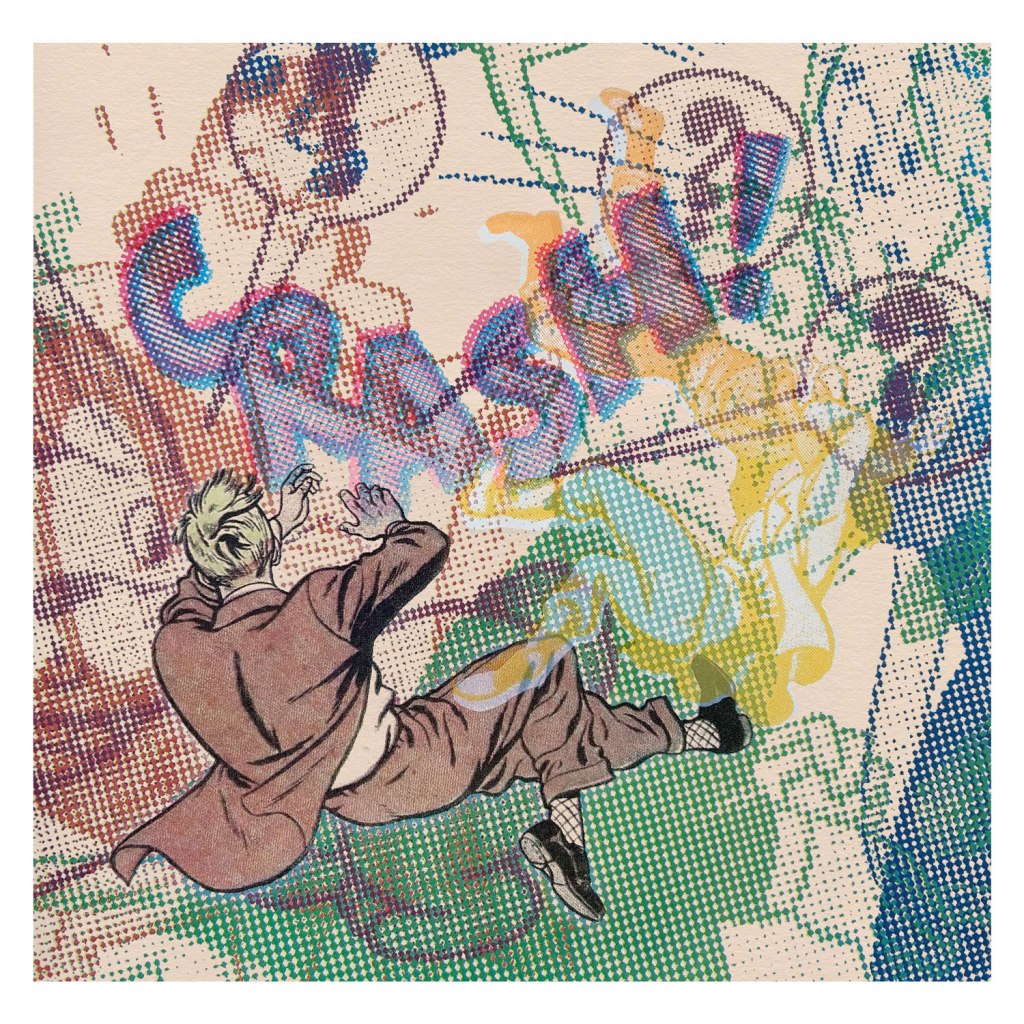
Screen print
20″x20″
Did you grow up reading comics?
YES, I 100% grew up with comics. I grew up loving Iron Man and Marvel comics in general. I’ve always been really into mech, I love the droids and vehicles in Star Wars more than the actual human characters, which is probably why I was drawn to Iron Man in the first place. I not only love his armor, but maybe more importantly, I love the way different artists draw it. Looking back, what I realize is that I wasn’t really into reading comics as much as I was into looking at the art and page design. When I was in elementary school, I would lay down on the floor of my room and just literally trace an entire issue of Iron Man, page by page, on tracing paper. Then as I got a little older, into junior high and high school, I would redraw entire sections or covers of those same comics.
Iron Man volume 1, issue 200, was an important moment for me as a kid. This was 1985, I was eight or nine years old, so I was the perfect age to be blown away by this. That issue had things I never saw before in comics, huge splash pages introducing the new Iron Man Silver Centurion armor, introducing Iron Monger, it was the culmination of a few story lines with Tony Stark getting his company back, James Rhodes not being Iron Man anymore, I think it had like “chapters” cutting the story into sections. That was an issue that I drew and redrew I don’t know how many times. That whole arc, around the 170’s-200 was a really good run. For better or worse, the Iron Man comics from around 1984-86 taught me how to draw.
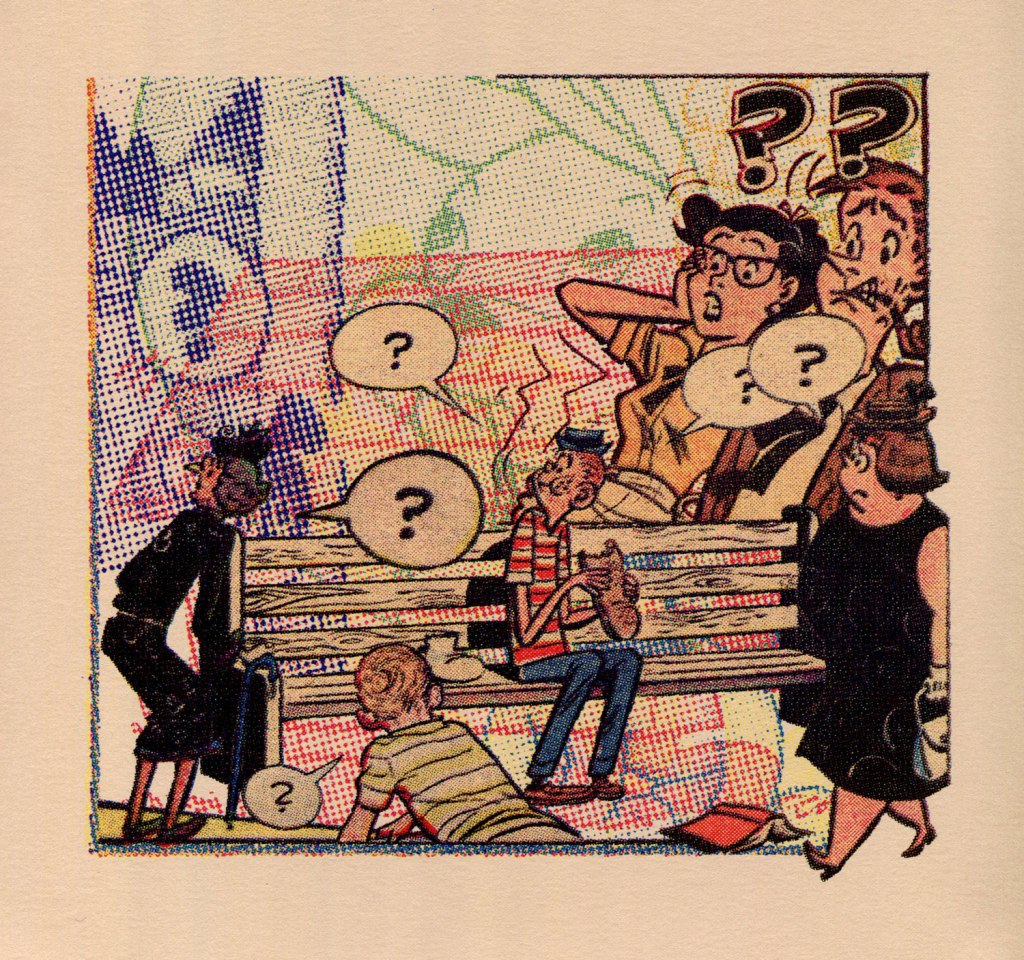
Screen print
8”x8”
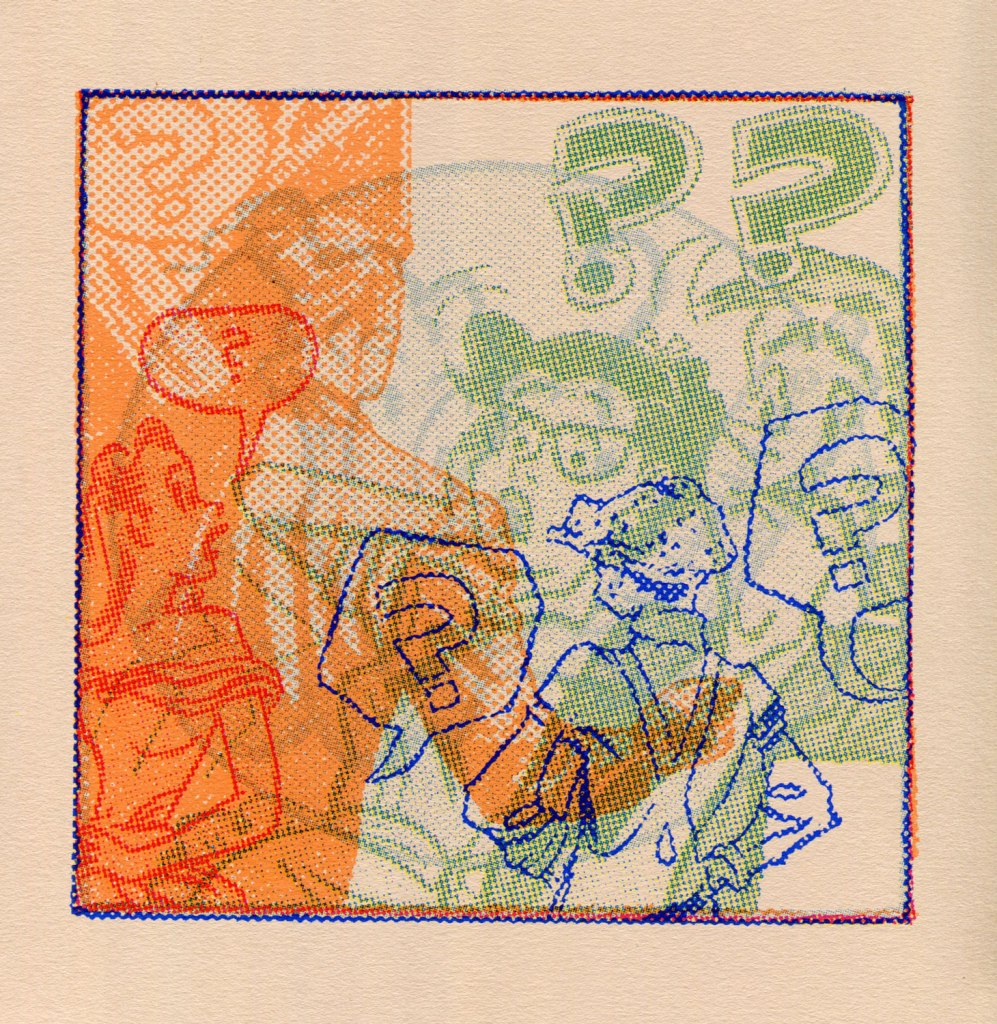
Screen print
8”x8”
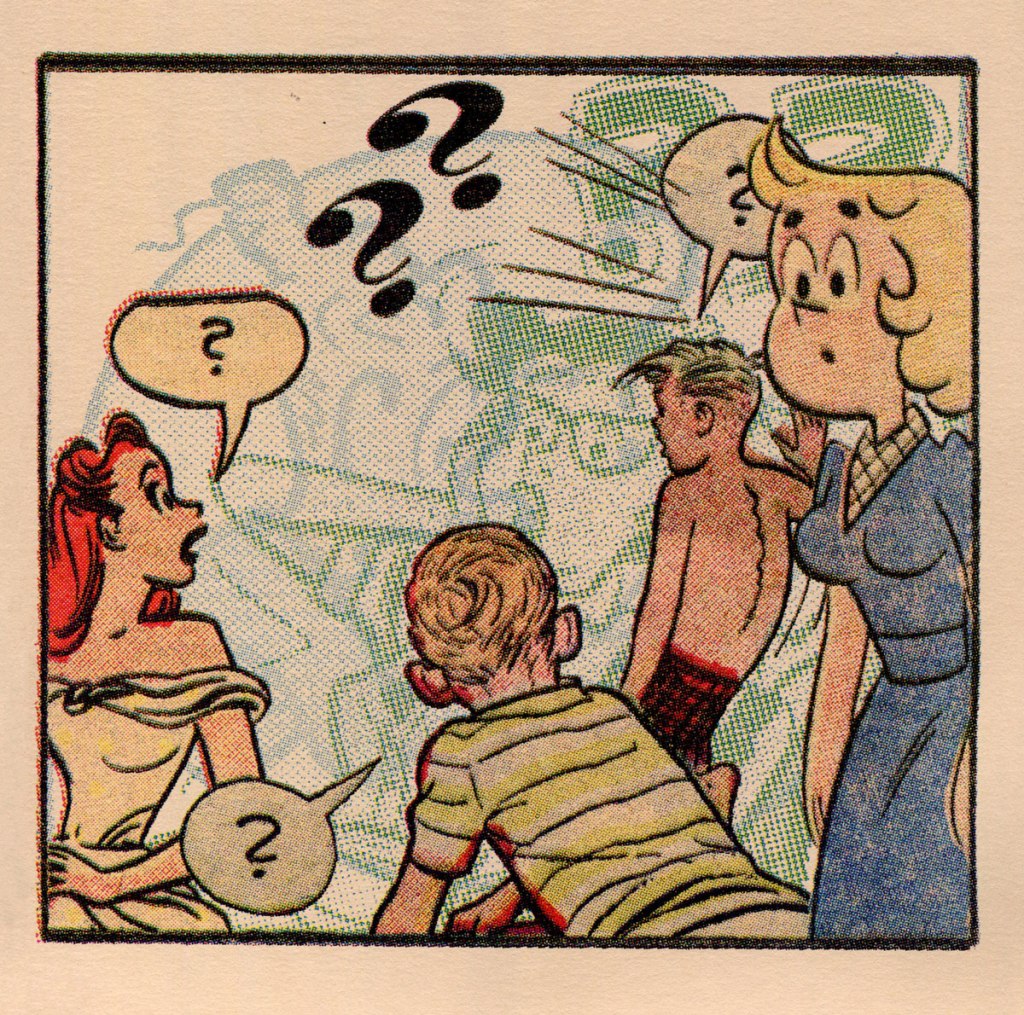
Screen print
8”x8”
Have you ever felt embarrassed or ashamed about reading comics?
YES, but I actually don’t think it was a conscious thing. Growing up, I never had friends who were into comics and Star Wars like I was. Once I hit junior high and through high school, I didn’t really talk a lot about comics (or Star Wars) even with my closest friends, we just never had that in common. My high school friends and I were really into making movies, watching bad horror movies, going to concerts, watching hockey, and playing a lot of NHL ’93-’95 on the Sega Genesis. We were our own kind of nerdy. My interest in comics and art was a very solitary interest growing up. I think that experience of having solitary interests is why I am interested in doing group projects like this interview series, or the comics related print portfolios I’ve done, the Morgantown digital billboard project…
When I got to college and started studying for my BFA degree, faculty didn’t really understand how to talk about comics. I think they tried their best and would talk about appropriation in ways that was helpful, but I could tell that they weren’t comfortable with talking specifically about comics references. I did find a group of friends who were as interested in comics and Star Wars as I was, we still nerd out over this stuff.
Looking back at that work from undergrad, I see some similarities to what I am interested in now, although I was just scratching the surface. The work in my BFA show, I was using moments in comics that were emotionally dramatic or had some emotional or symbolic conflict; what I didn’t fully understand, or was uncomfortable admitting at the time, was that I was using these moments as symbols or metaphors for my own inner conflicts at a moment when my life was changing.
When I got to graduate school, after my first semester, I dropped comic book references completely. Again, I think this was a combination of faculty not exactly knowing how to deal with those references, and my own assumptions about what “good art” should and shouldn’t look like.
Direct comic reference took a hiatus in my artwork until I started teaching at West Virginia University and I felt like I had the freedom to explore my own subject matter. Scott McCloud’s “Understanding Comics”, McSweeney’s Quarterly No. 13 edited by Chris Ware, the exhibition “Comic Release! Negotiating Identity for a New Generation”, Chris Ware’s “Jimmy Corrigan, the Smartest Kid on Earth” kicked off years of research into comics, trying to figure out interesting ways of using comics as a visual reference without being too obvious or emulating what has already been done. I also began to obsess over one issue of Iron Man No. 178, Volume 01, published in 1984. That specific issue of Iron Man became central to over a decade’s worth of artwork and research, and it all just kind of evolved from there.
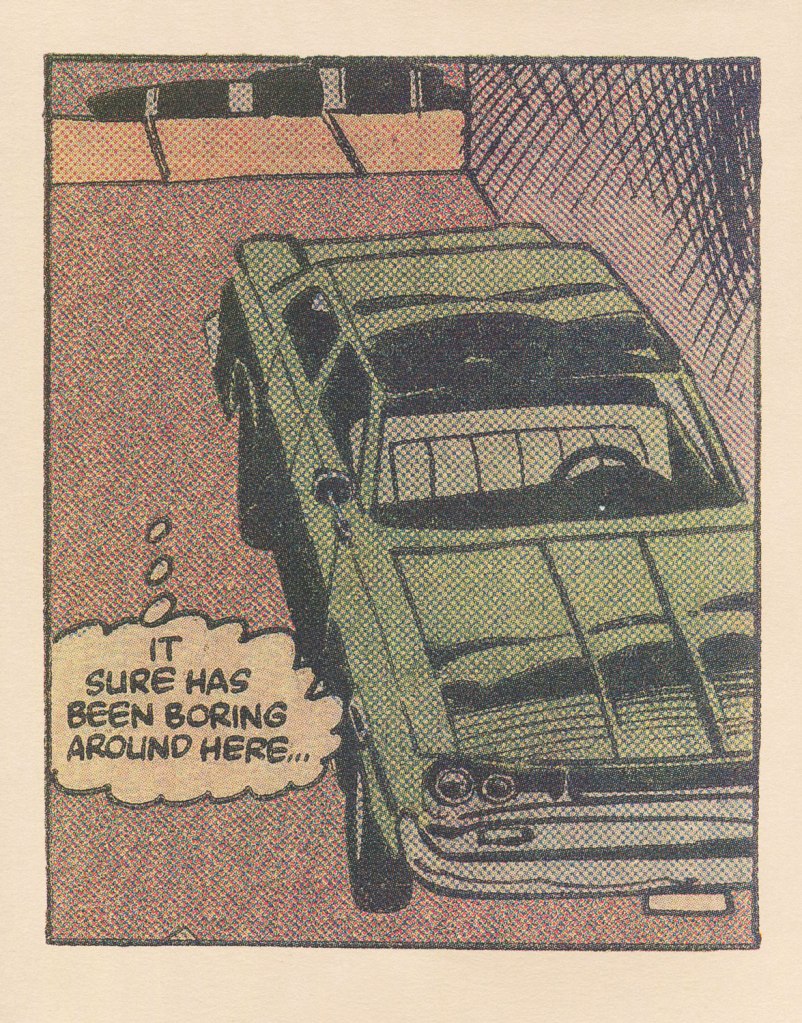
CMYK Screen print
8″x7″
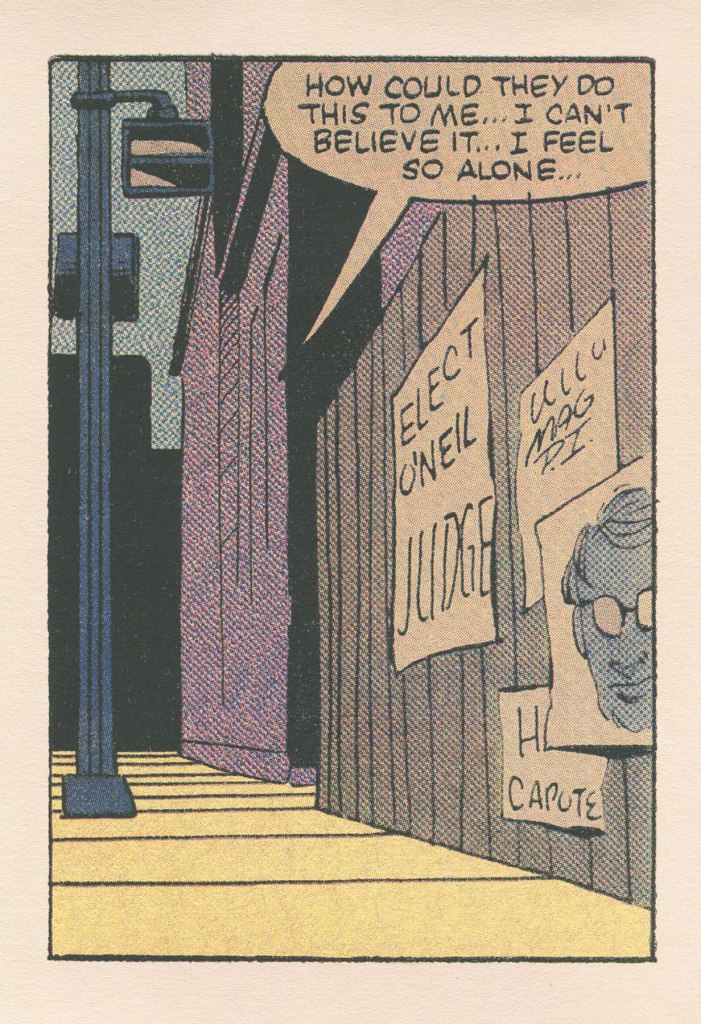
CMYK Screen print
10″x7″
Is there an important comic shop or friend who opened your eyes to comics?
I understand things like comic shops, used record stores, used bookstores different now than when I was a kid; I understand that they are unique archives. These stores represent a curated archive that reflect the owner’s sensibilities and their understanding of the “canon” of that genre or medium. I think that’s why these stores are so much fun to go into, that’s why they are all so different from each other. Each represents a reflection of the owner, their experiences, their taste, the region, even the physical space impacts the way the archive exists.
I grew up in the suburbs of Chicago, a town called Schaumburg. There was a local shop “Moondogs”, I would ride my bike over there all the time, sometimes to buy something, mostly to look through the back issues and just hang out.
But probably the most important comic shop in my life was the Bizarro-Wuxtry in Athens, GA. I was in Athens for my MFA degree at the University of Georgia. During my first year there, Mandy Mastrovita, who was also in the MFA program, introduced me to the Bizarro-Wuxtry, which was above Wuxtry Records, the record shop where Peter Buck met Michael Stipe. Mandy’s then partner Devlin ran the shop. It was my first year of the MFA program, and I was struggling; personally and artistically. Mandy noticed that I liked comics, and noticed that I was, unsuccessfully, trying to make work that referenced comics. One day Mandy was like “you know there is a whole world of comics that have nothing to do with superheroes…” I did not know this. She and Devlin very generously gave me a gift certificate for my birthday and brought me to Bizarro-Wuxtry, and my mind was blown. They introduced me to a variety of independent comics creators, but I latched onto Adrian Tomine’s Optic Nerve. My interests in independent comics expanded from there, I literally have not been the same person since that day; I am forever grateful for Mandy and Devlin being in my life at just the right time.
That led me to a lifetime of interest in independent and self-published comics and local shops. My favorite thing to do when I travel is find the local comic shop and see if they have a section of mini-comics and self-published comics.
I now live about an hour away from Pittsburgh, which I love and try to get to as much as I can. Pittsburgh had a shop called Copacetic Comics which was this amazing shop in Polish Hill run by Bill Boichel, who is a legend in his own right. It is now called Doomed Planet and is run by someone else, but is still a cool shop to visit.
Bill was always amazing at having a range of stuff for sale, he always carried a bunch of older superhero comics that seemed to be priced ridiculously low, but Copacetic always had a huge selection of independent, self-published and local stuff. Bill is how I learned about Pittsburgh contemporaries like, Jim Rugg, Ed Piskor, Tom Scioli. When entering the store, Bill would always politely ask if I knew what I was looking for and then would have a TON of recommendations and information. I take my students up to Pittsburgh usually once a semester, and we always stop at Copacetic/Doomed Planet, and I feel like it always blows their mind.
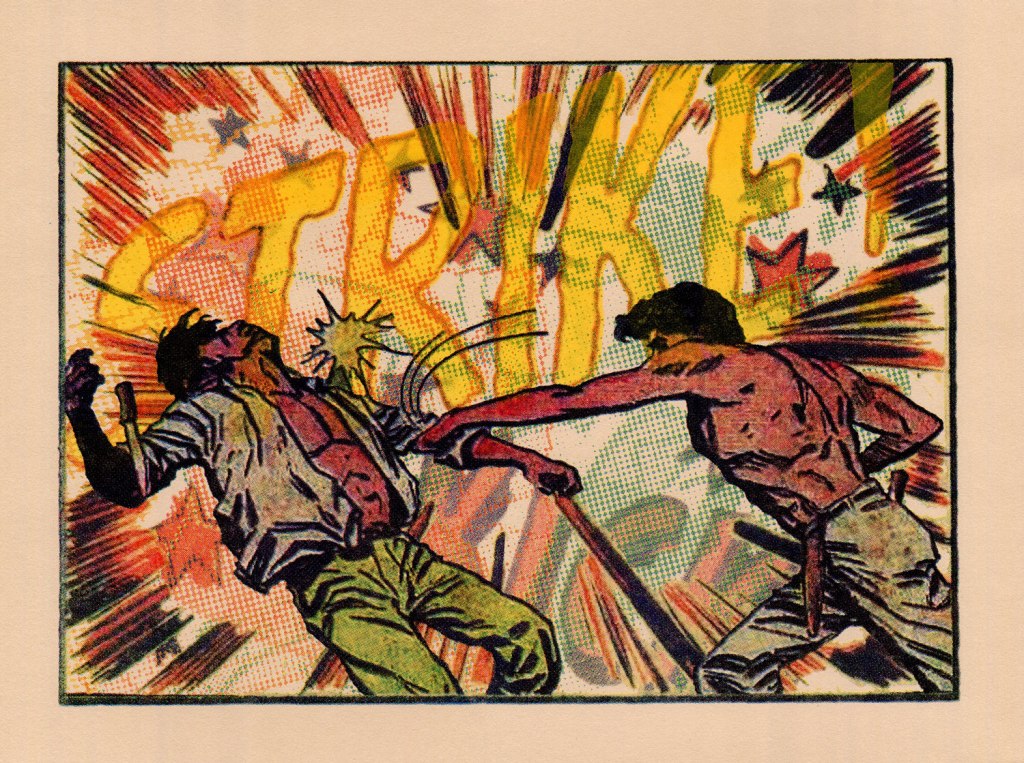
Screen print
10″x7″
How do comics inspire or inform the work you make?
For a while now, the visual language of comics, how they were printed, and their history have been central to my work. Referencing comics gives me the ability to subvert the viewer’s expectations. While everyone may not know or understand the specifics or minutiae of what I reference, almost everyone knows what a comic book is and has some already formed ideas about them, who they are written for, what the stories are about, etc. So because there are obvious visual clues (talk bubbles, the lettering, the black outlines, halftone colors…) to the fact that I am referencing comics, a viewer can come in with an assumption about what the work will be about. There is also something fun and challenging about finding new ways of utilizing the text and imagery from a comic book that was published 50, 60, 70 years ago and is considered to be final or concrete, with only one way of understanding the story.
What I hope I am doing in the work is continually challenging what artwork that uses comics can be. I’ve made work that is just about the talk bubbles, that referenced the color palette throughout a book, referenced the panel layout, I eliminated the characters in certain panels, redrawn panels with just the backgrounds, alphabetized the text of a story, created new comics from old by making anagrams of the text…Each time, tinkering with the elements, and each time, asking, what happens if I do this??? As each body of work starts to die down, I always feel like my inner voice says “Ok Joe, that’s enough with the comics stuff…” and every time a new idea emerges. It feels like a truly endless source of inspiration.
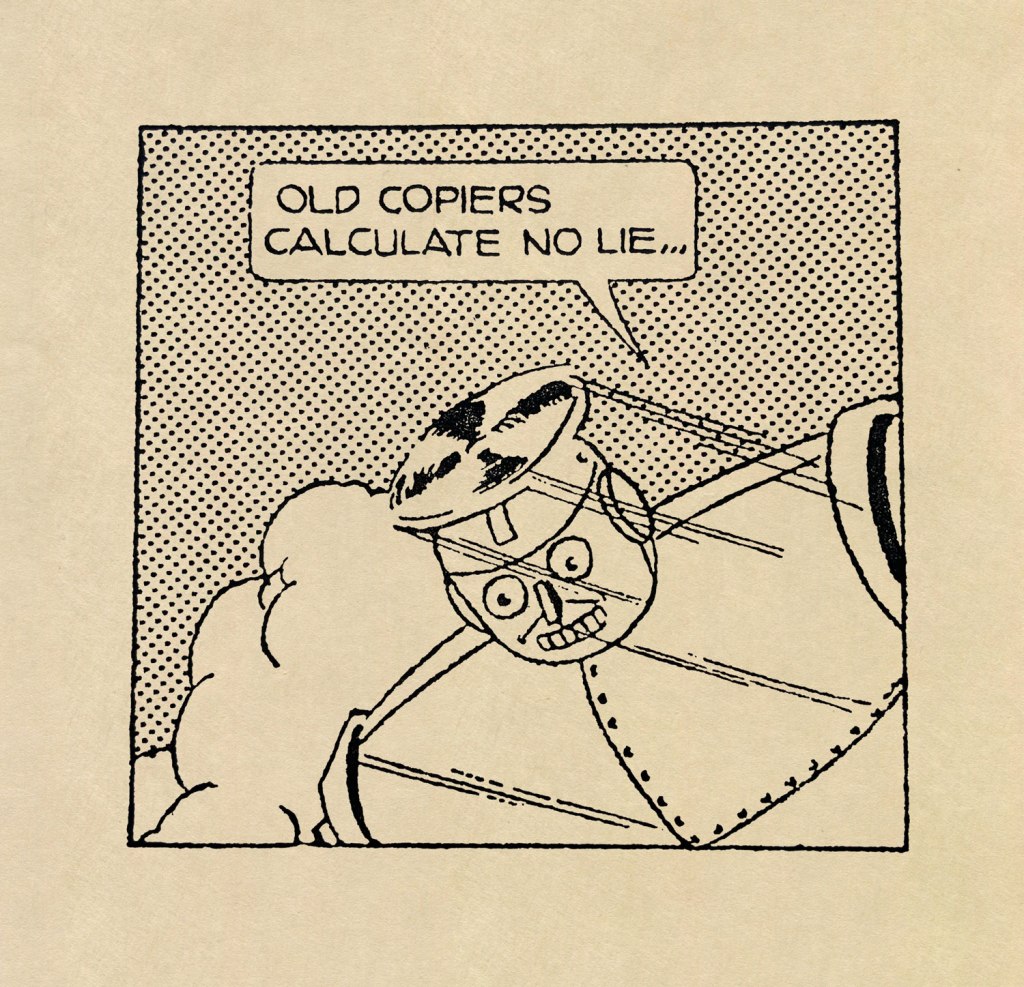
Laser cut relief print
8”x8”
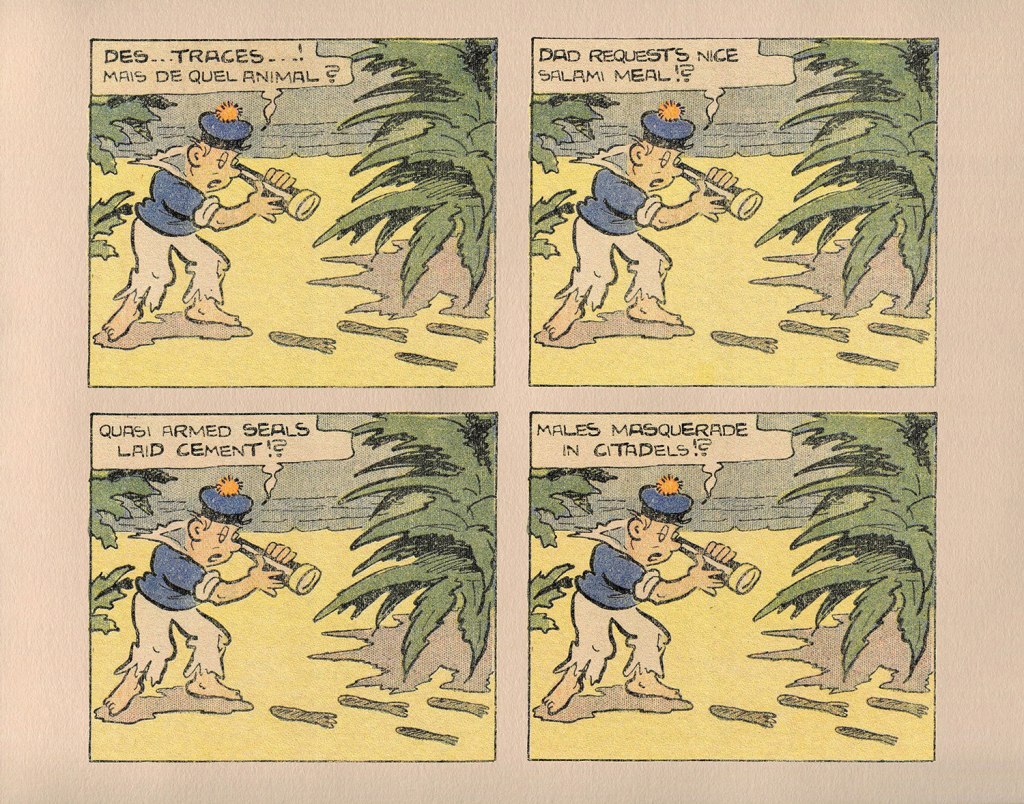
Risograph
8”x11”

