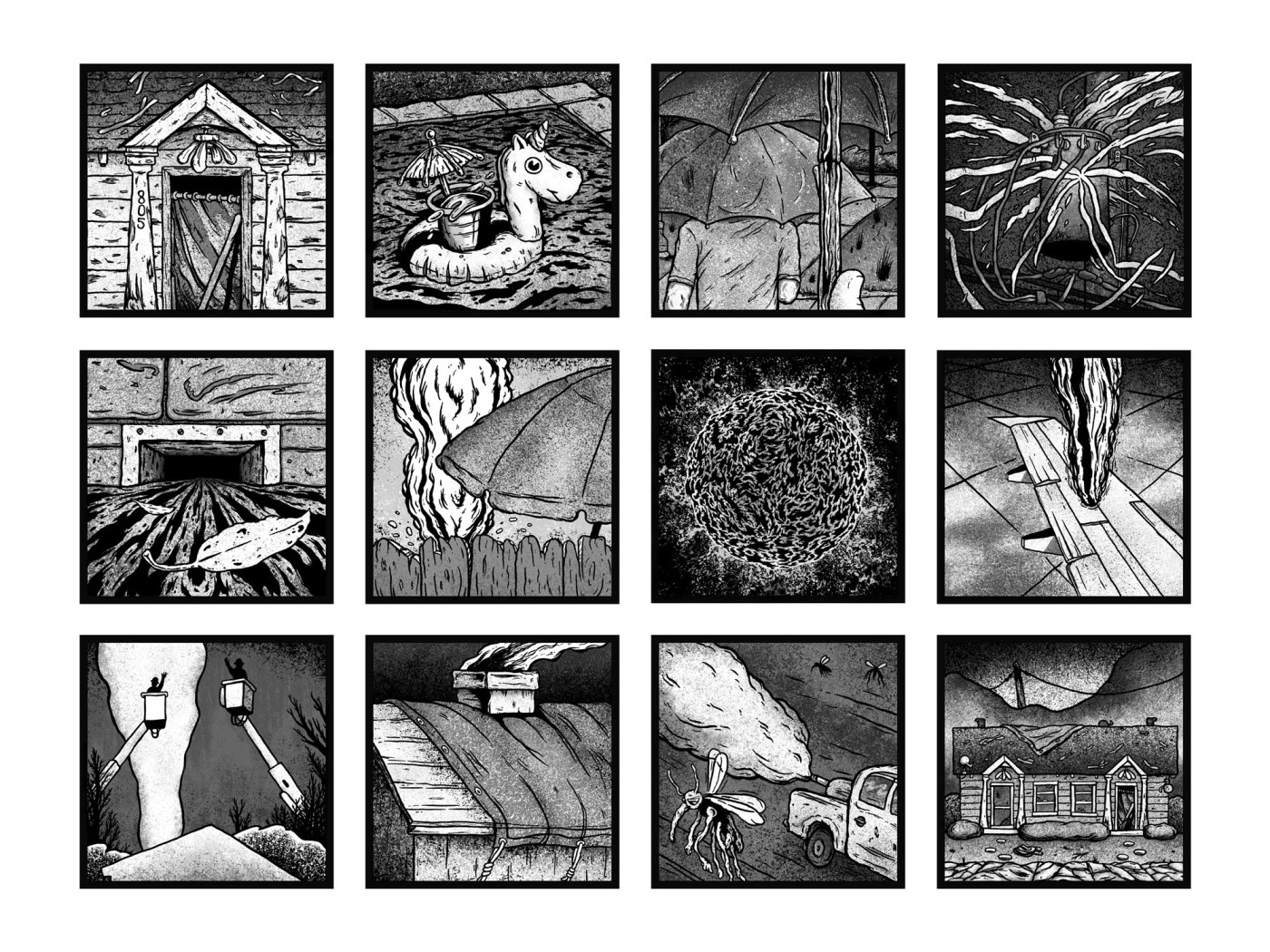
Nathan Pietrykowski lives and works in Jonesboro, Arkansas where he takes daily walks to gain a deeper understanding of his surroundings; a process that informs his prints, artist books and installations.
Nathan’s current research explores how communities are connected through printed networks and how printmaking shapes daily life. Nathan incorporates zine and comic projects in university level art courses, and for the last several summers has taught two week-long comic workshops.
You can see more of Nathan’s work at https://npietrykowski.com/ and https://www.instagram.com/nathanpietrykowski/.
Screen print and Laser print
8” x 10”
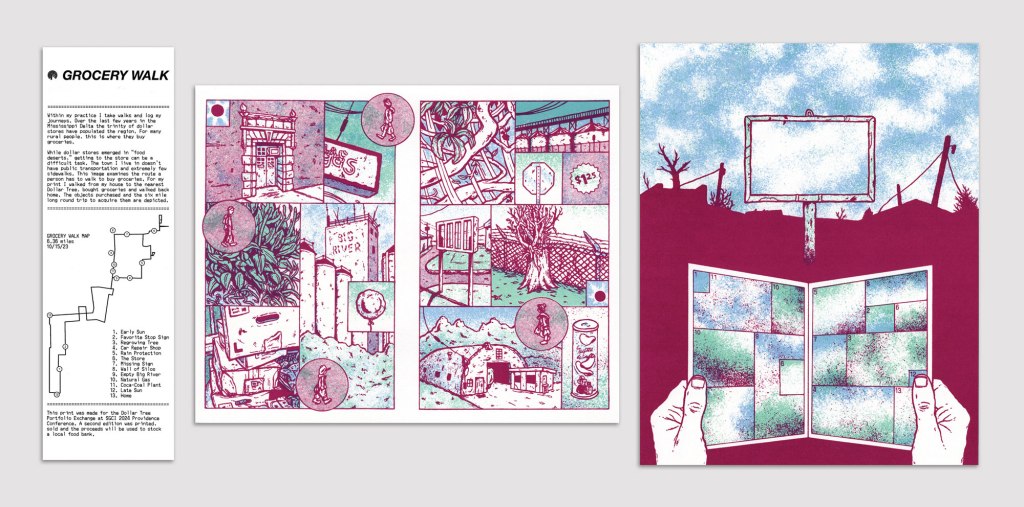
Screen print and Laser print
7” x 5”
Did you grow up reading comics?
Yes, to some degree. I grew up in rural Indiana, where there weren’t any local comic shops. My introduction to comics came in the form of daily newspaper strips and whatever was available at the local library. The illustrated books at the library were very formative.
Eclectic might be a good way to describe the library’s comic book collection. There weren’t any superhero comics and manga definitely wasn’t something you would find in a library at that time. The selection at the library shaped my preferences toward experimental comics and zines.
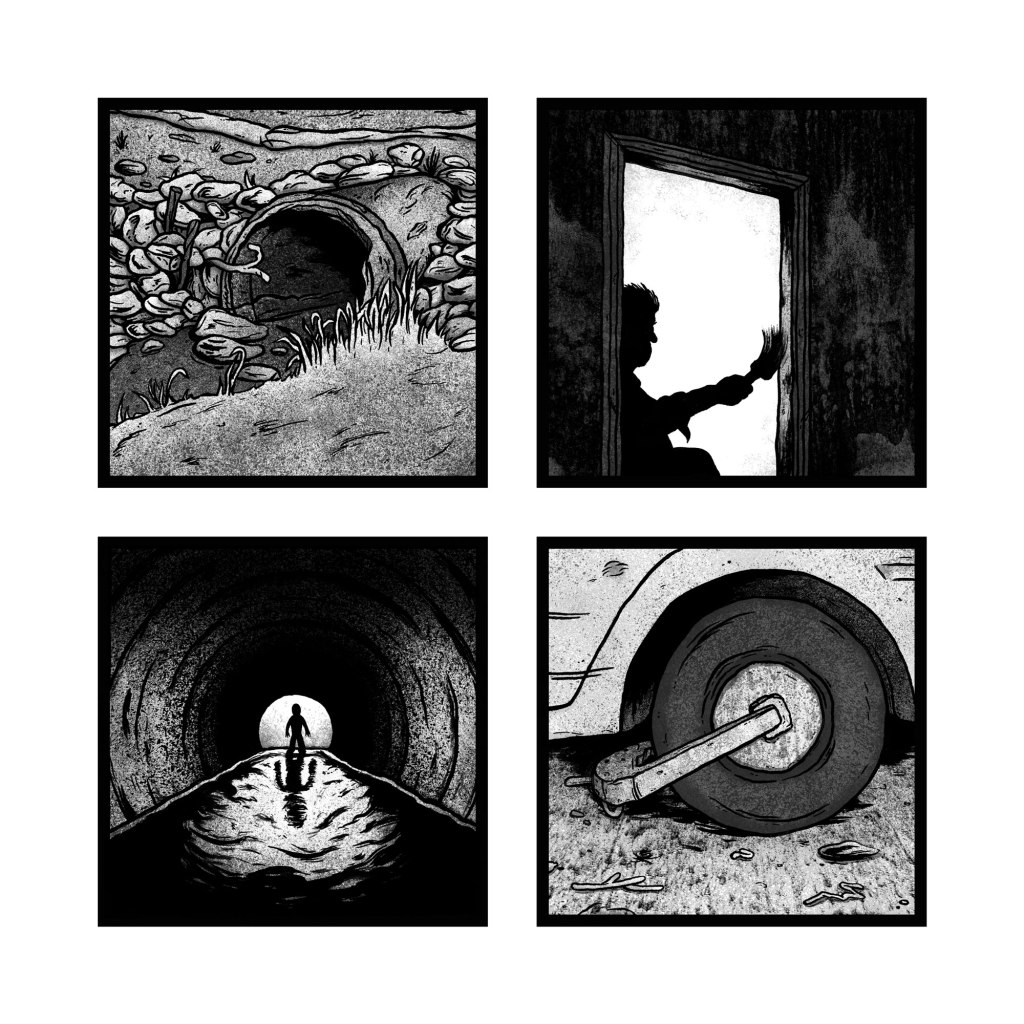
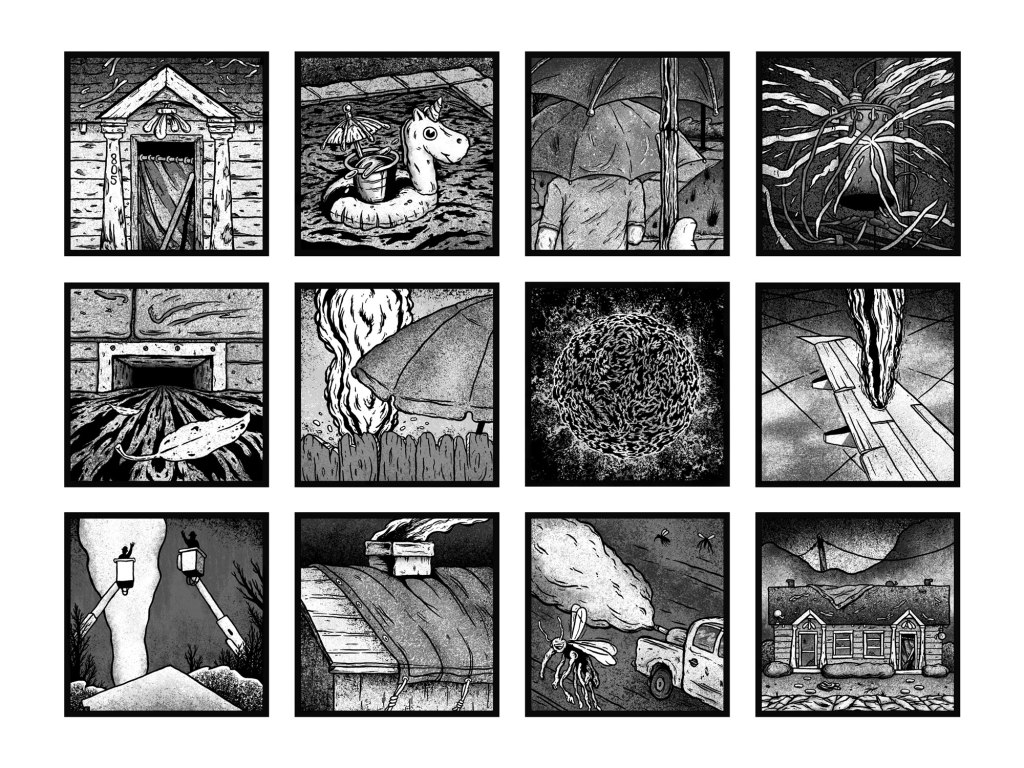
Screen print
10” x 10”
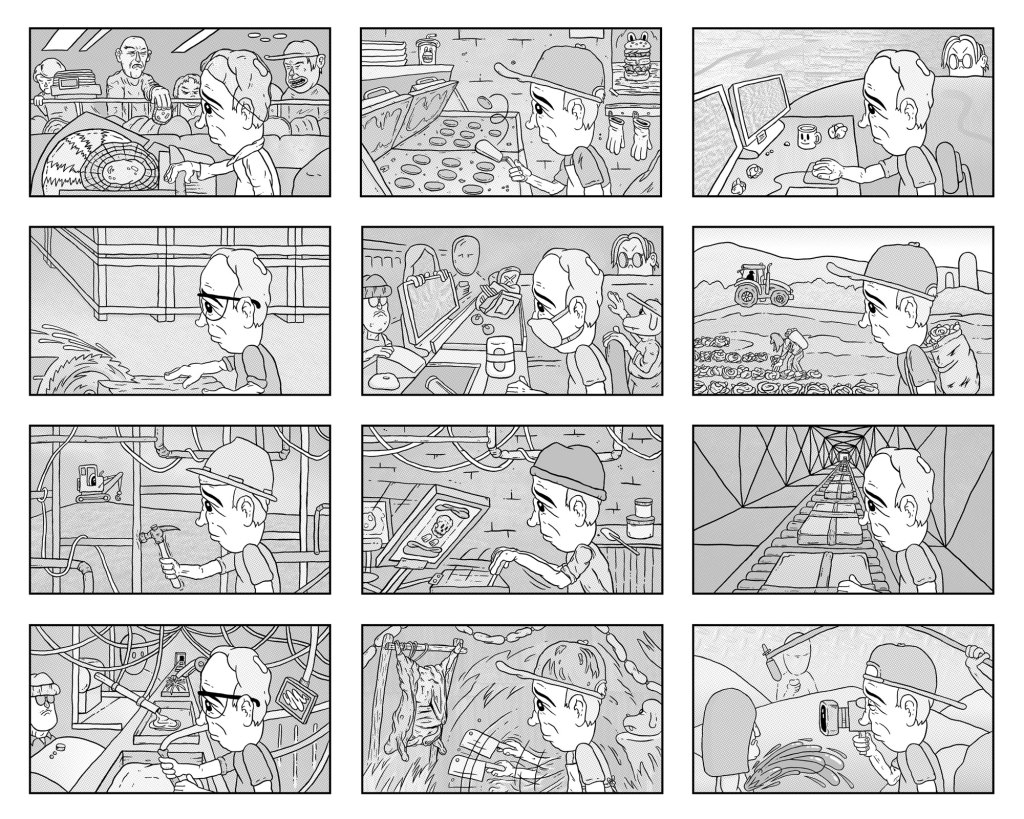
Screen print
15” x 20”
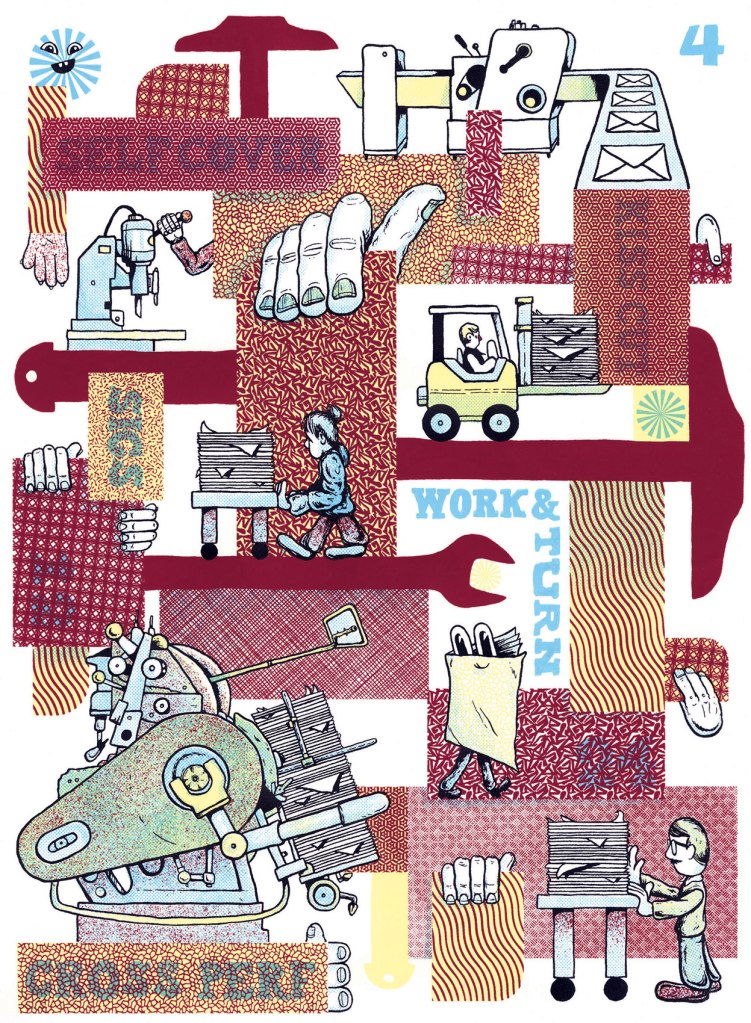
Screen print
16” x 20”
Is there an important comic shop or friend who opened your eyes to comics?
In undergrad I was introduced to Dan Nadel’s publishing company, PictureBox, which exposed me to dozens of great artists. Many of these artists made zines and I began contacting some of them and collecting their work. Receiving zines through the mail was incredibly inspiring and showed a possible path forward as an artist.
Today, one of my favorite comics resources is the New York Comics & Picture-story Symposium, which has weekly lectures from artists, writers, publishers and historians. They cover a wide selection of comics-adjacent topics and theory that help energize my practice. I highly recommend Bill Kartalopoulos‘ multi-part lecture on the Avant-Garde Histories of Comics that he did for the symposium.
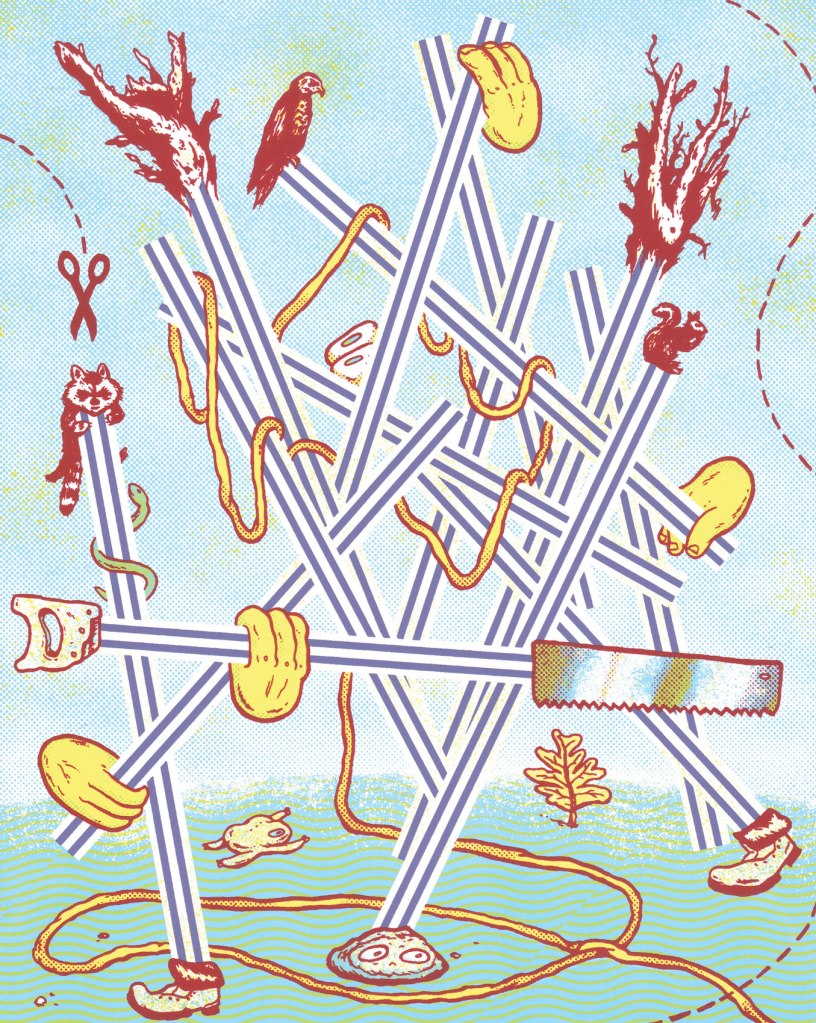
Screen print
15” x 11”
Screen print
10” x 8”
How do comics inspire or inform the work you make?
My work has always been narrative-driven and illustrative, often depicting movement and time. I enjoy implementing comic theory when depicting these elements in static 2D images. When drawing, I abstract form through simplification; distilling an object down to details I feel are needed for the viewer to understand the story.
I am interested in the many ways the world we have constructed is an expanded comic. Throughout the day, picture-stories help us navigate public spaces, use tools, and make decisions. Text-image relationships, cartoon characters, arrows, pictograms and talk bubbles are interwoven into urban and digital environments. They are deeply embedded in everyday life, yet they often remain invisible. I am interested in how the vernacular of comics can be used to reveal the systems that shape our world and help us see them more clearly.
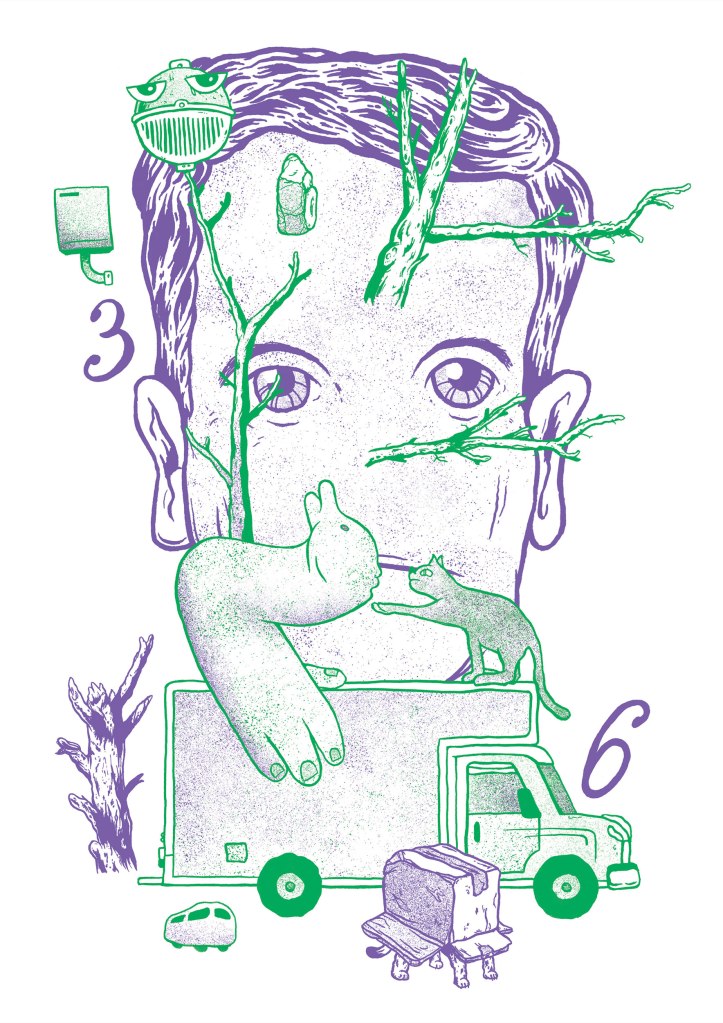
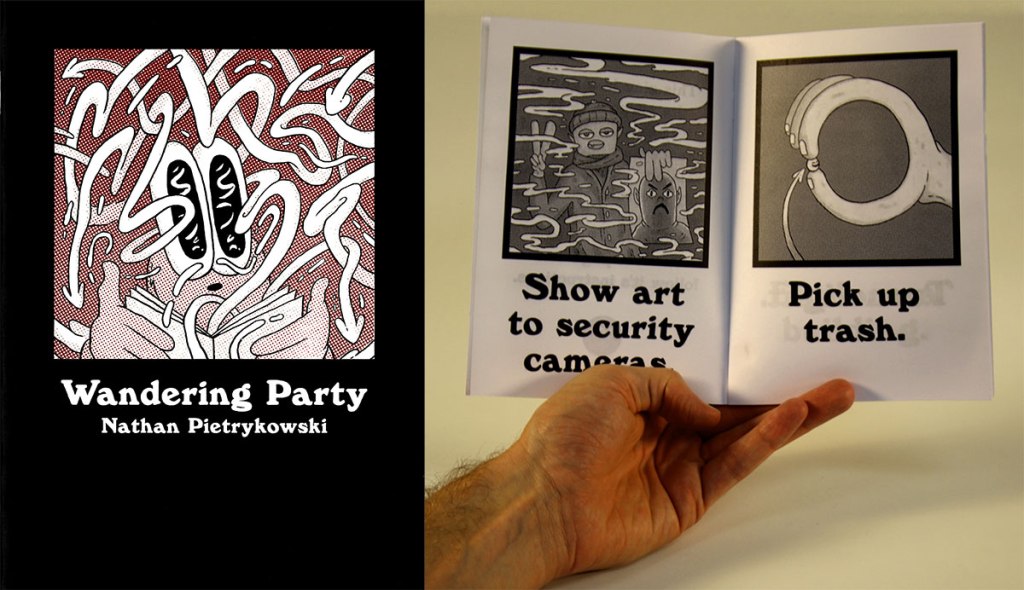
Laserprint
17” x 11”
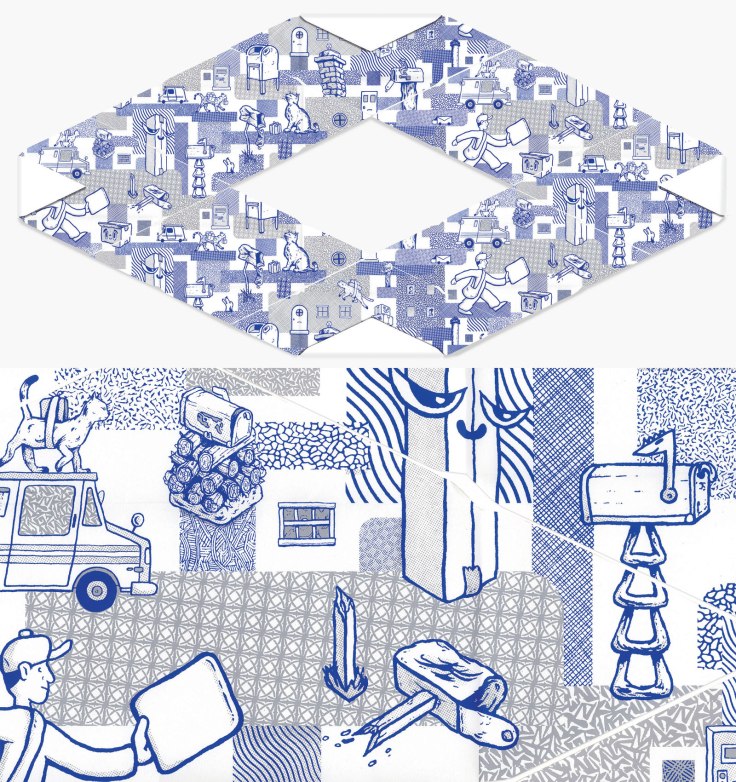
Screen print on Laser Cut and Folded Paper
52” x 26”
Have you ever been afraid or worried about making artwork that references comics?
I used to worry about this in graduate school, but I feel the division between comics and gallery art has eroded. A few years ago, I was talking with a curator about an exhibition at the Mississippi Museum of Art, and midway through the studio visit, she asked if we could showcase some of my zines. That moment affirmed for me that I don’t need to sneak zines into galleries anymore. People want them to be there.
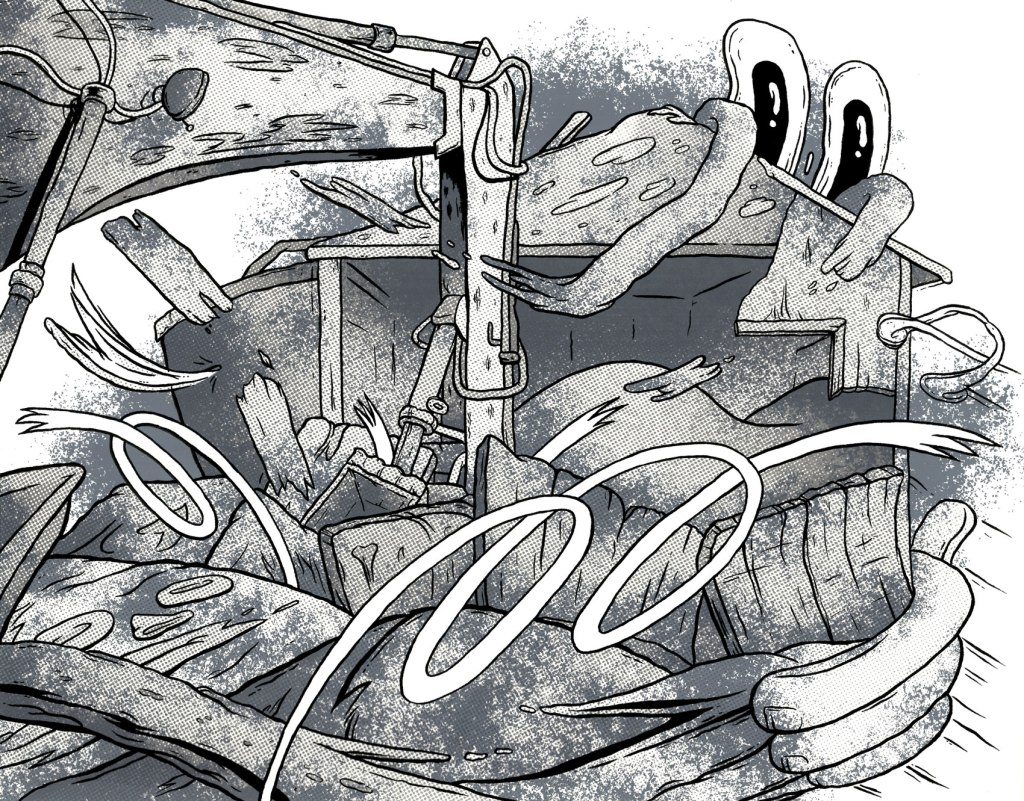
Screen print
11” x 14”
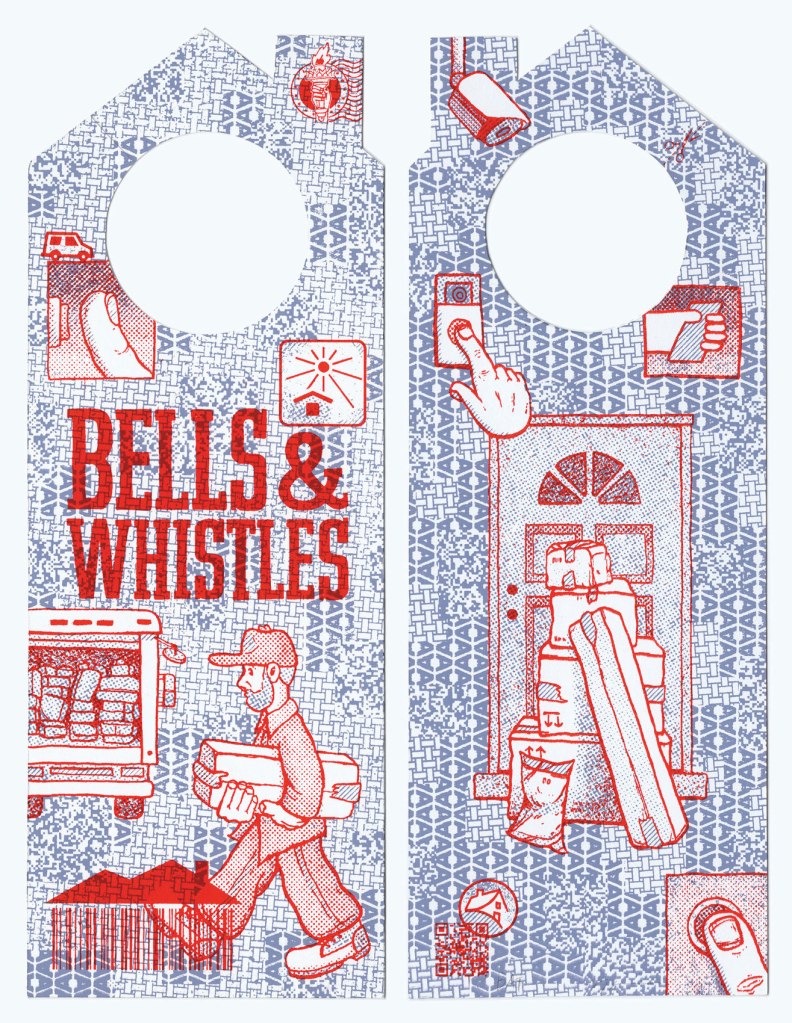
Screen print on Hand Cut Paper
9.5″ x 3.5″ Double sided door hanger
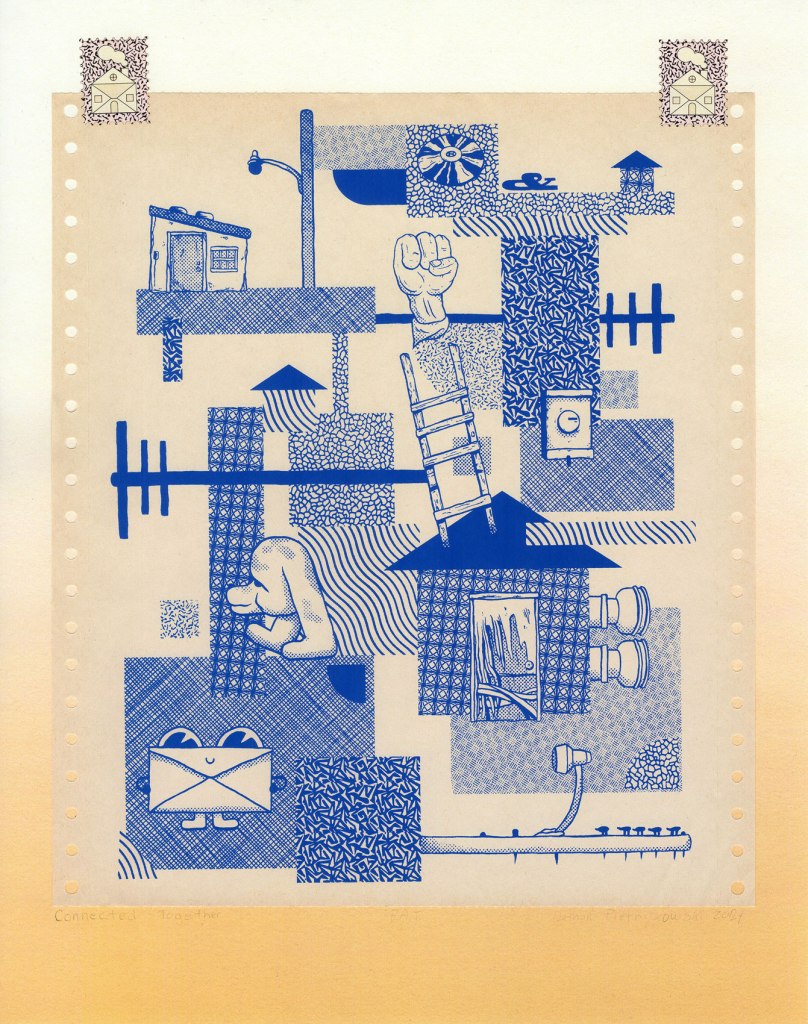
Screen print, Laserprint, Laser Cut Stickers,
Dot-Matrix Paper
14” x 11”

