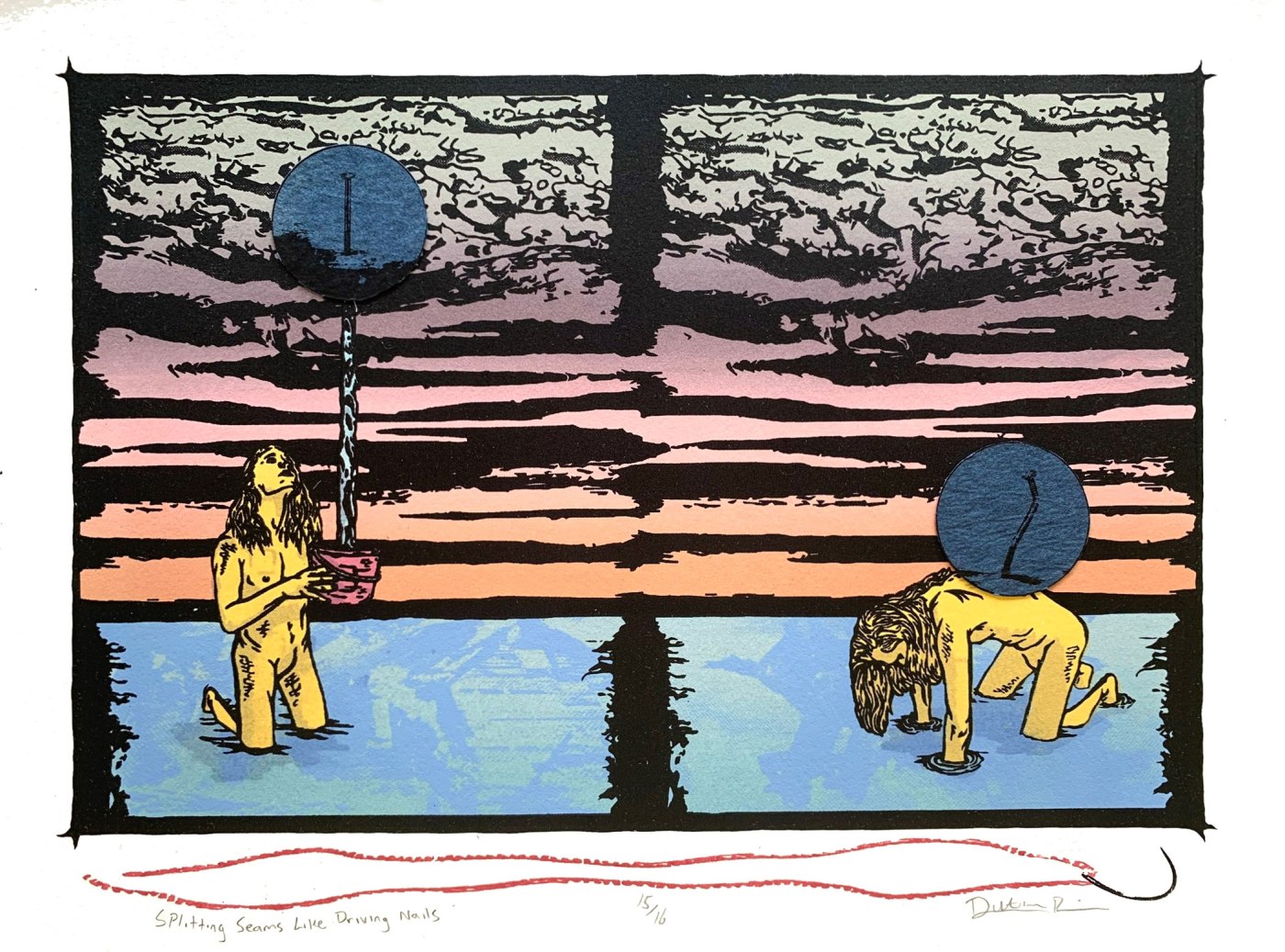
Dustin Brinkman is the Instructional Assistant Professor in Printmaking at the University of Mississippi in Oxford. Previously he lived and worked in Columbus, Ohio.
Dustin classifies his work as regenerative image collage; constantly pulling from personal and regional archives, scanned books and documents, drawings and sketches. Through these materials Dustin tries to interrogate and question themes surrounding home, kinship, gender roles, and the tender and brutal moments in exploring and finding one’s identity.
Although Dustin doesn’t teach comics, he does teach a lot of book arts classes and community risograph workshops, both of which have a consistent crossover into comics. For example, this semester Dustin had students consider instruction manuals; a fun way to process how we consume images and text, and a fun way to create something that was both illustrative and descriptive.
You can see more of Dustin’s work at www.dbrinkmanprints.com
and https://www.instagram.com/dbrinkmanprints/?hl=en
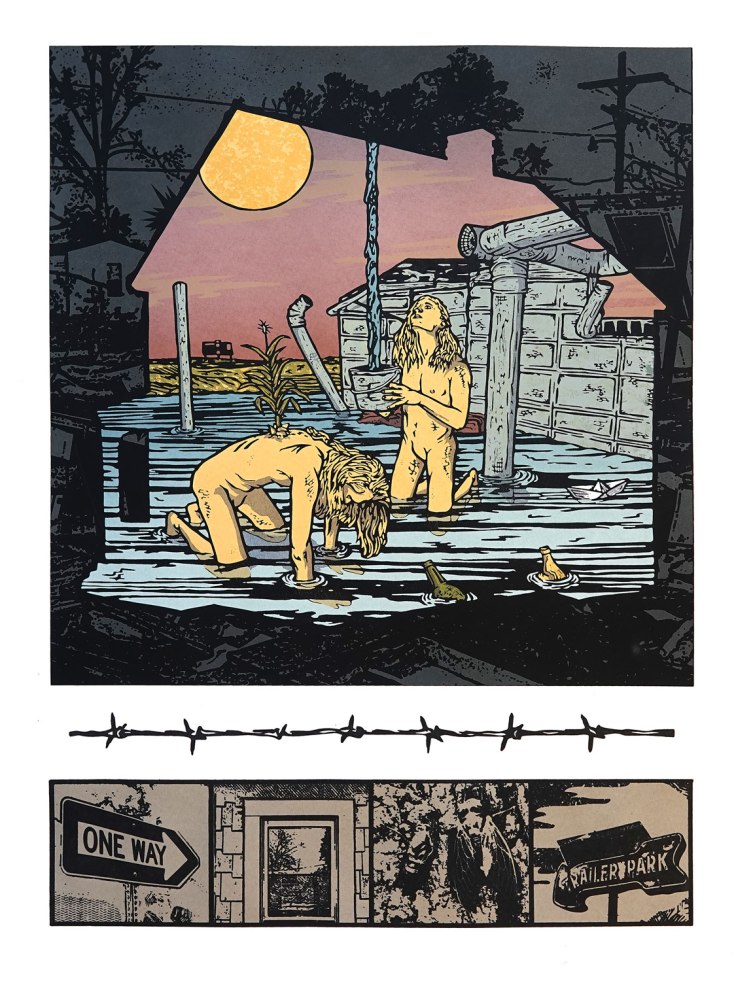
Relief and Serigraphy
18”x24”
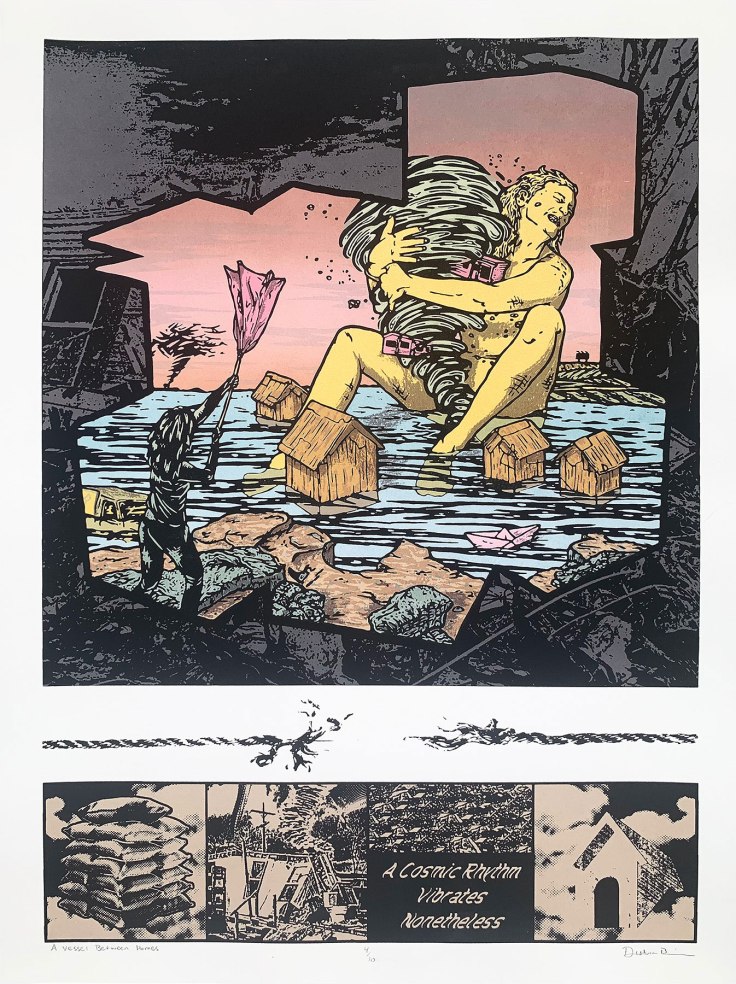
Relief and Serigraphy
18”x24”
Did you grow up reading comics?
I grew up reading various comics, but mainly weekly reissues of the Stan Lee and Steve Ditko’s The Amazing Spider-Man in the newspaper. My mom would save them for me to read during my 8th grade English class. We had a free reading period each week and I talked my teacher into letting me bring comics to read them instead of a “traditional book”. Our deal was this, I had to bring in more than one comic for it to count as reading, so I would load up on other comics and read three or four issues each class.
Sometimes my dad would take my brother and I to the comic book store. Any comics that seemed “too graphic” he would tell us to put back. My brother would always buy manga or Shōnen Jump and we read those religiously.
And then I just sort of stopped reading comics in high school, which in retrospect would have been the best time to dive deeper into them. It wasn’t until late in undergrad and early grad school that I started getting back into comics thanks to a friend who introduced me to the Columbus comics scene.
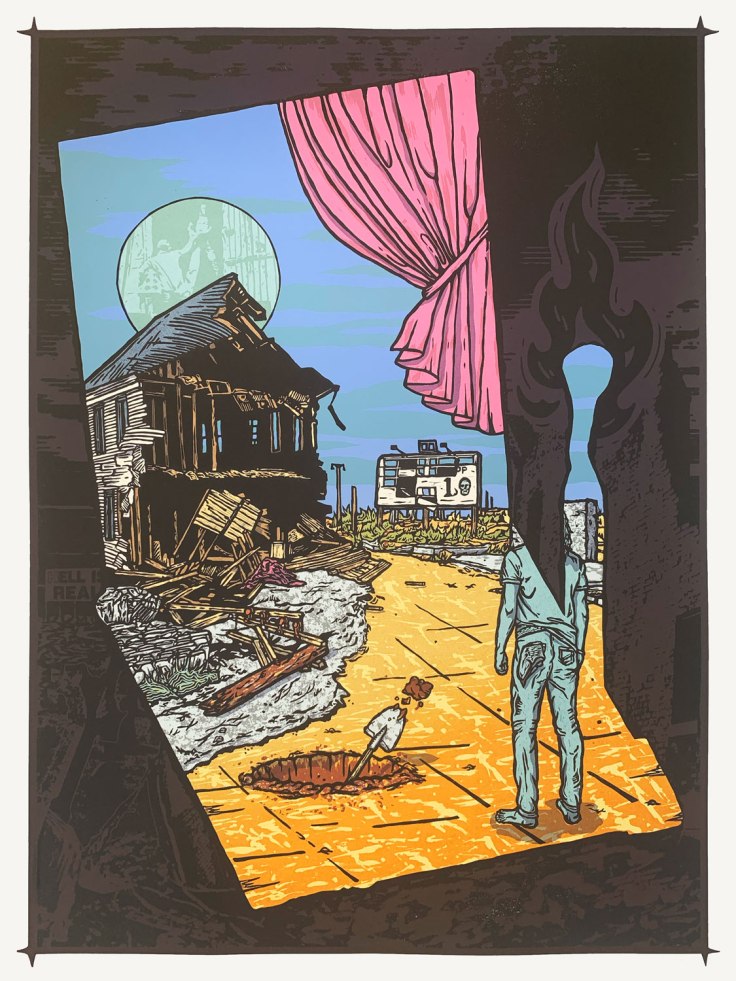
Relief and Serigraphy
18”x24”
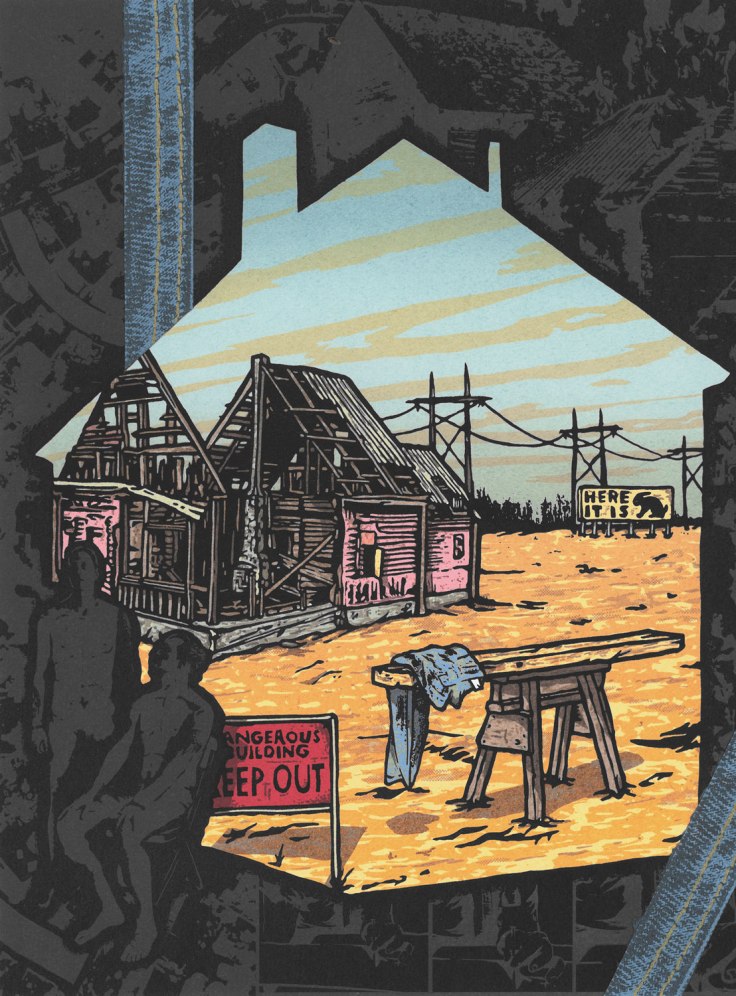
Relief and Serigraphy
18”x24”
Have you ever felt embarrassed or ashamed about reading comics?
I’ve never personally felt embarrassed about reading comics, but I have experienced a lot of unenthusiastic responses when comics get brought up seriously in conversation. “Aren’t those for kids?” and “But comics aren’t real art” types of viewpoints; which I think are damaging to those who are interested in pursuing comics or illustration as a way of activating their art. I’m a firm believer that comics and art, especially printmaking and bookmaking, all exist in the same sphere. If you’re reading this, don’t let anyone tell you comics aren’t art!
Comics are a space that sits somewhere between object and print which is something I’m very intrigued by. Comics and paneled work, for me, slows down the complicated feelings or experiences we have and spreads it out so we can pause and breathe. Comics are also an artifact of a story that’s meant to be displayed and viewed.
I’m constantly trying to find new ways to improvise or revisit how paneling and text can find their way into my work. I’m interested in comics and printmaking as a partnered style because I can visually create engagement with the reader while using an analog print processes to create a tactile experience.
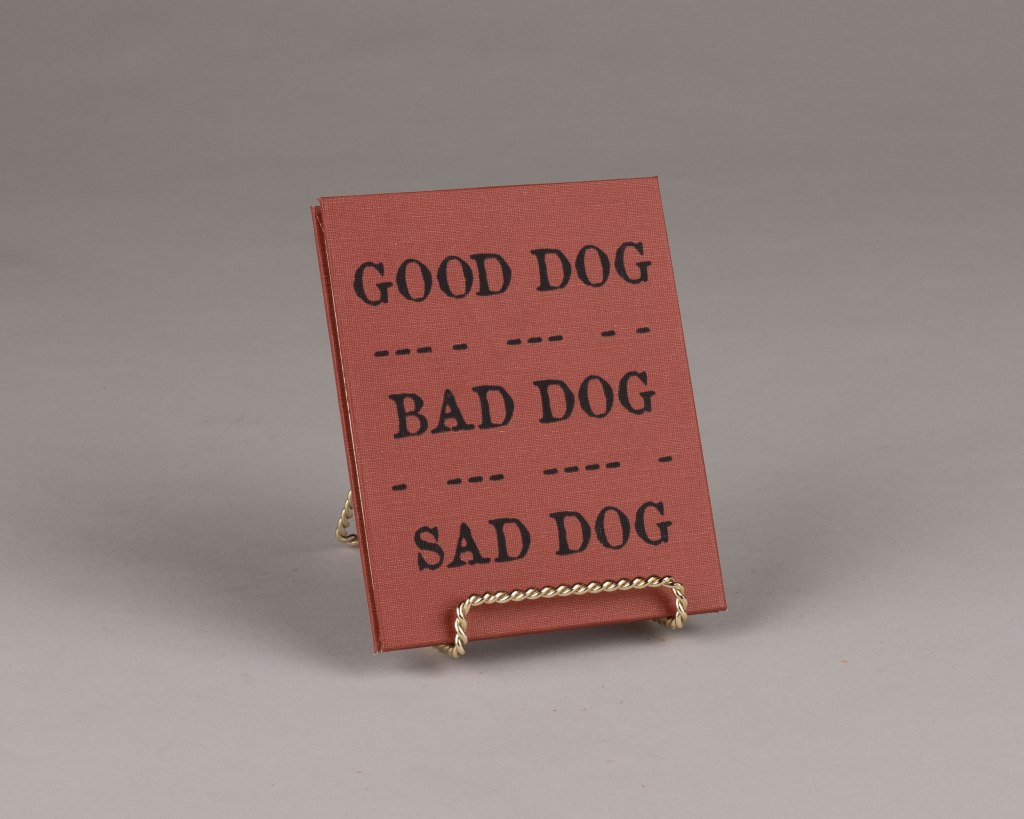
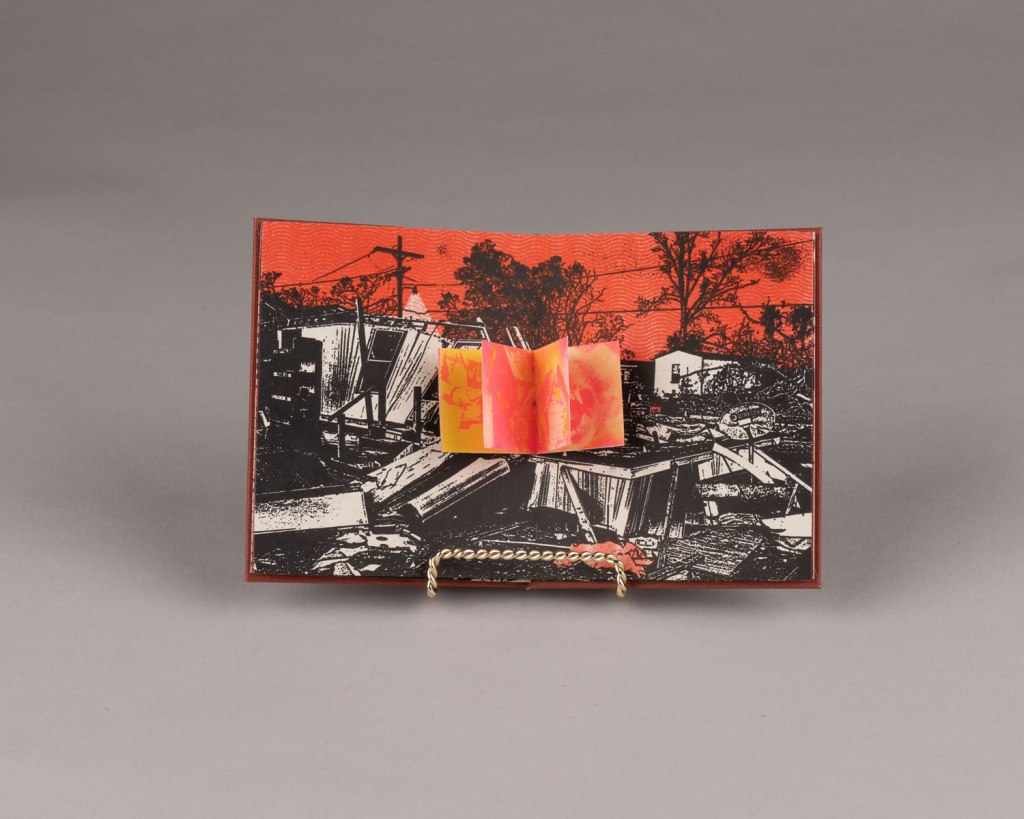
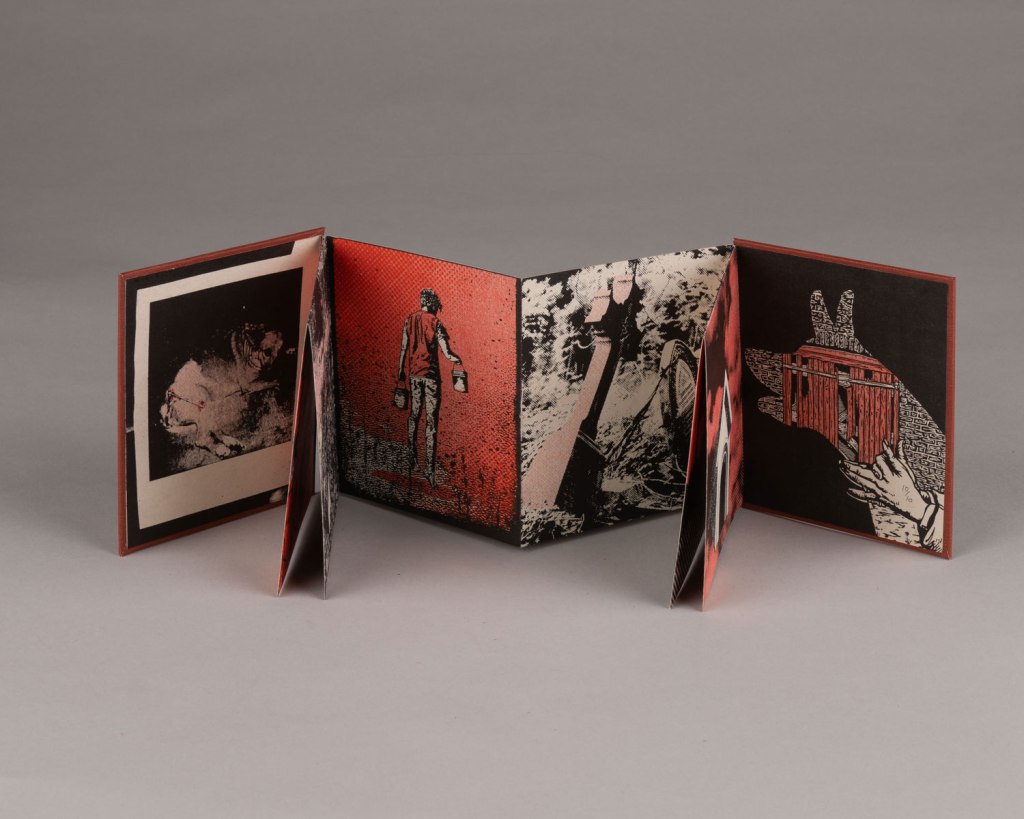
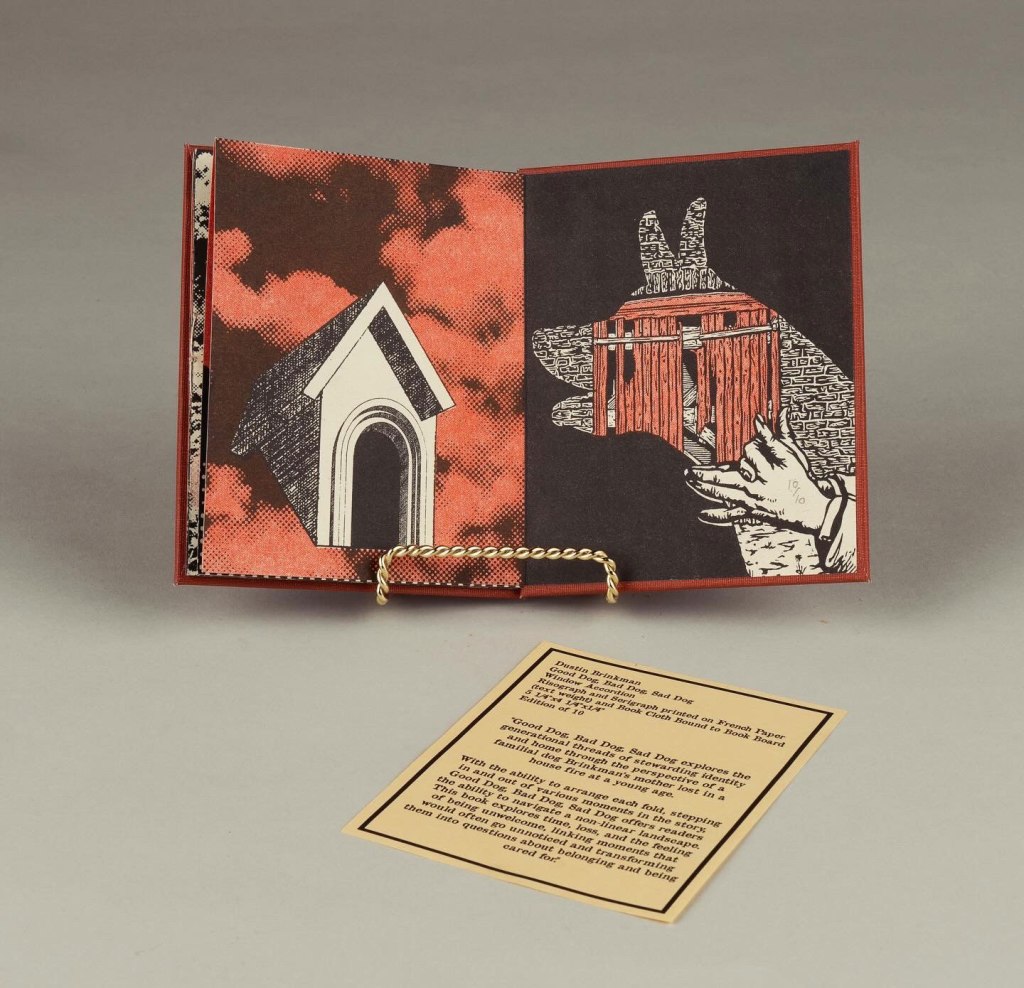
Risograph and Serigraph Prints on French Paper
5 ¼”x 4 ¼”x 1/4” (Edition of 10)
Is there an important comic shop or friend who opened your eyes to comics?
For sure! my friend, Gloria Shows got me back into comics during grad school. During that time I got turned on to a lot of great artists that I had never heard of as well as the comics community around the city. It was eye opening to see just how much those in that comics community supported one another. It’s like the global community of printmaking that I always try to surround myself with and participate in; I think that’s why I like hanging out with the comics crowd so much. They like to chat about all the same silly things printmakers talk about; paper, ink, mark making, experimental drawing, and image making.
Another good friend and comic artist, C.M. Campbell has been really supportive and a great person to bounce ideas off of. We have spent endless hours talking about drawing and finding obscure comics to share with one another. We bond over punk music and soccer as well! He and I worked on a large edition of risograph comics he illustrated and we collaboratively printed. They were a critique on the gentrification of Columbus and the erasure of DIY and subversive culture (record stores, punk and jazz venues that had been around for years) throughout the city. We would just sit in our risograph room while he drew and I carved all day, we would share craft tips, talk about our favorite artists, discuss our teaching philosophies, and then print spreads on the weekend.
That type of collaboration, the shared trials and tribulations of image making that blur the lines between “fine art” and comics is what it’s all about.
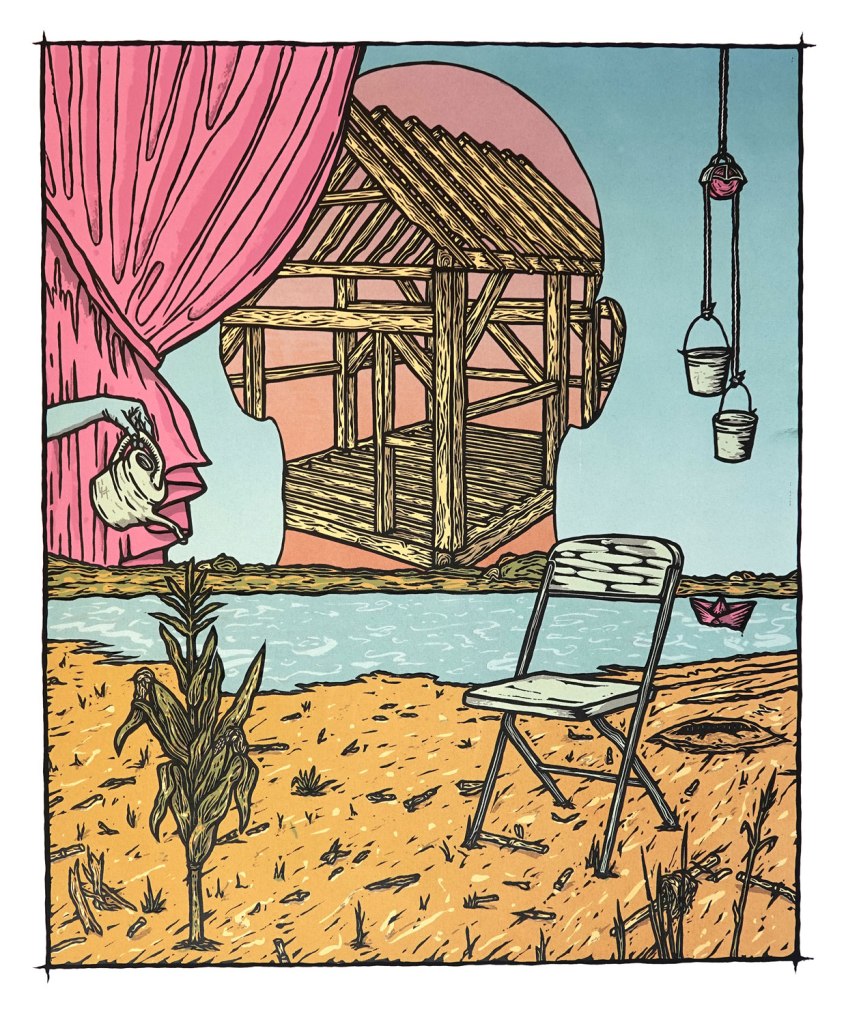
Relief and Serigraph
16”x20”
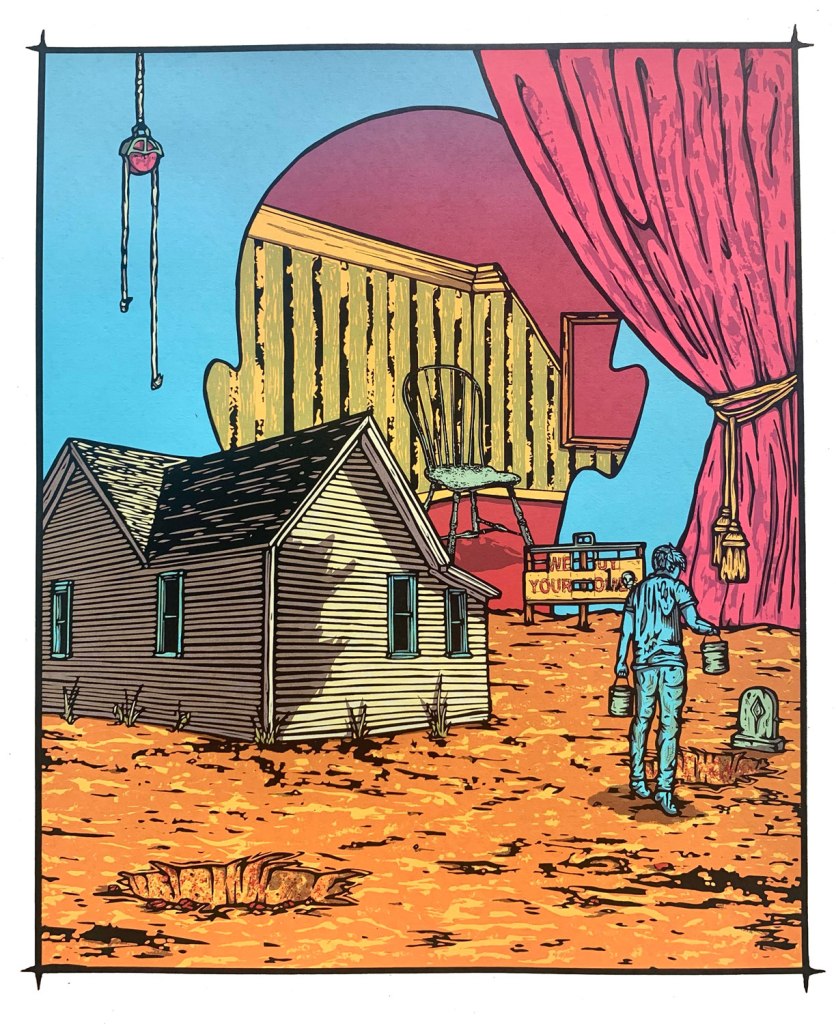
Relief and Serigraph
16”x20”
How do comics inspire or inform the work you make?
The way panels are utilized and frames interact within a single sheet of paper is so intriguing and complex. Stories and single moments can be paired and seen as a whole. A reader knows they have to read this frame to get to the next, but the experience of seeing the next image coming and/or what has happened just moments before holds a critical spot in my brain.
As I’ve been realizing and exploring more of who I am, what I feel to be true within my own identity, the use of fragments of time become more and more useful. I want to squish panels and different moments together and make the image feel overwhelmed, feel the weight of kinship, gender roles, and home. That’s always been the way my brain has worked, wanting all the things to be visible at once, like an exploded diagram of a motor.
I draw a lot of inspiration from Dave Sim and Gerhard. I really love how they break down what we might consider a panel or splash page, some of those pages are so fluid! I also enjoy the non-linear storytelling that happens in a lot of graphic novels, the one that comes to mind specifically is IT WILL ALL HURT by Farel Dalrymple. There are so many ways to visdually express time and emotion. I guess that’s sort of how I think about my work, like a bunch of splash pages or de-tangled panels in a larger story.
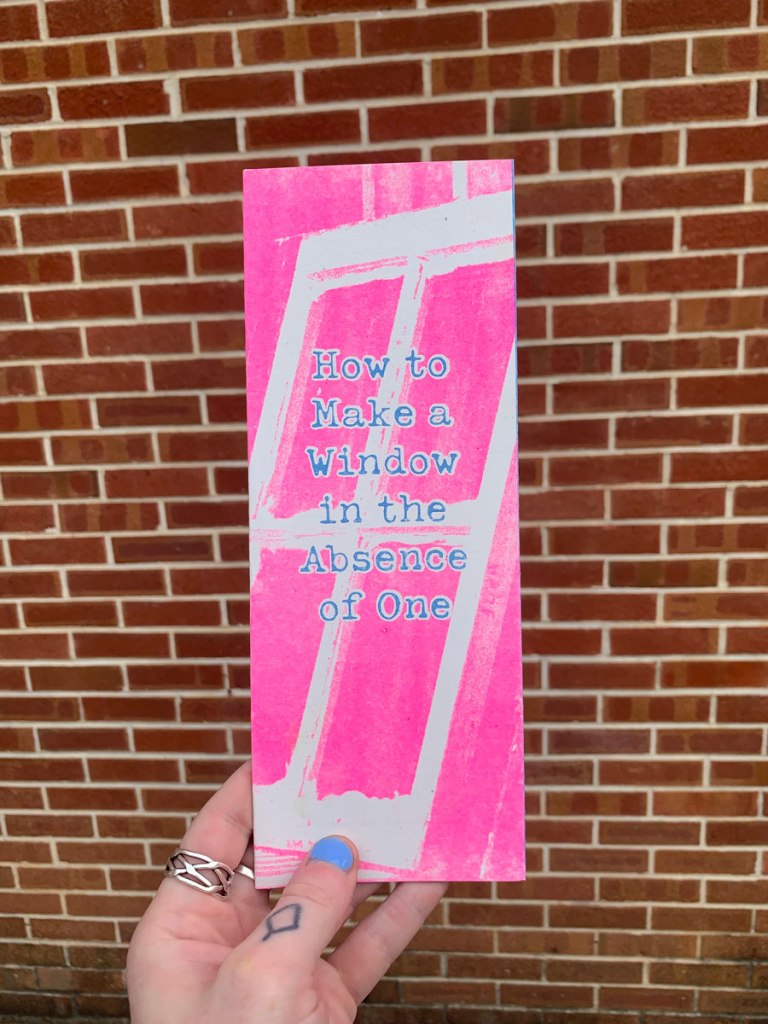
Risograph Instruction Manual (Closed Gate Fold)
4”x10”
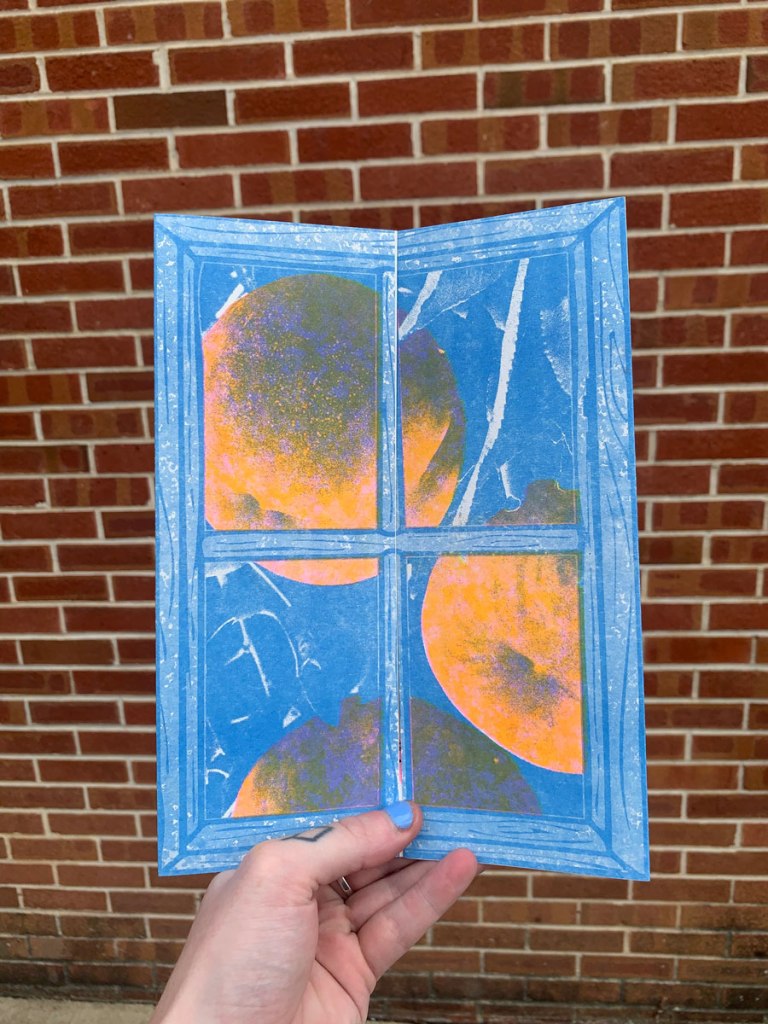
Risograph Instruction Manual (Closed Gate Fold)
4”x10”
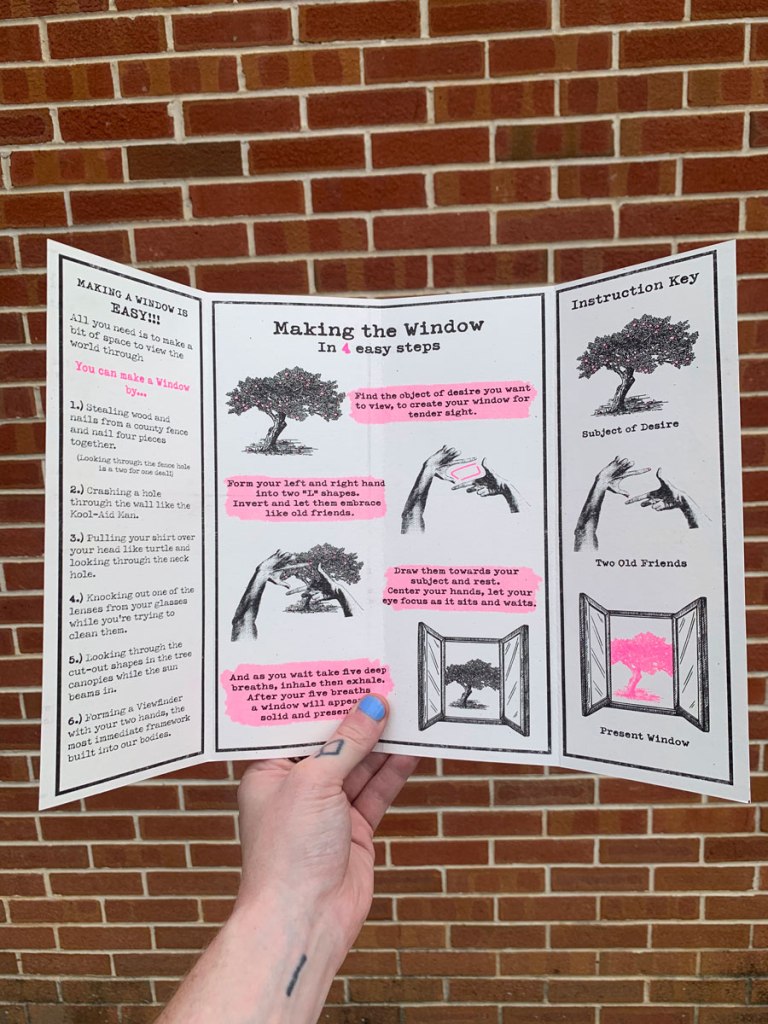
Risograph Instruction Manual (Closed Gate Fold)
4”x10”
How long have you been making work that references comics?
I started to investigate how comics could find their way into the skeleton of my work in the last five years. I guess it’s always been present, I’ve always thought about how to make landscapes and scenes feel like they’re part of a larger narrative, like if I stacked all my prints side by side would they tell a whole story like a comic book. Comics over these past few years have been such a breath of fresh air; especially when I think about how frustrated I was trying to make sense of all these spaces and moments in time I wanted to reference. I’ve always gravitated towards a solid black line, halftones, and color, but it hasn’t been until recently that I’ve really been exploring grids of imagery that directly speak to a comic aesthetic.
At the end of graduate school, I think something finally clicked and my brain allowed me to stop trying so hard to tell a single story in a single image. Maybe finding the time to read more comics post grad school helped. I became more aware of what I liked in the media I was consuming. Reading more comics and thinking in comics logic became a way to separate the complicated feelings I have about the relationships in my work while also keeping true to the continuity of a story. I truly appreciate comics for that, for making complex feelings more tangible and digestible.
These ideas also inspire my print class and workshop curriculum. I want students to know the mediums of print, comics, and zines can help them feel visible and their voices heard. We can build community and share thoughts, visions, experiences through print and comics. Teaching about comics this last year has also made me double down on comic references within my work.
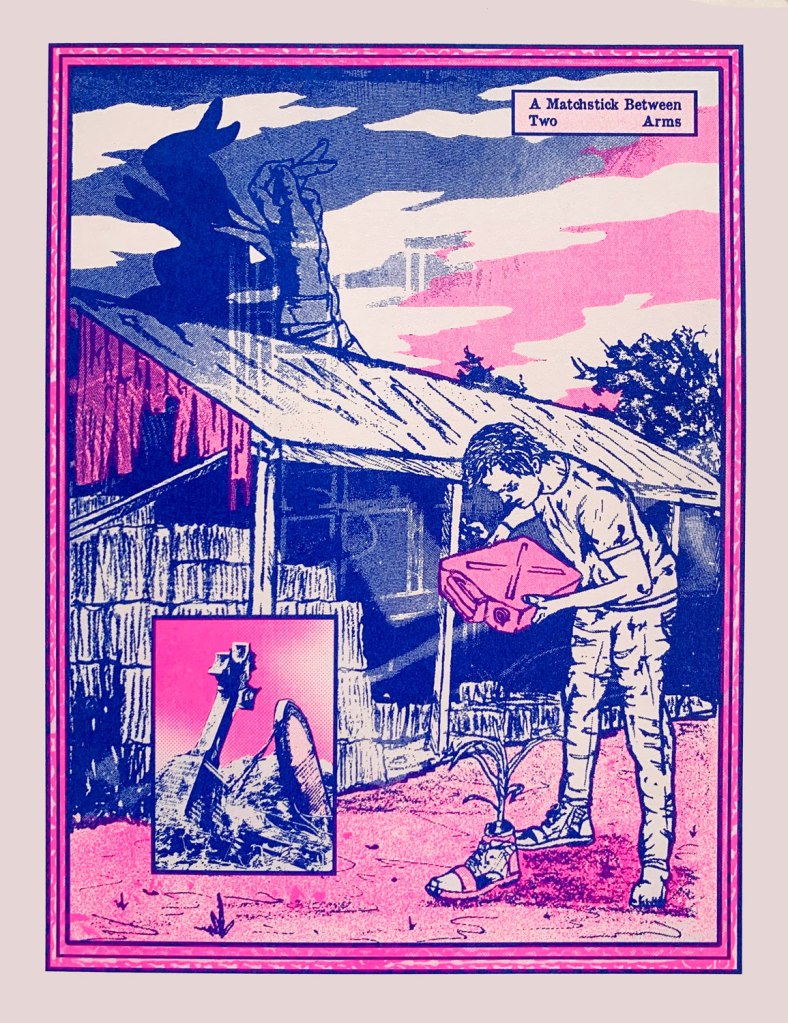
Risograph
8.5”x11”

Risograph
8.5”x11”
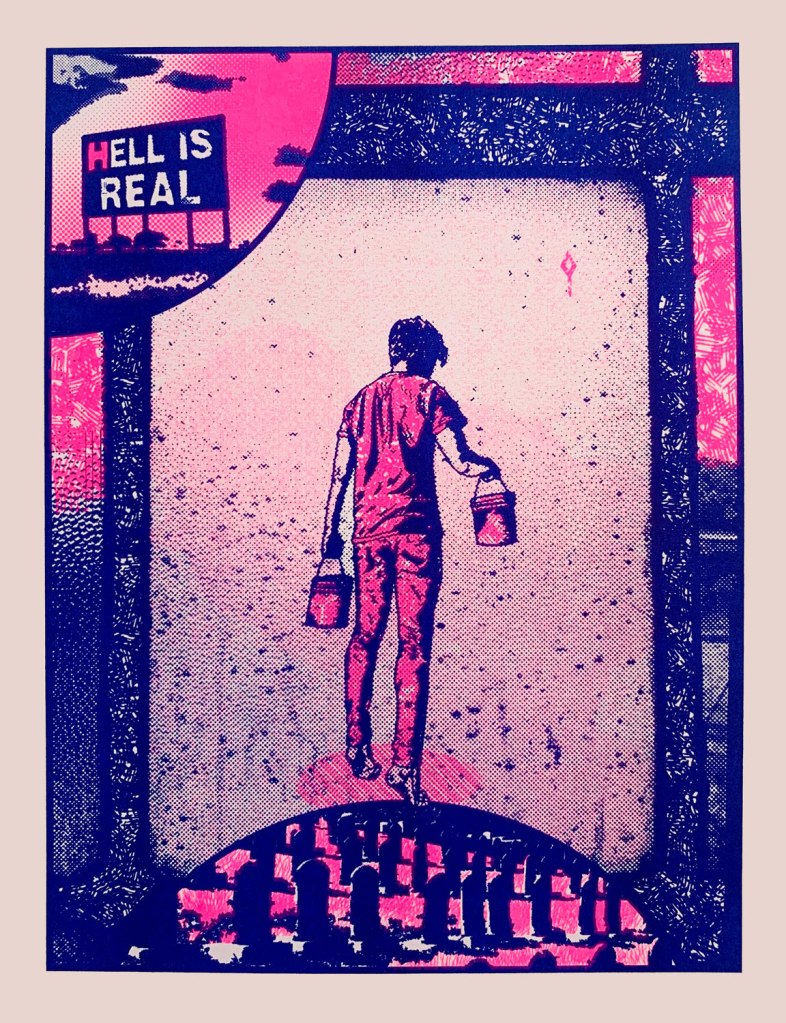
Risograph
8.5”x11”
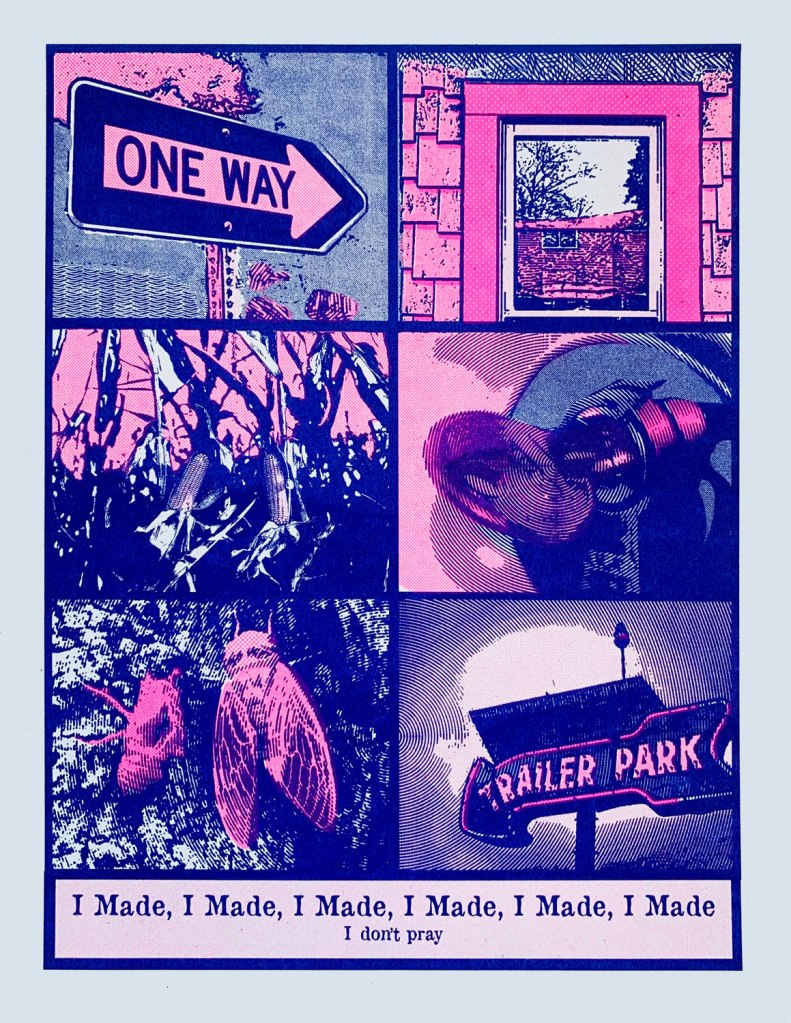
Risograph
8.5”x11”
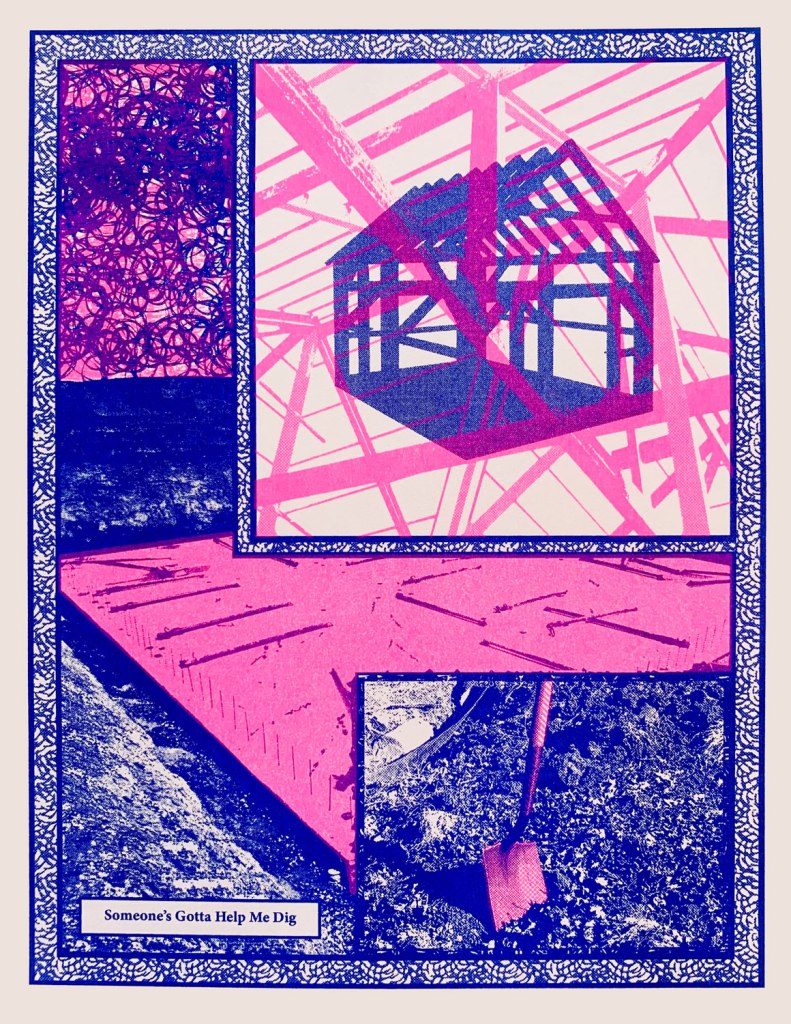
Risograph
8.5”x11”
BONUS QUESTION: Why do comics matter?
They matter because you matter. Like any form of art, what you make has a part of you in it, it has your soul, your vision, your voice, your opinion. Comics matter in the same way that we listen when someone builds up the courage to speak their mind or share something personal. It’s hard to make art, and it’s even harder to tell a complex story that is often rooted in personal experience. Comics are the vehicle for those types of discoveries and acts of sharing so we should take the time to listen. Go read a self published comic and learn about your neighbor.
 Not Approved by the Comics Code Authority...