Edie Overturf lives and works in Portland, Oregon and teaches a class called Visual Storytelling at Mt. Hood Community College that focuses on comics and zines.
Edie’s print-based work takes the forms of traditional prints, book arts, zines and sculptural work. The relationship of text and image are an integral part of her creative practice. Some of Edie’s work focuses on sociopolitical issues and some work tends to be more personal in nature, but central themes concerning shared experiences such as anxiety, burnout, and imposter syndrome can be found throughout.
The best place to see examples of more of Edie’s work is at edieoverturf.com and to see work in progress and process content go to @eoverturf.

Linocut, woodcut, and letterpress
12″x12″ open
Linocut, woodcut, and letterpress
12″x12″ open
Linocut, woodcut, and letterpress
12″x12″ open
Did you grow up reading comics, and did you have any moments in your life when you stopped reading comics??
I did read comics growing up, but mostly because of my friends. I didn’t really connect with comics like the Ninja Turtles, Batman, or DC comics. I enjoyed them but they weren’t something I sought out. It wasn’t until I was in high school that my brother-in-law gave me a copy of the Sandman series. I was attracted to the complexity of the characters, the artwork, and the world building.
I did pause reading comics when I was in college. I told myself it was because I had to read for school, but I still found time to read a lot of science-fiction. I picked comics back up when I moved to Minneapolis. I started teaching at the University of Minnesota, and had a strong friendship with Jenny Schmid (fellow printmaker and comic lover). My time working with Jenny gave me so many gifts, but one of those was seeing how honestly and unapologetically Jenny talked about her love of comics, even with graduate students. That was my first experience knowing a person that was very successful in academia, and in an art career, that was also a strong advocate for comics as an art form.

Linocut and screen print
22″X 27″
Linocut and screen print
22″X 28″
Have you ever felt embarrassed or ashamed about reading comics?
When I was in college I had a sense of shame, and would never have dreamt of directly referencing or finding inspiration in comics, or maybe just not admitting it in a public setting. The BFA and MFA programs I was in, there was a model for what was considered a “serious” format for our ideas. It wasn’t until I got older and felt more confident in what I wanted my creative practice to look like that I embraced my sincere interests. Then, when I began formally teaching comics and zines, I saw how STOKED my students were. They were generally excited that the art department was supporting their true interests, and encouraging students to explore all formats of creative work. In a way, it feels like I am giving them something that I did not get, and by proxy, giving that back to myself.

Reduction lino
15″x20″
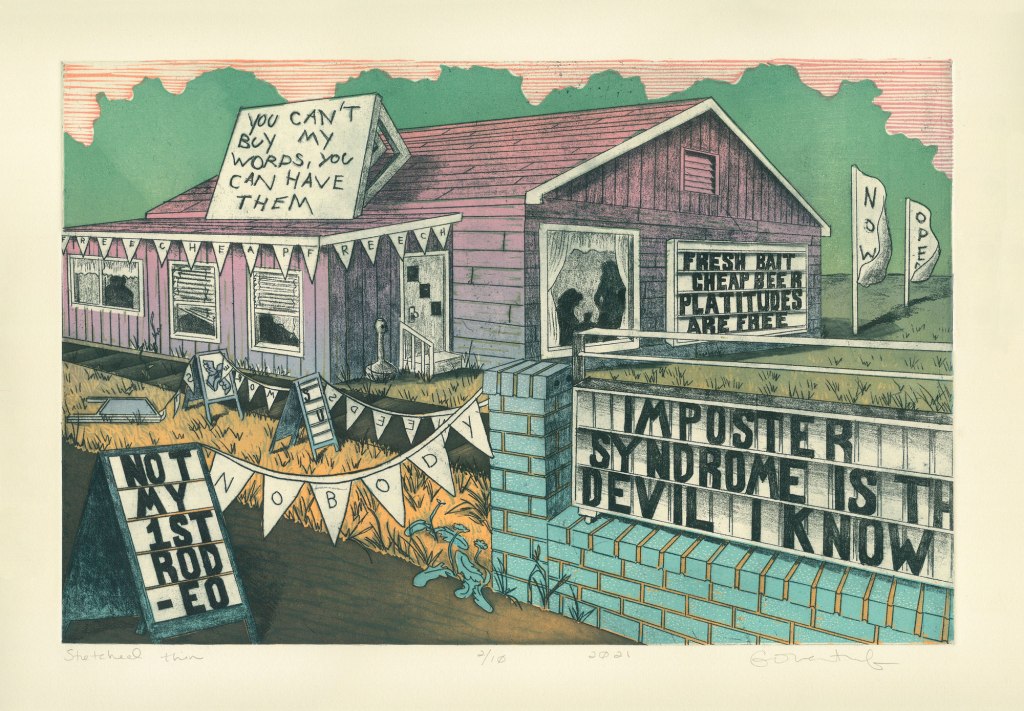
Etching and two layer woodcut
12″X 18″
Do you have a favorite comic shop that you visit? Where is it? What makes it so great?
I really love Floating World Comics here in Portland. I love that they have comic books, contemporary graphic novels, vintage items, AND feature local artists. They have a great zines section too.
I also really enjoy going to zine symposiums which typically have a lot of comic artists making their work in a zine format.
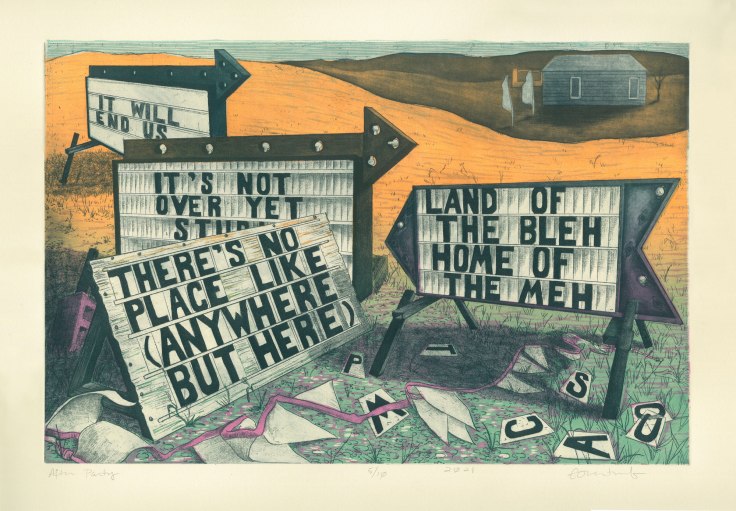
Etching and two layer woodcut
12″X 18″
How do comics inspire or inform the work you make?
I am inspired by how comic artists have to consider their panel shapes, sizes, pacing, visual hierarchy AND the text placement.
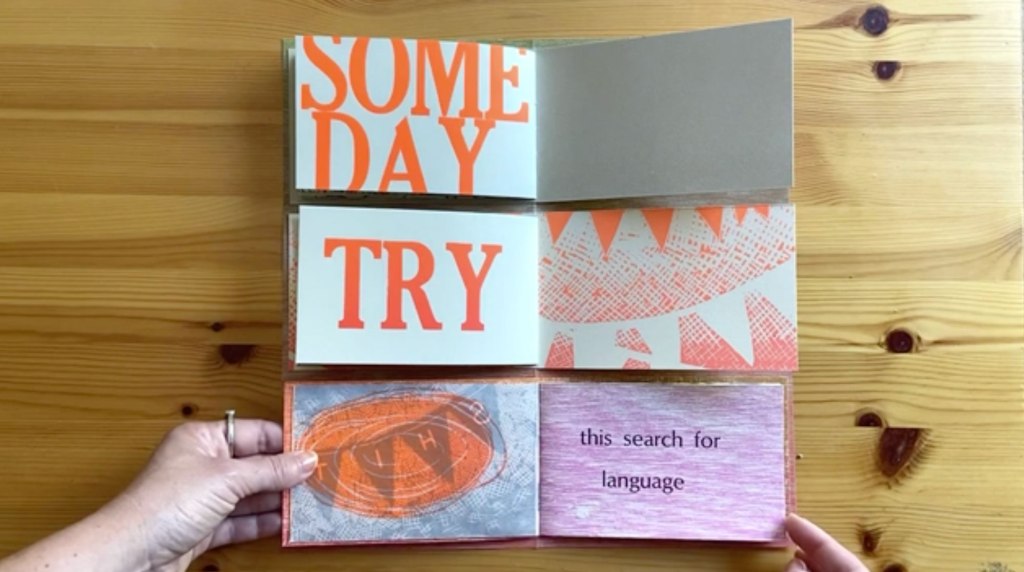
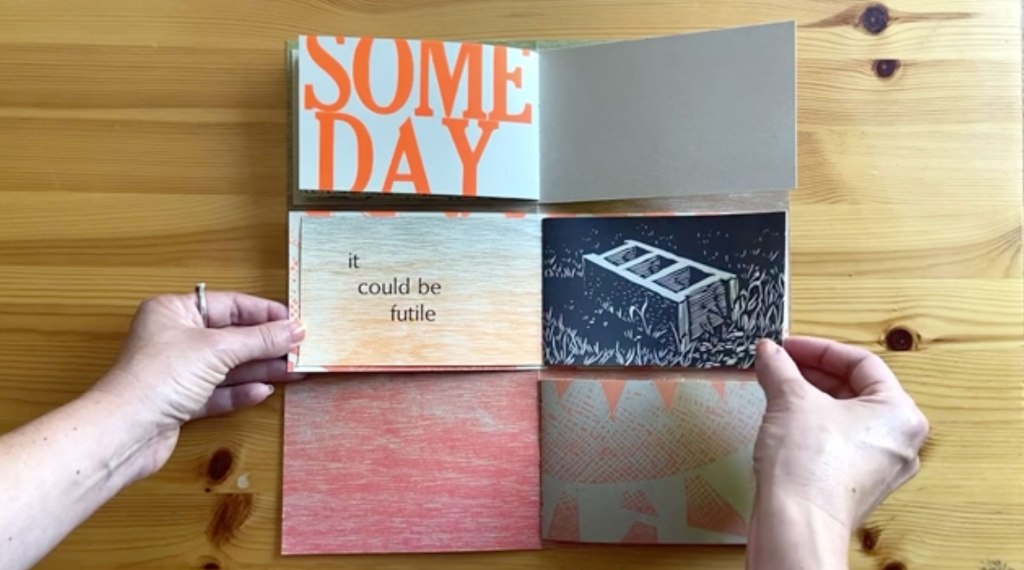
So for me, I am inspired by the versatility of the format of the comic as a narrative art form. Comics allow for the interplay of the “show” (imagery) and “tell” (narrator/ dialogue) that create meaning. The choices that comic artists make in voice, pacing, and tone are rooted in creative writing; but the visual style, image pacing (moment-to-moment or scene-to-scene), story boarding, and character design are rooted in visual aesthetics. There are so many elements to consider. It’s a dance between the image and the word. I think about this a lot when I am making artists books or zines. The relationship of one page to the next, whether it’s a spread or a page-turn action between content, the amount of information on a page are all in consideration with communication of the content.
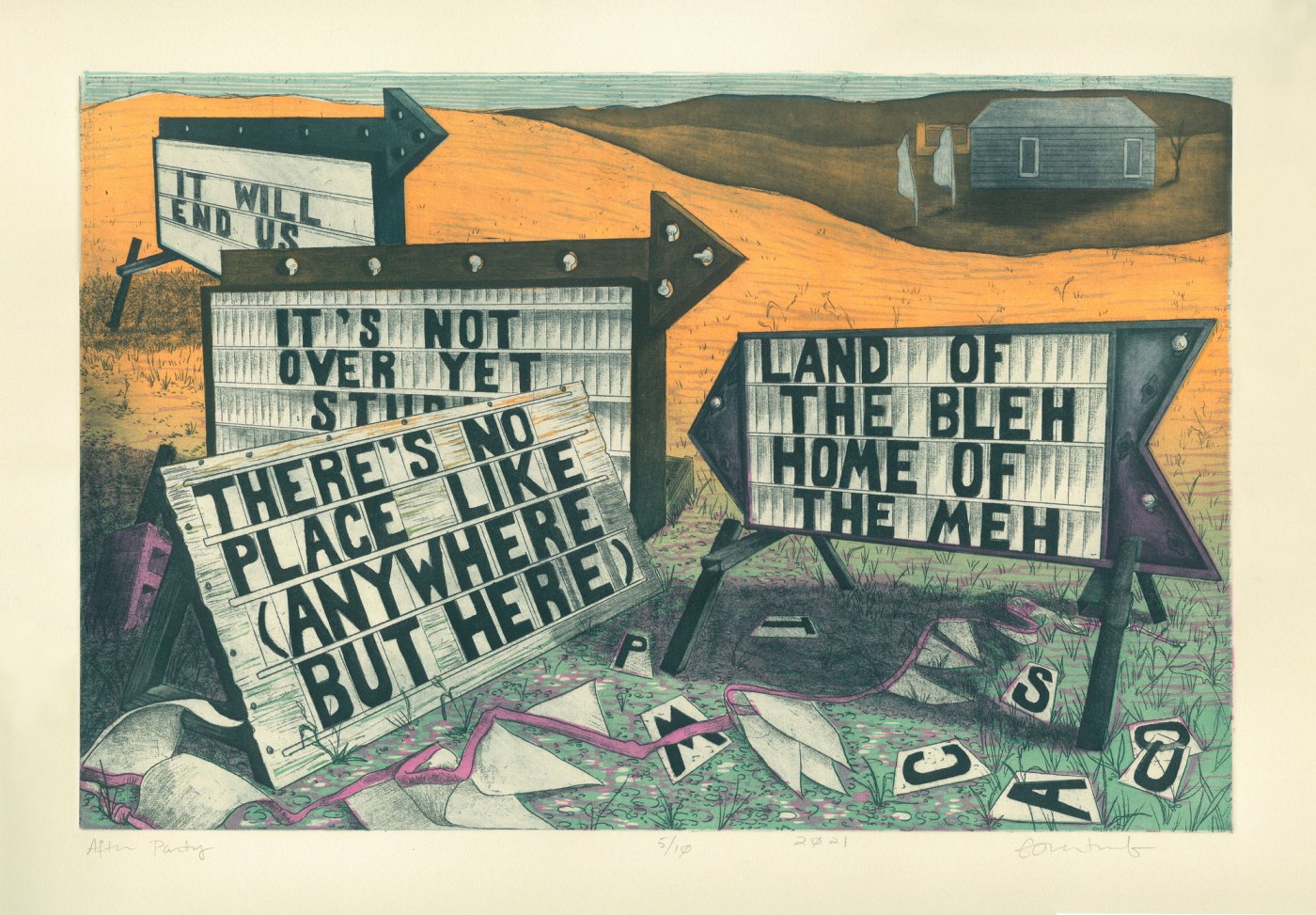
When making singular images with many points of text, such as “After Party” where there are many hand-made signs in one yard, I am considering the form of the signs, the background, and the content in the signs. I am considering the relationship of text to text and their placement within the hierarchy of the composition. With only an image, there are ways to lead the viewer to your intentions, but words tend to have more concrete meaning. When they are blended, I can skew the meaning.
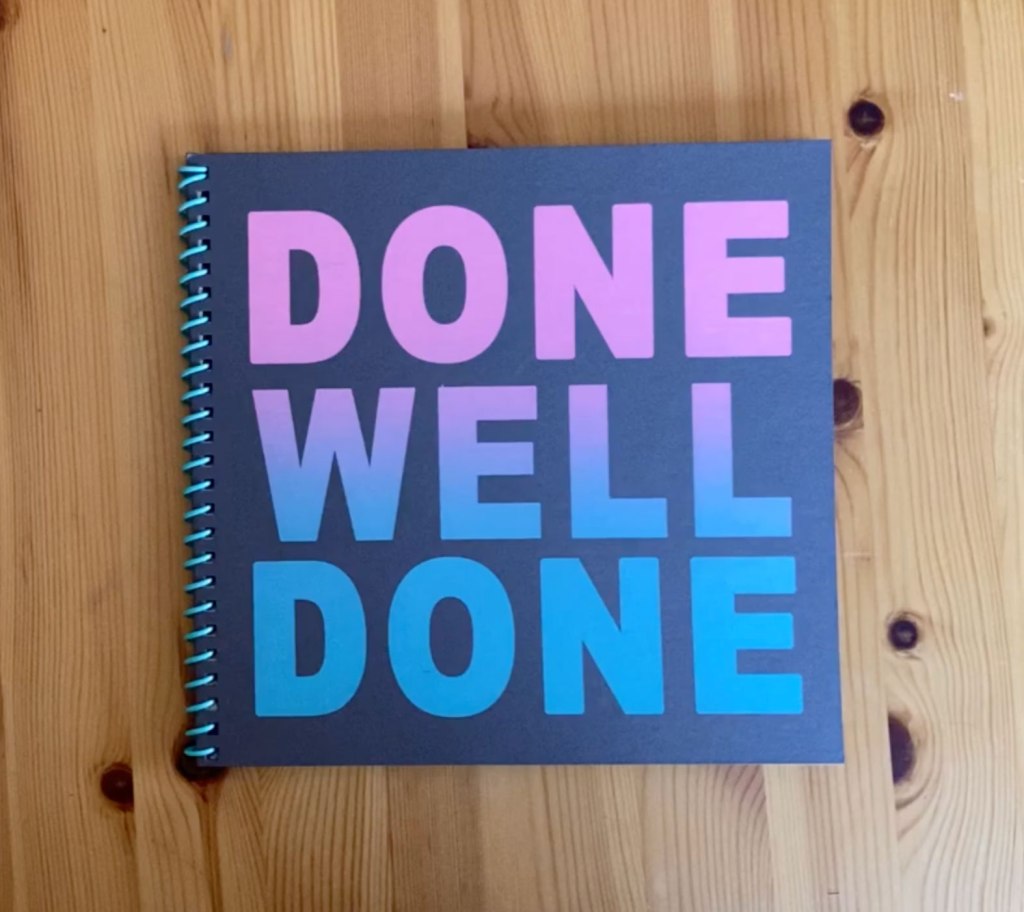
Screen print
10″x20″ open
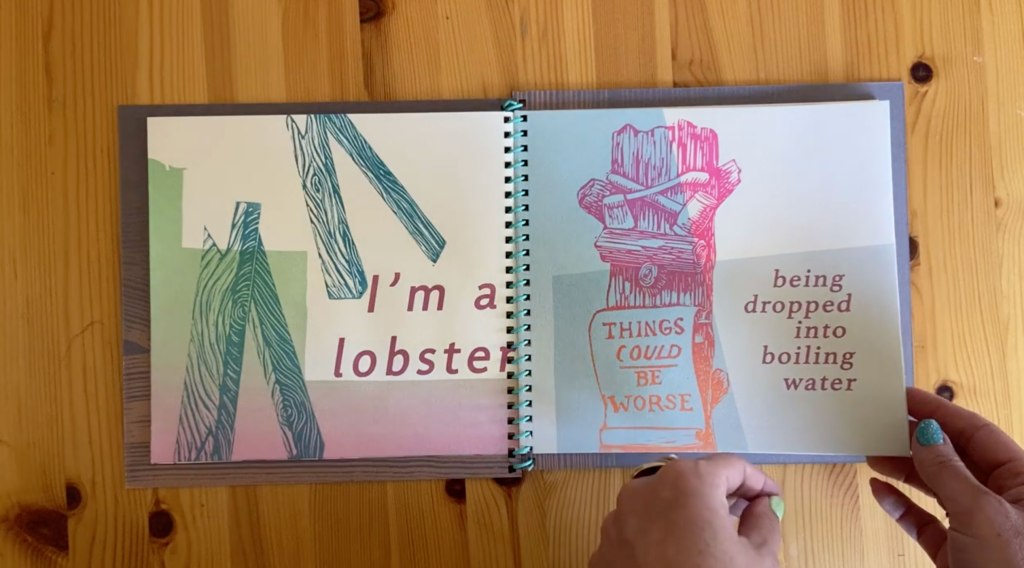
Screen print
10″x20″ open
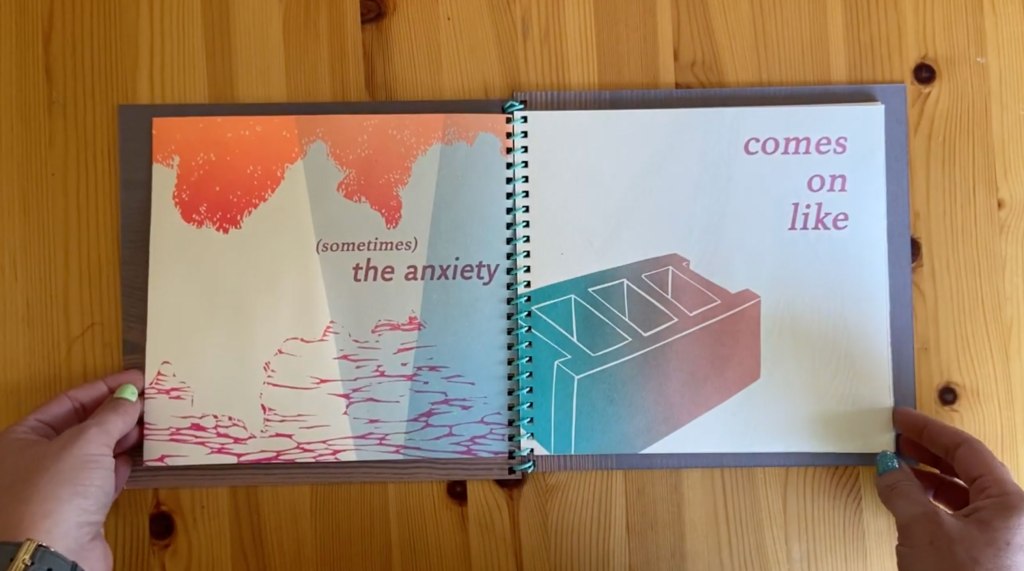
Screen print
10″x20″ open
How long have you been making work that references comics?
For a majority of my art career, my work often focused on narrative and storytelling. Around 2016, after working with my long-time collaborator, Nick Satinover, I started to incorporate text into my work. Through collaboration, I began to feel more confident in how I could marry image and text without it feeling redundant or forced. It was about that time that I was teaching a comics and zines course at University of Minnesota, and feeling inspired by the wealth of comic materials I was researching for course content. Although I have only done one very short comic, and made comics for class demos, this research into comics brought about a new way of looking at the way book forms and text/image relationships can be used in my work.

Linocut and screen print
15″X 20″

Linocut and screen print
18″X 24″
Have you ever been afraid or worried about making artwork that references comics?
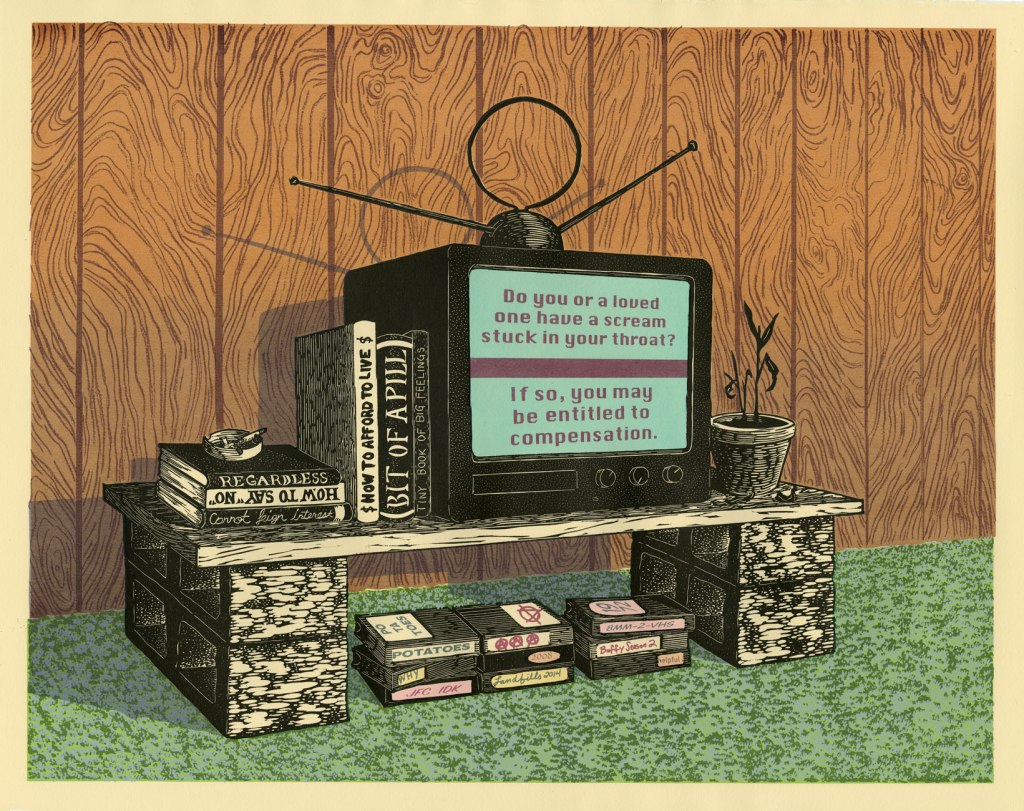
The ways that comics inspire me show up in my use of text, it’s placement, and relationship to image. Philosophically, I am inspired by how comics can deliver content and ideas in a subversive way. Throughout its history, comics have been able to disarm a reader and perhaps connect them with uncomfortable ideas through comfort, nostalgia, or surprise. I use a similar approach in the way that I use color and humor. Though I do not have any traditional comic panels or characters, I consider the format of the book and the myriad approaches to that format to be really helpful in connecting with my viewers.
 Not Approved by the Comics Code Authority...