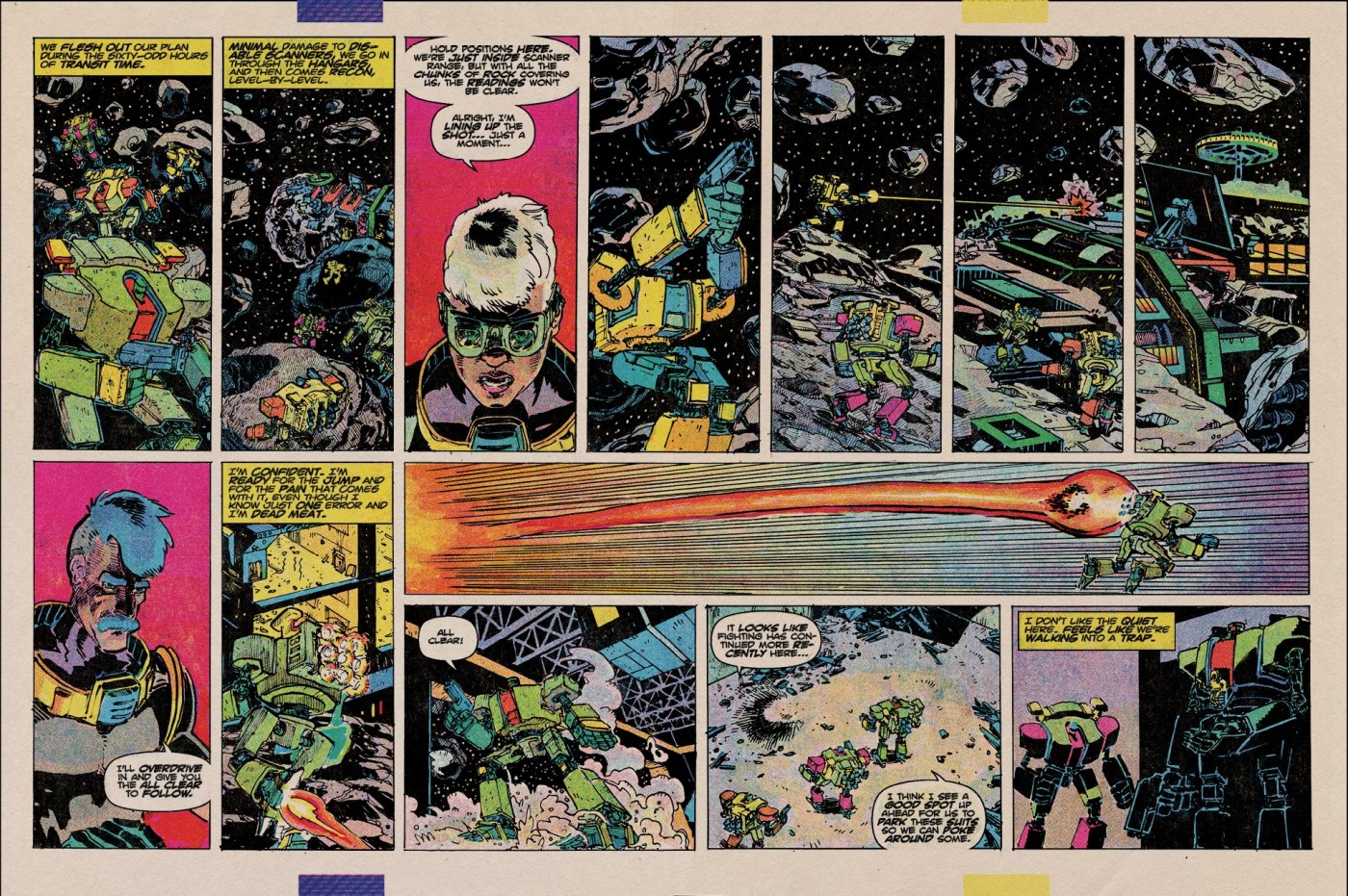
Raphael Cornford, “Raph” in person, and “R. Christopher Cornford” in print, lives and works in Bloomington, Indiana. Raph stays very busy writing and illustrating comics, fantasy and science fiction stories, role playing games, album covers, and other freelance professional gigs. Raph also designs and publishes books (sometimes on the history of comics), and has curated contemporary art shows in the U.S. and Canada.
Raph occasionally lectures at Indiana University, Ivy Tech Community College, and remotely at UC Santa Cruz. In addition to comics and illustration, Raph can be found teaching groups of undergraduates how to look at conceptual art.
You can find Raph on Instagram @raphmakesartithink, use the hashtag #thrillingsuspensefantasy to see his main project, a pulp and comics magazine that Raph describes as: “if Weird Tales and Heavy Metal got into a knife fight on the moon.” Raph’s work can also be found on the web at: http://raphaelcornford.com.
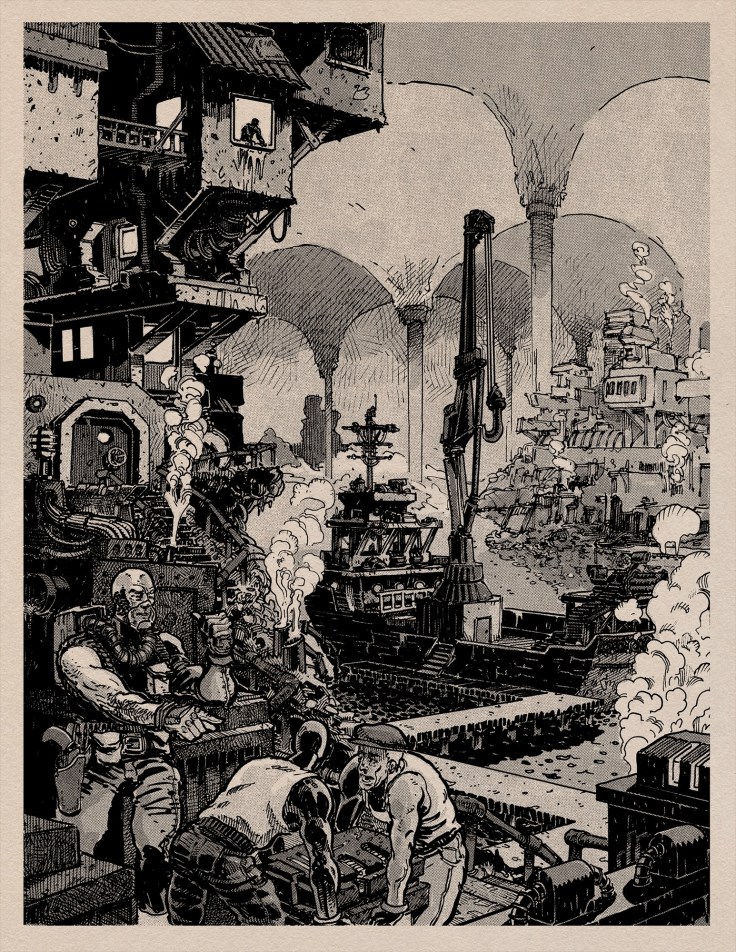
Ink and white gouache on Bristol with digital zip-a-tone, 10.25” x 13.25”
Did you grow up reading comics, and did you have any moments in your life when you stopped reading comics??
Some of my earliest memories are of looking at comics I could not read. My folks obtained a stack of Curt Swan Superman books for me to color on right around the time of the theatrical re-release of the Max Fleischer Superman cartoons from the 1940s. I was hooked! Batman dovetailed with Batman: The Animated Series, as did X-men with its attendant cartoons; a lifelong fan was forged. 1990’s arcade games, Sega Genesis, and Super Nintendo displayed beautiful sprite-based graphics that further reinforced my love of comics and hand drawn animation. Capcom’s Marvel game license joined Street Fighter and X-men, and then eventually the broader Capcom and Marvel rosters in a foundational series of fighting games that I absolutely worshiped.
As I got a little older, hip-hop culture in my east Oakland surroundings embraced fighting games, anime, and comics. A particular synergy between Lone Wolf and Cub and Wu Tang Clan, incidentally featuring Frank Miller cover art, transitioned me out of childhood fandom and into the world of teenage fandom.
During the end of high school and beginning of my undergraduate years, call it 2006-2009, I didn’t read as many comics. I think that is the only significant break or pause in my comics readership. There’s always something going on, even if I’m not reading at a rapid pace at any given time.
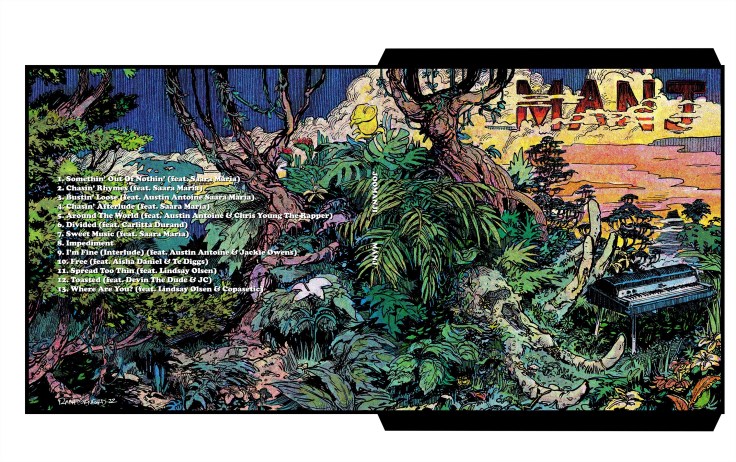
Ink and white gouache on Bristol with digital color, 24” x 12”
Have you ever felt embarrassed or ashamed about reading comics?
Definitely! In particular, I remember other kids loving superheroes up into the middle of grade school, but dropping away as sports and video games took over. In particular, I remember wanting to play make-believe X-men with friends and being disappointed as no one else wanted to play, even the kids who had played with me previously. Luckily, this attitude seemed to be bounded by the end of middle school, and through the remainder of my education, comics were not socially frowned upon. Comics even became cool for periods!
While comics were not something any art teacher of mine properly knew how to support until graduate school, most were encouraging enough, despite their lack of familiarity with the medium and industry. Yes, there were discouraging comments made by some teachers and professors, but this is an experience most people have had in one way or another, and consequently neither exceptional nor remarkable.
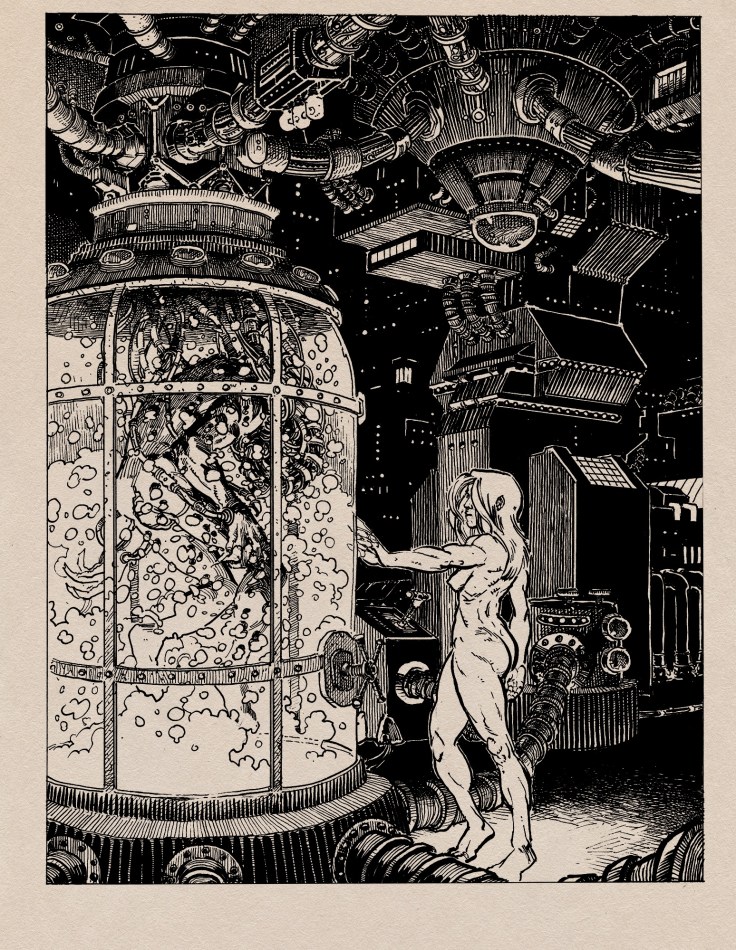
Ink and white gouache on Bristol, 10.25” x 13.25”, printed at 7.75” x 10.5”
Do you have a favorite comic shop that you visit? Where is it? What makes it so great?
Here in Bloomington, there are two places I frequent. We have a marvelous comic shop called Vintage Phoenix with a really nice selection of back issues at below-market prices. They also stock new books and can pull subscriptions if one would like to follow a book as it is published. The second place is the Monroe County Public Library, where incredible deals can be found at the Friends of the Library bookstore. Comics are not the focus, but books are priced for non-comics fans to purchase for literal pennies on the dollar. I’ve found many treasures there!
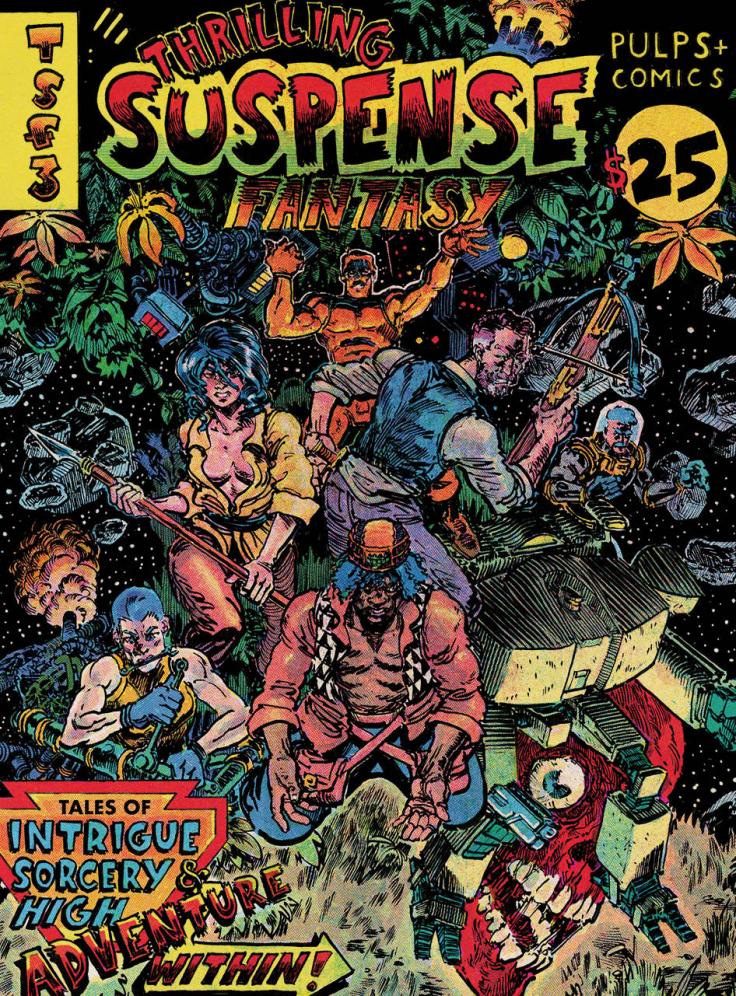
Ink and white gouache on Bristol with digital color, drawn at 10.25” x 13.25”, printed at 7.75” x 10.5”
Is there an important comic shop or friend who opened your eyes to comics?
Joe Lupo (albeit primarily from afar) and Malcolm Mobutu Smith (here at Indiana University) are and were important because both professors take comics seriously. While I would like to say that I did not need validation from external sources to pursue what I love, that would not entirely be true. By taking comics seriously, both artists gave me permission to do the same, after my own fashion of course!
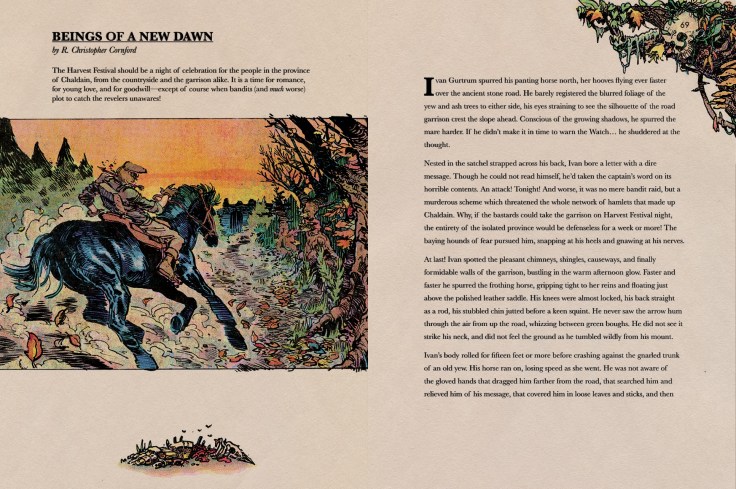
Ink and white gouache on Bristol, 10.25” x 13.25”, printed at 7.75” x 10.5”
How do comics inspire or inform the work you make?
In many ways, comics are the work that I make! Something important to me is understanding the visual logic of comics–the vital text for this is of course Scott McCloud’s “Understanding Comics: The Invisible Art.” In brief summary, comics are a developed art form composed of sequences of text and image juxtapositions. In these sequences of juxtapositions, we readers are tasked with filling in implied information and become accomplices in the act of creating meaning. Formal analysis of these processes deepens and enriches one’s appreciation of and creation of comics, and is a part how the creators working in the medium advance the developing history of the medium. I encourage comics readers to remember their favorite stories: if we are alike in how our memories function, you will recall sequences not only as they existed on the page, but as pieces of narrative more like you would see on film. This is the mental process through which McCloud names us readers as accomplices.
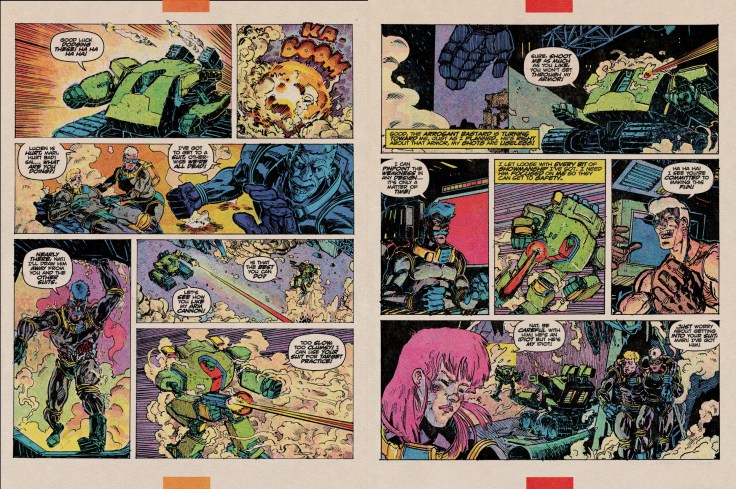
Ink and white gouache on Bristol, 21” x 13.25”, printed at 15.5” x 10.5”
Do you ever engage with the history of comics in your work? If so, how?
The history of comics is at the core of my work. Comics are a popular medium and reflect popular ideas that resonate with their intended audiences. From the mass appeal of the golden age of comics (1937-1962, roughly speaking), through the silver age, the bronze age, the copper age, and up until the present, there are different presumed consumer bases, cultural assumptions, distribution networks, creators, and other material considerations that fascinate me. These historical and material relationships are fertile ground for cultural commentary and interrogation of identification (with whom does one identify in a story and why) as well as sets of aesthetic conventions which load up on signifiers in an interesting way. Comics respond to the moment of their production, capturing the anxieties, hopes, fears, and morés of that particular time.
My current primary project, Thrilling Suspense Fantasy, engages with the golden age of comics and also heavily with the fantasy and science fiction revival of the late 70s and 80s seen in magazines like Heavy Metal. This era marked the late career stages of golden age artists like Wally Wood, Frank Frazetta, and Jack Kirby along with the first serious works from Frank Miller, Klaus Janson, Richard Corben, Moebius, Walt Simonson, Chris Claremont, and John Byrne–and all of these creators are vitally important to me.

Ink and white gouache on Bristol, 21” x 13.25”, printed at 15.5” x 10.5”
How long have you been making work that references comics?
Discounting a childhood spent making comics and a 200 page book made in middle and high school, I began to reference comics in my printmaking work as an undergraduate in 2010. I haven’t really stopped, although it might be more accurate to say that since 2016, my primary medium has been comics and illustration rather than fine art or printmaking apart from comics. I’m not a huge believer in those kinds of distinctions, perhaps to my own detriment.
Have you ever been afraid or worried about making artwork that references comics?
Genre work is frequently devalued in the current climate, as is illustration. Even proponents of comics will assume that there are hierarchies elevating autobiographical or biographical works above genre works like superheroes, crime comics, romance, fantasy, horror, etc. I find this attitude to be regrettable. While I was earning my MFA and in the first phases of my career search, I certainly worried about these matters. The transition to professional illustration has been liberating and has generally freed me from a great deal of stigma that I experienced in academia–not all of that can be traced directly to comics, but it can’t be entirely untangled from it either.
In privileging certain kinds of content (the autobiographical, or whatever one’s preferred subject might be), one neglects the formal aspects of both medium (sequenced juxtapositions of text and image) and the formal considerations of the component parts (individual drawings, pieces or writing, etc.)–and this is precisely where a great deal of success in comics as a medium can be found and understood. It is by stepping away from one’s preferences in subject matter and understanding the formal aspects that one can better appreciate exactly what the comic is and what its creators have accomplished specifically and within the field.
 Not Approved by the Comics Code Authority...