
John Peña is a Pittsburgh based multidisciplinary artist who makes drawing, sculpture, and public art.
Recent projects include racing with clouds, making a drawing about his life every day for the last fourteen years, and etching drawings into the Fern Hollow Bridge to document major water events in Pittsburgh over the last 400 million years. Once a year, John teaches a course called “Intermediate Studio: Graphic Novel” at Carnegie Mellon University’s School of Art.
You can find John on Instagram at @johnpenastudio and on the web at www.johnpena.net.

Graphite on Paper, 7” x 7”
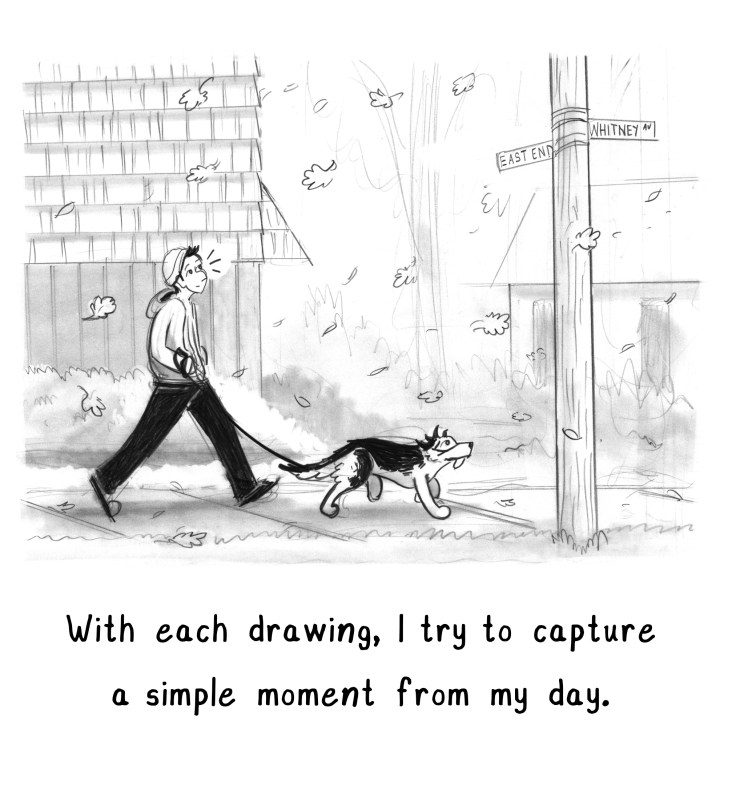
Graphite on Paper, 7” x 7”
Did you grow up reading comics?
As a kid, I primarily read The Far Side, Garfield, and comics in the Sunday paper. When I was ten years old, I discovered old E.C. comics like Tales from the Crypt and Vault of Horror and fell in love with them. I stopped reading comics from about age 12 to 22. (See Question #2)
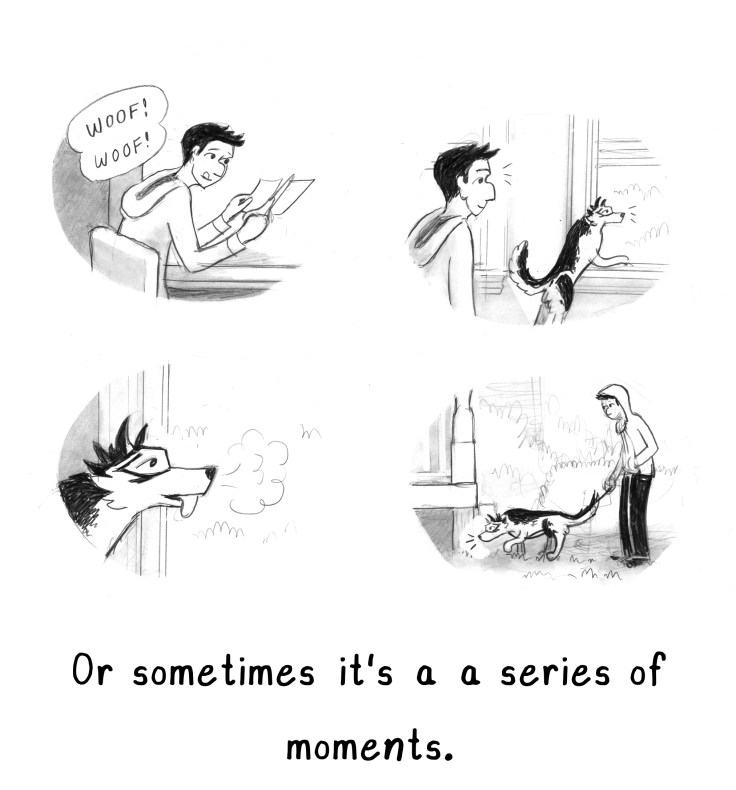
Graphite on Paper, 7” x 7”

Graphite on Paper, 7” x 7”
Have you ever felt embarrassed or ashamed about reading comics?
In high school, I struggled to read and felt insecure about reading comics since I could barely read the most basic expository text. My friends read superhero comics, but I was never a fan. There was also an implicit message in high school courses that the bulk of your reading should be text-based with very few images. This was, of course, part of a larger cultural trend that valued high art as being prose, poetry, or static images like classical painting (with a rare exception here and there). Comics, manga, and cartoons were perceived as childish, with the very rare exception of “Maus,” which most adults had not even read in 1998. It wasn’t until I started painting and drawing in college that I gained more self-confidence to explore content that truly fascinated me. It was around the age of 22 that I revisited EC Comics and started reading McCloud and Spiegelman.
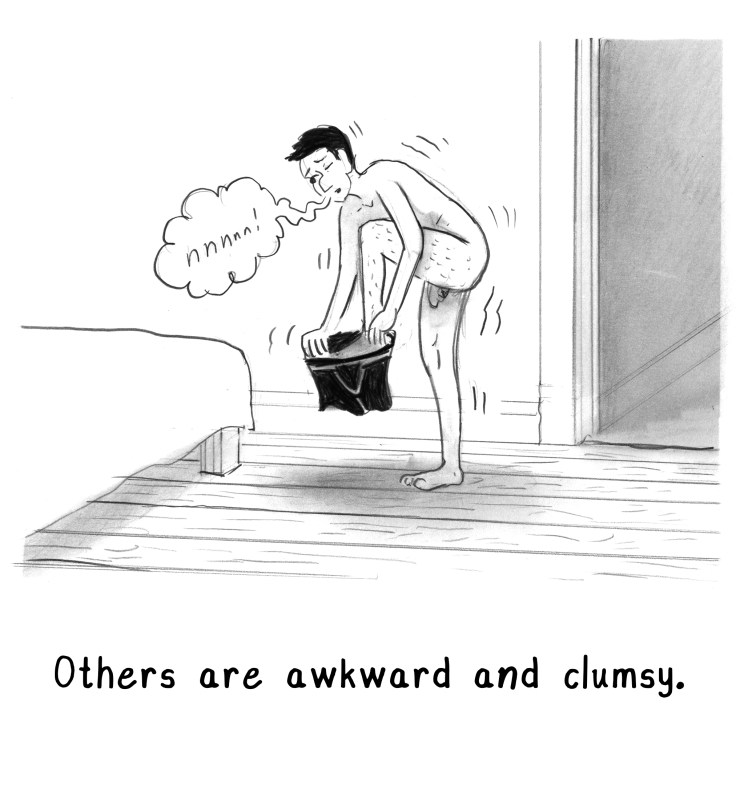
Graphite on Paper, 7” x 7”
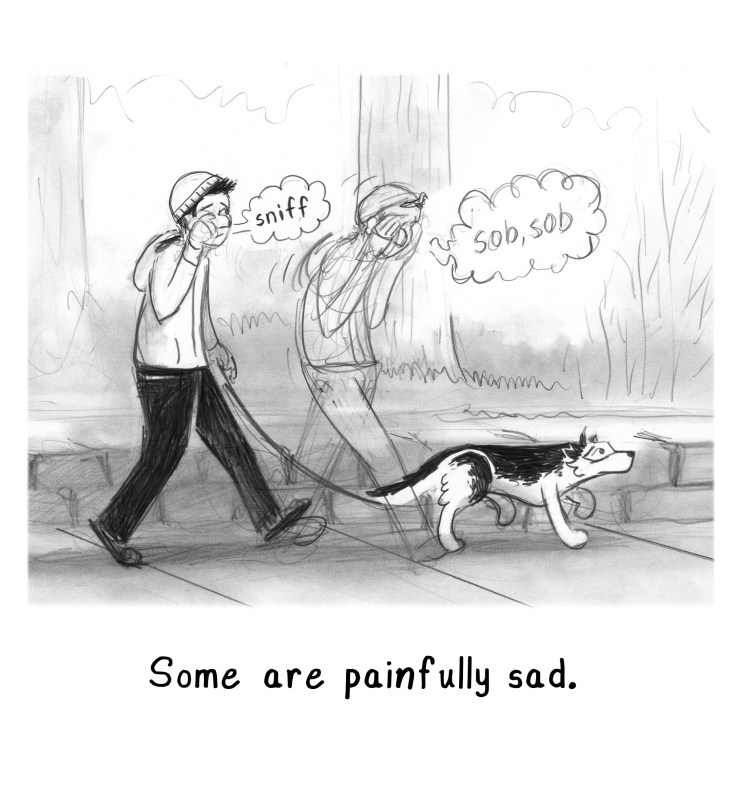
Graphite on Paper, 7” x 7”
Is there an important comic shop or friend who opened your eyes to comics?
In Pittsburgh, it would definitely be Copacetic Comics in Polish Hill. The owner, Bill Boichel, has been a staple of the comics scene both regionally and nationally. He is a wealth of knowledge and is full of warmth and genuine curiosity. When I started getting interested in comics again in my twenties, it was Powell’s City of Books in Portland, Oregon. I had a friend who took me there, and I remember being floored by their selection of comics.
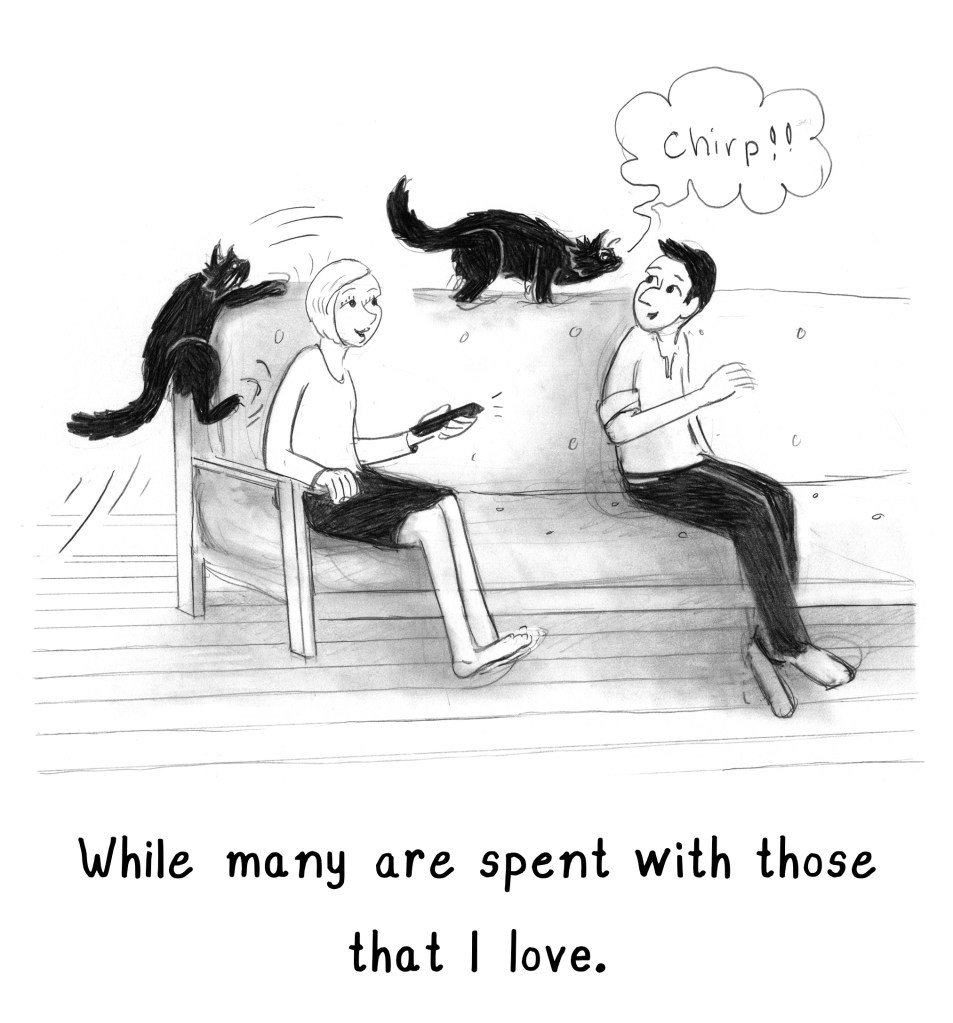
Graphite on Paper, 7” x 7”
How do comics inspire or inform the work you make?
I am inspired by the ease with which comics can be made. I only started making comics in my twenties because I thought I lacked the technical skills to make them. Once I discovered the world of indie comics and zines, I saw artists making incredible work with stick figures. That’s when I started to experiment with comics again.
I see the language of comics influencing me in a variety of ways. I frequently use the visual language of comics in my sculpture. In “Word Balloons (2014),” I created large speech bubbles out of plaster that, in order to be elevated to speaking height, had to be supported with structural lumber. I wanted to explore how the act of speech has the capacity to carry a significant intellectual and emotional weight. When manifest in the physical world, words can be so light and yet so heavy that they need a tremendous amount of invisible labor to remain functional in the world.
Other ways that comics inspire me are the spatial dynamics at play when images and text are placed in a sequence. In 2023, I created a work of art for the Fern Hollow Bridge in Pittsburgh, PA. As you walk along the sidewalk, there are sandblasted and stained etchings of water patterns with cursive text describing the body of water and time period. Some water events are recent, while others go back 400 million years. The movement along the bridge is much like the movement of the eye on the comics pages. You moved from image to image with HUGE leaps in time in between. Then, on the south side of the bridge, there are metal interpretive placards with text describing the histories of the water events with hand-drawn diagrams and images etched into stainless steel. Image and caption are an integral part of my work.
Lastly, every day for the last fourteen years, I’ve made a drawing about my day. This project is called “Daily Geology” because I’m interested in how slow and gradual actions accumulate over time. In this way, no one drawing that I make is more important than any of the others. It’s only when they are taken together as a whole that larger trends and shapes begin to emerge.
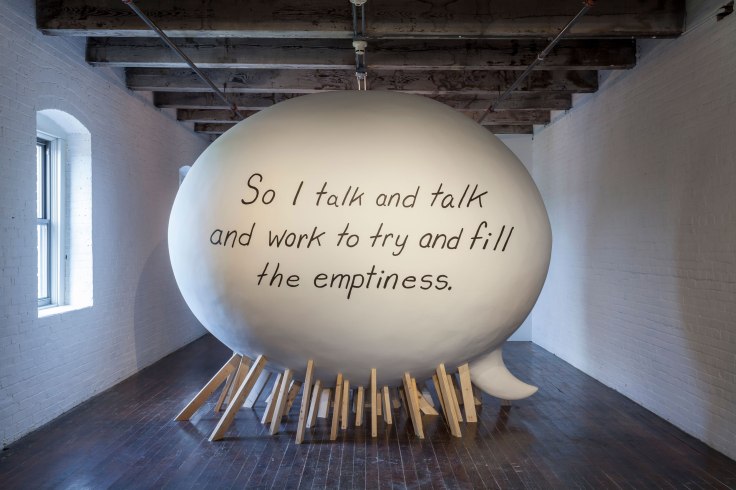
Plaster, Wood, and Paint, 16’ x 9’ x 7’
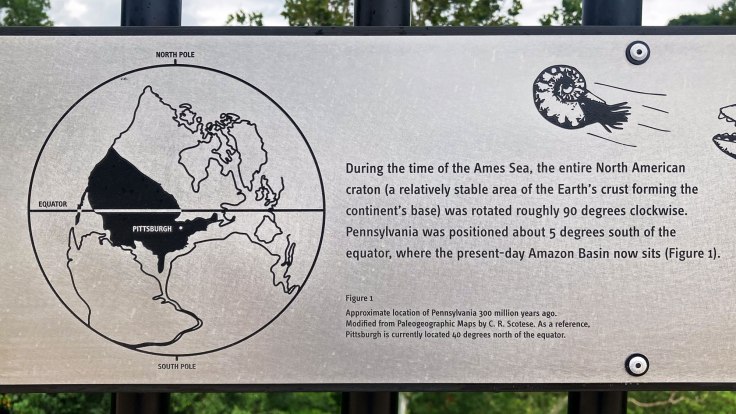
Medium: Sandblasted and Stained Concrete with
Stainless Steel Placards
Have you ever been afraid or worried about making artwork that references comics?
I think the only time I felt worried was when I was in an academic context. In some cases, it was my own insecurities and self-imposed limitations that were stopping me. I imagined that people I looked up to would disapprove if I used comics in my work. In these cases, I was clearly projecting. But then there were also times when professors would say outright that I needed to stop making cartoony imagery because it was lazy and cliche. I think those professors didn’t quite understand the formal advantages that comics has to offer in the realm of fine arts. More importantly, they didn’t see how deeply rooted comics are in human history. The impulse to draw silly pictures and put them in a sequence is almost a rite of passage for the human species.
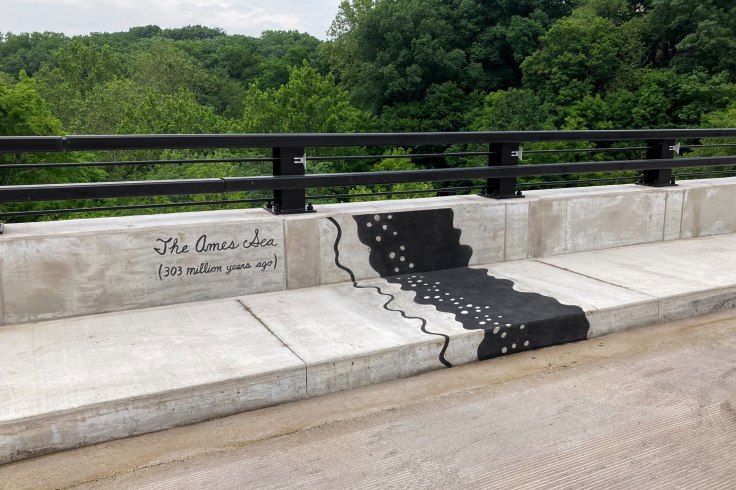
Medium: Sandblasted and Stained Concrete with Stainless Steel Placards, 8” x 56”
 Not Approved by the Comics Code Authority...