
Trishelle Jeffery makes autobiographical comics in Fresno, California.
Sometimes Trishelle’s comics are part of a longer narrative, like the book Best Breasts in the West, but often they are singular images that use the methods and visual language of comics. Trishelle primarily uses printmaking to create work and many of her comics are made to be printed matter first and foremost.
You can get Trishelle’s book Best Breasts in the West from Fieldmouse Press at :https://www.fieldmouse.press/shop/p/best-breasts-in-the-west
You can find Trishelle on Instagram at @trishellejeffery and on the web at trishellejeffery.com
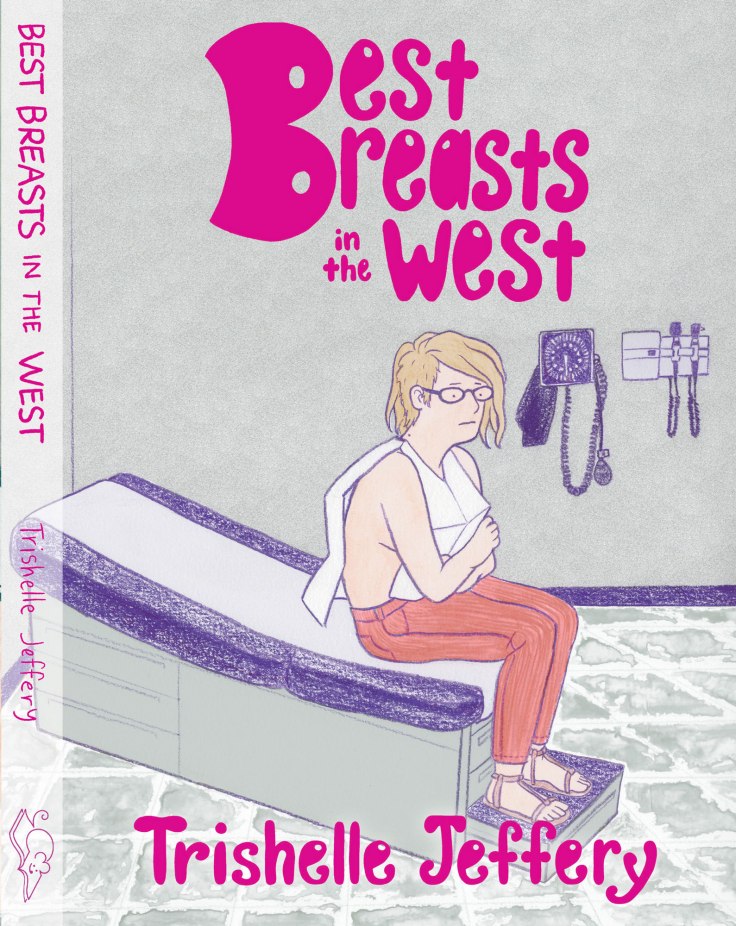
Fieldmouse Press, 2024
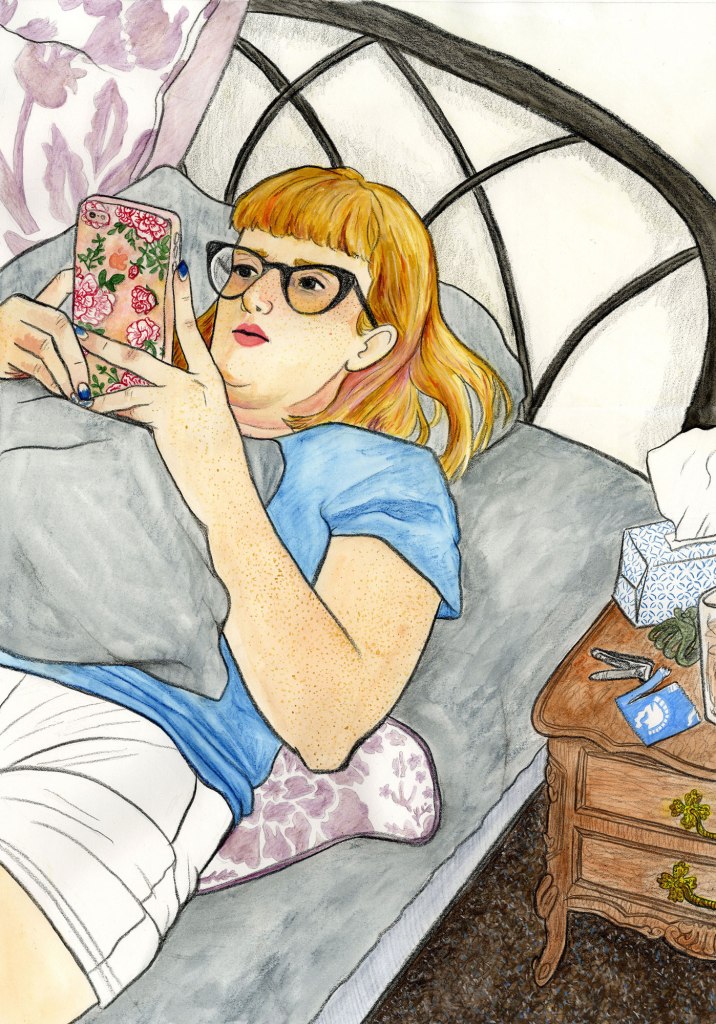
Watercolor and crayon, 13″x 19″
Did you grow up reading comics?
Yes, but not the way I think a lot of folks did.
My first comics were Garfield and Sailor Moon. I got every Garfield book from the bookmobile and my favorite cousin let me borrow Sailor Moon, but she only had the first book, so I had to watch the show to find out what happened; an impossible task with filler episodes and cable schedules. The tiny library on the Army base where I grew up had no comics and there was definitely no comic book store on base. There weren’t stores with any books at all, really. Maybe the gas station had a paperback or two?
I borrowed comics where I could from friends and bought things online. When I was in High School, before I got a debit card, I emailed people at SLG Publishing to see if I could buy some Jhonen Vasquez comics with a mailed money order. A friend had let me borrow Johnny the Homicidal Maniac and I was just beginning a deep lifelong obsession. Reading his books made me feel like I could make comics, not just read them (which I’m not sure is a compliment, but I say it with love). The first thing I ever bought online was his short series I Feel Sick, and I had to email the man in charge of the publishing company to get it.
After that I tried to research what the “best” comics were because my budget was very limited, and I had to order everything! I bought a few Alan Moore comics and reread Watchmen at least 50 times. I also got what I could from Barnes & Noble when we went into town. I was most interested in the art in the Manga books but I had to limit myself to shorter stories because I couldn’t afford a 50 volume series. By the time I went to college, I had a bursting desire to read more comics.
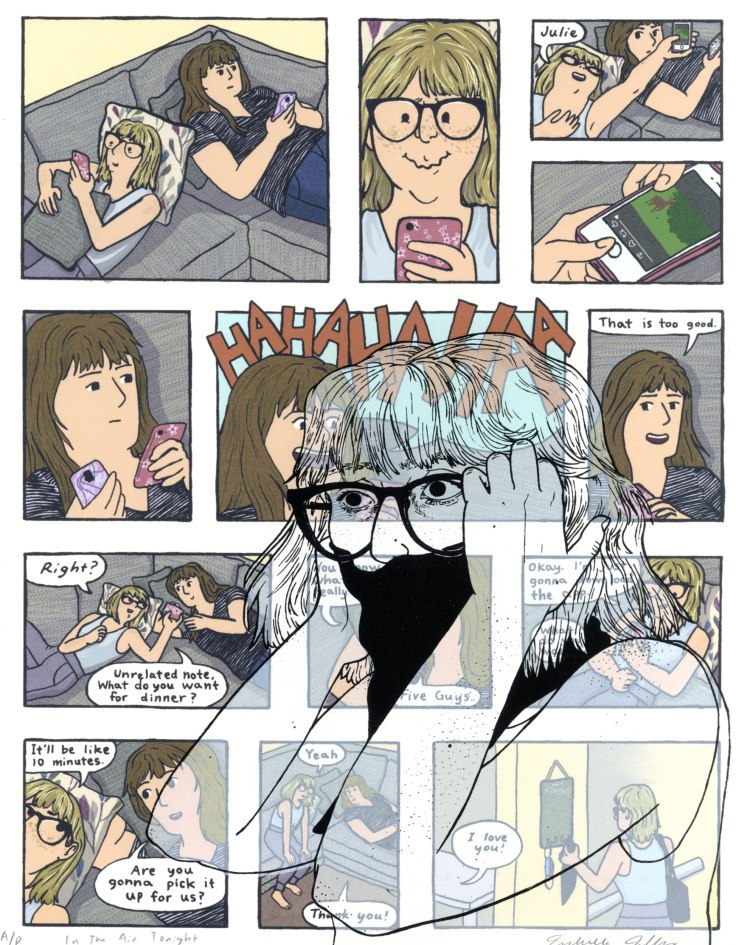
Inkjet and screenprint, 11″x14″

Screen print, 11″x14″
Have you ever felt embarrassed or ashamed about reading comics?
Not really. Comics are one of those things that when I am excited about them, I’ll make everyone around me aware of it. I’ll hold them open and be like, “Look at this!” while my mom or whoever quietly tries to change the subject.
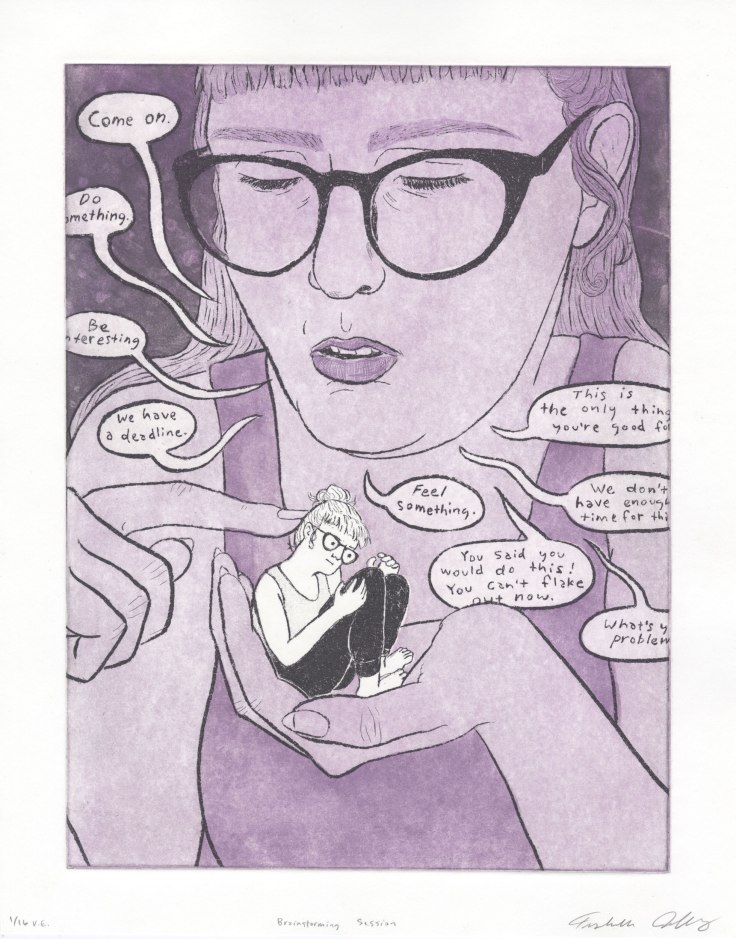
Etching, 11″x14″
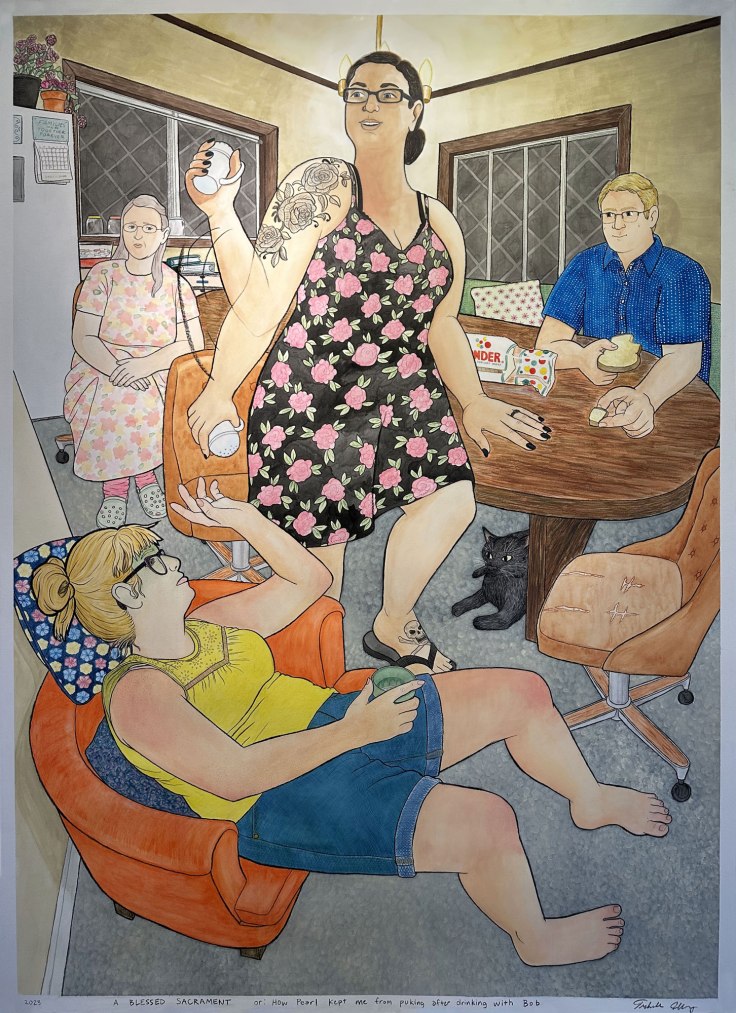
Watercolor and crayon, 5’x9′
Do you ever engage with the history of comics in your work?
I think the fact that my work exists as printed matter relates to the history of comics in an interesting way. In the age of the internet, it’s easy to forget how much mass media is and was reliant on the printing press. The mark making I use is so influenced by the mediums I work in, all of which began their existence as a way to make multiples. Books published by small and independent publishers are where I find the most inspiration. I love zine culture and work that is made by a single passionate person. Whether it’s a photocopied one-page zine or a beautifully delicate hand printed artist book, every comic is an absolute treasure.

Mokuhanga, 4″x6″

Lithograph and screen print, 30″x40″
How long have you been making work that references comics?
When I was like eight I drew a bunch of cat characters for an imagined epic that was really just a childish rip-off of Garfield. I managed to create a couple of pages of a comic that are basically unreadable. So twenty-six years, I guess.
The body of work I’ve been doing, these autobiographical prints that use some comics language, has been ongoing since my early college days, like 2009. I was lucky enough to figure out what I was going to make pretty quickly.

Mokulito, 11″x13″
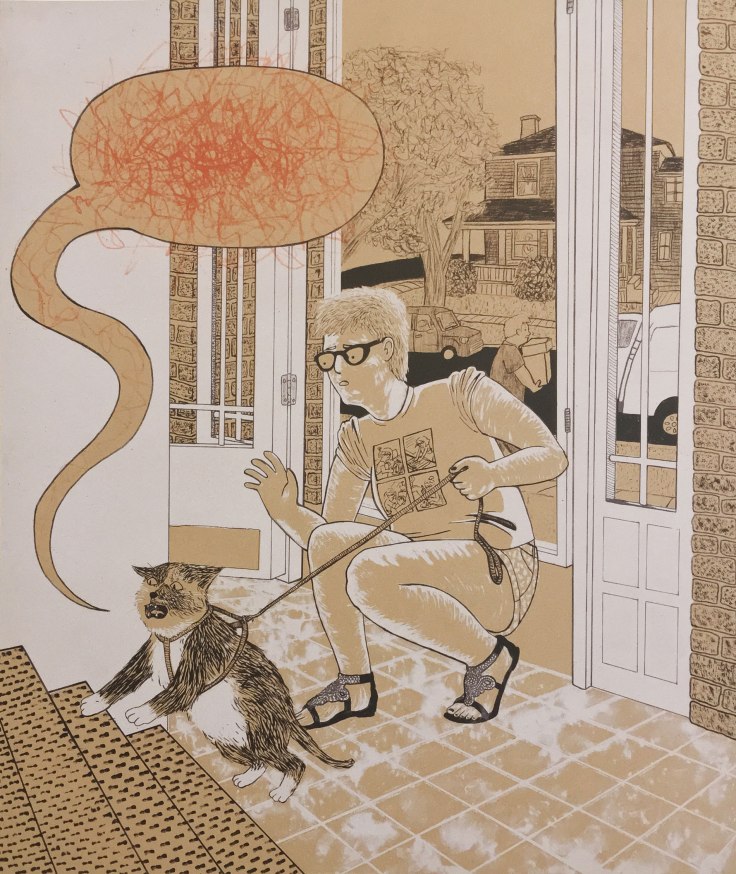
Lithograph, 11″x14″
Have you ever been afraid or worried about making artwork that references comics?
When I was in graduate school, I had a critique with a visiting artist who came into my studio, sighed, and as a first sentence in the door said, “Well, first of all, I don’t like comics.” He then proceeded to talk to me for an hour about how if I cropped in on a piece to remove all the context it might be better and to get annoyed at the cultural obsession with childish superheroes (which don’t appear in my work at all). I really liked this guy’s work and saw a strong connection to my own. I was sad about it that week, but now I’m more sad for him, that he can’t appreciate this whole world because the association with one small part of it is too strong.
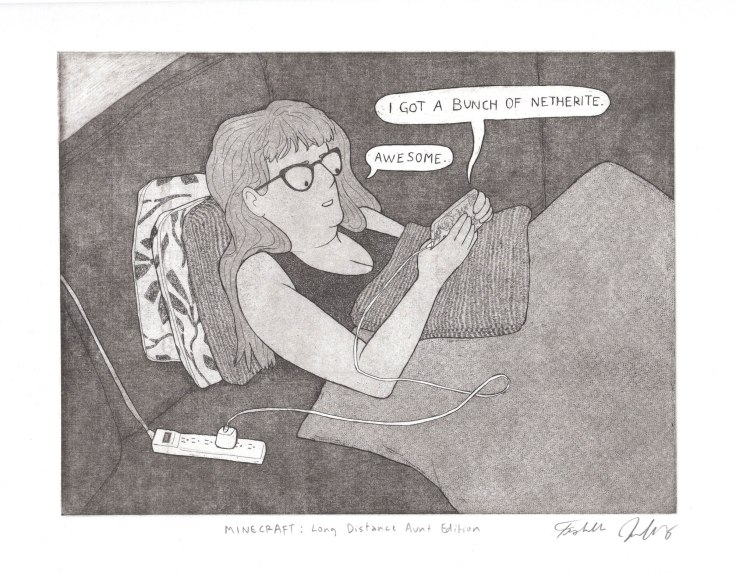
Etching, 6″x9″
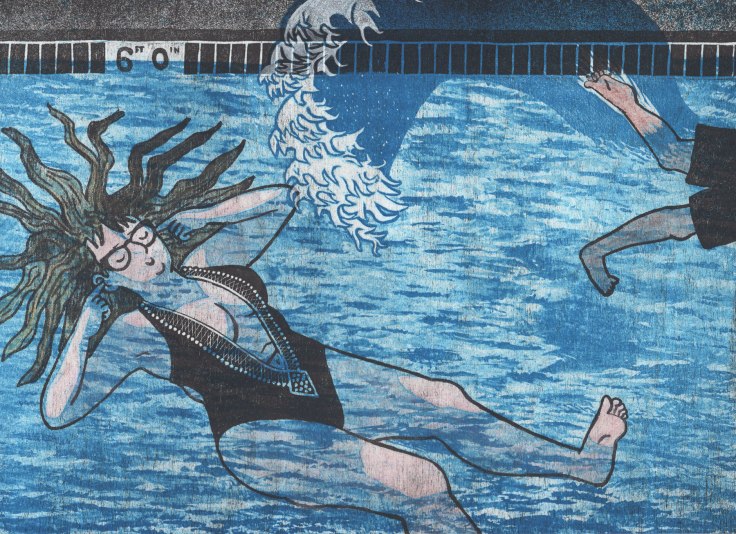
Mokulito and watercolor, 8″x10″
 Not Approved by the Comics Code Authority...