
Everything Mateo Fuentes makes happens in their home studio in Southern West Virginia.
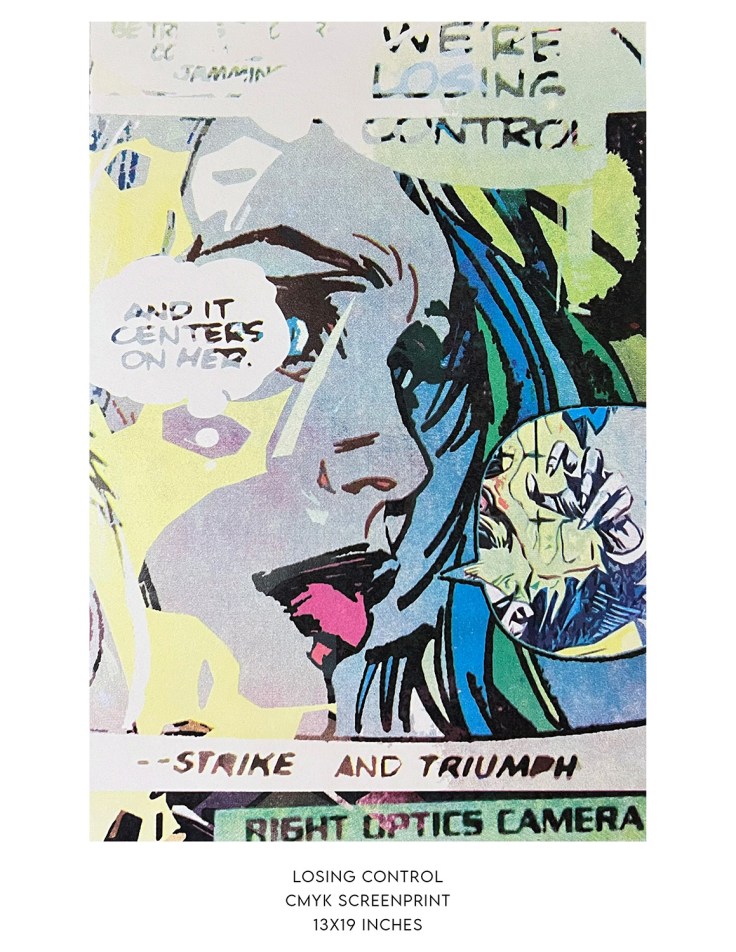
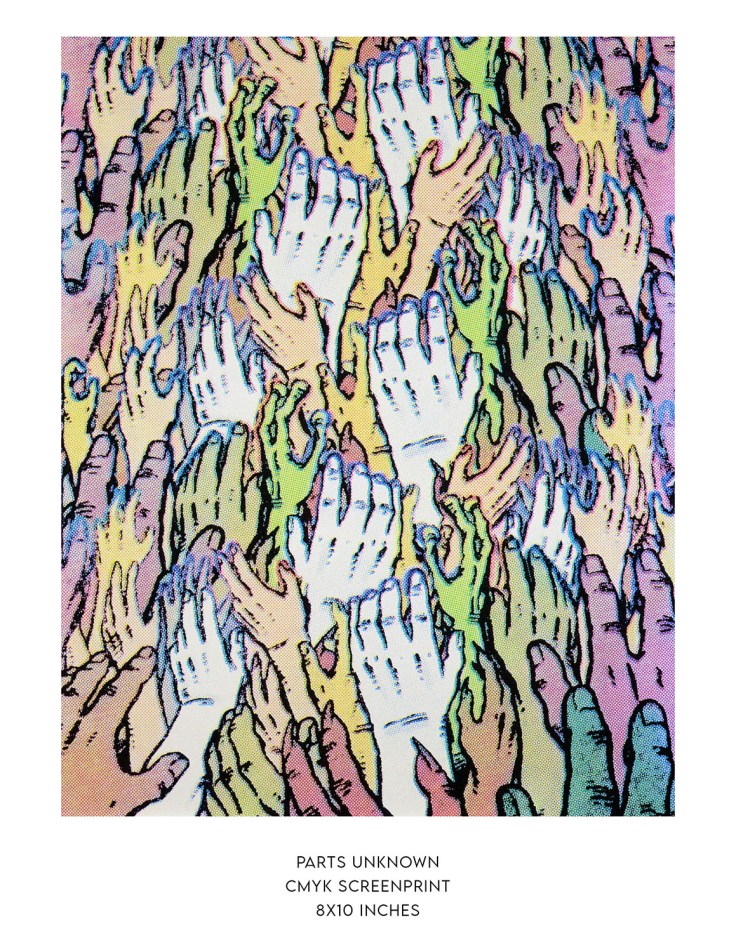
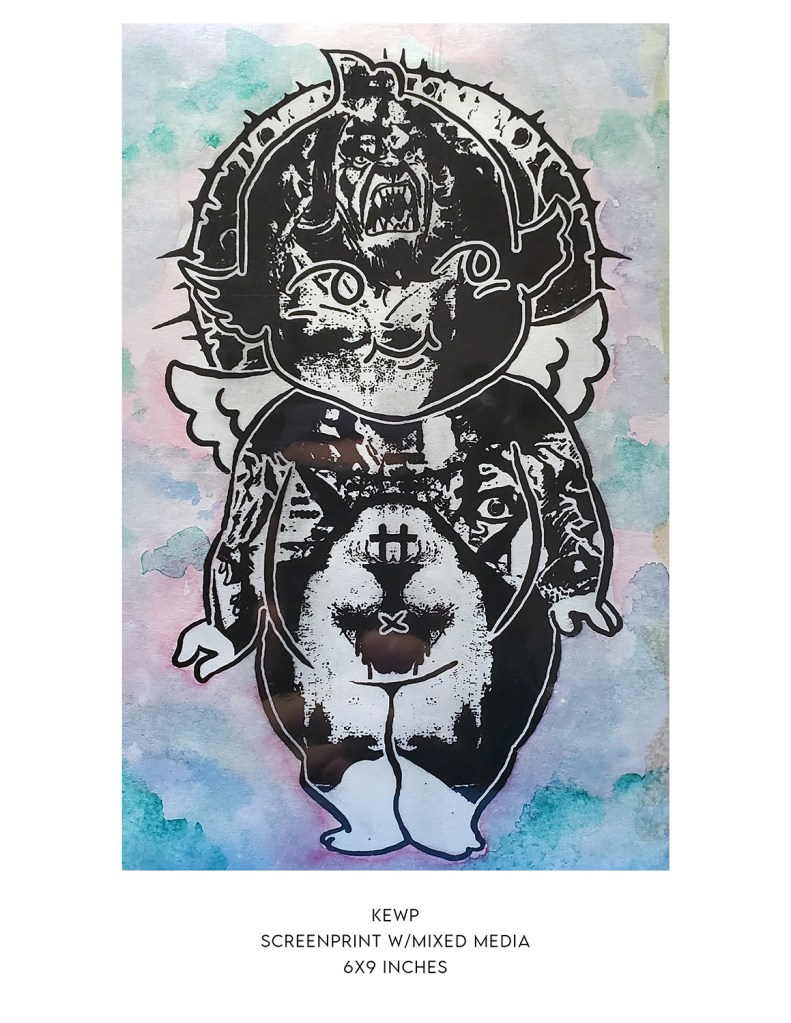
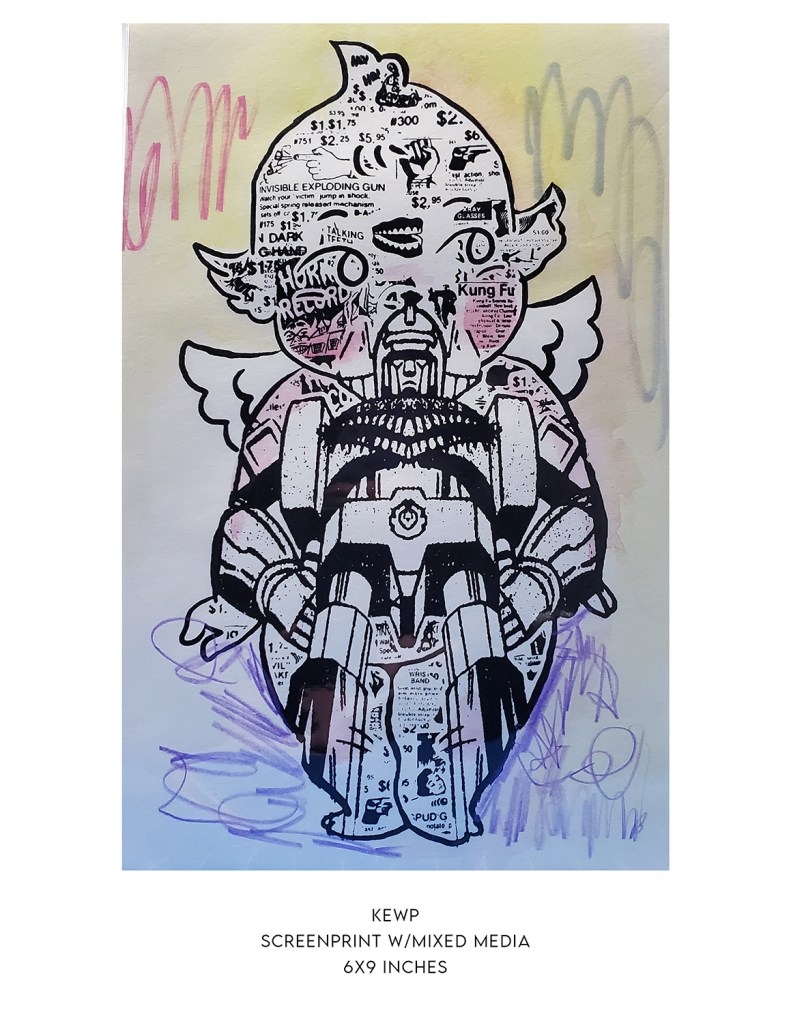
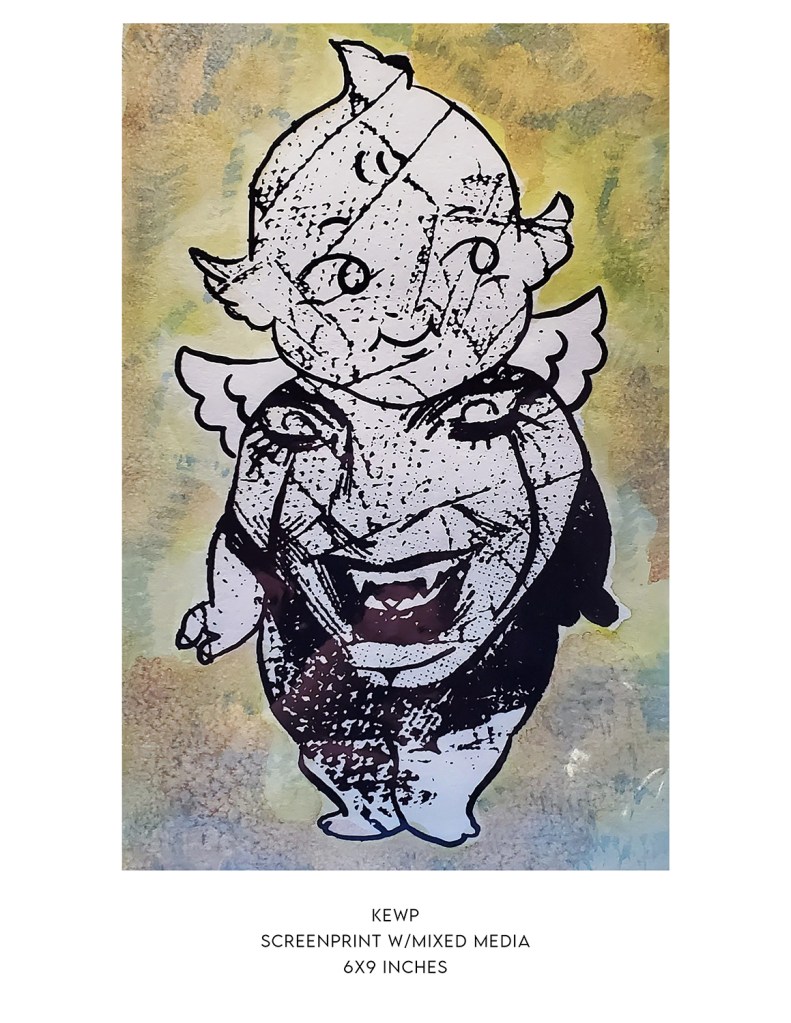
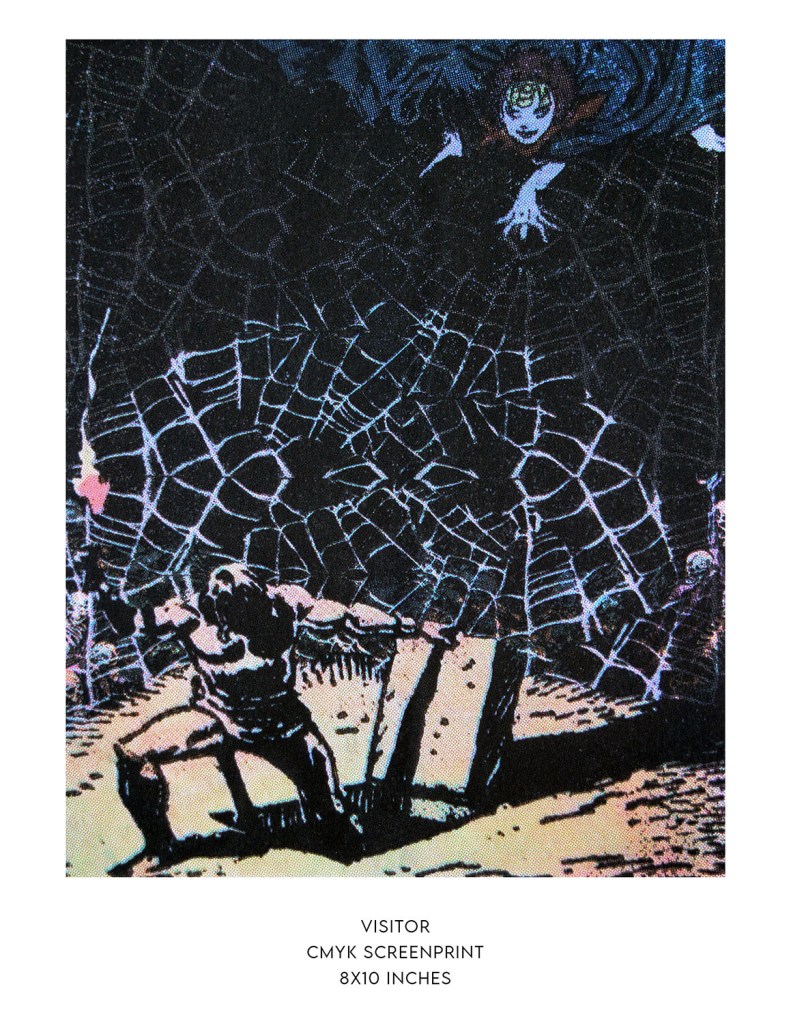
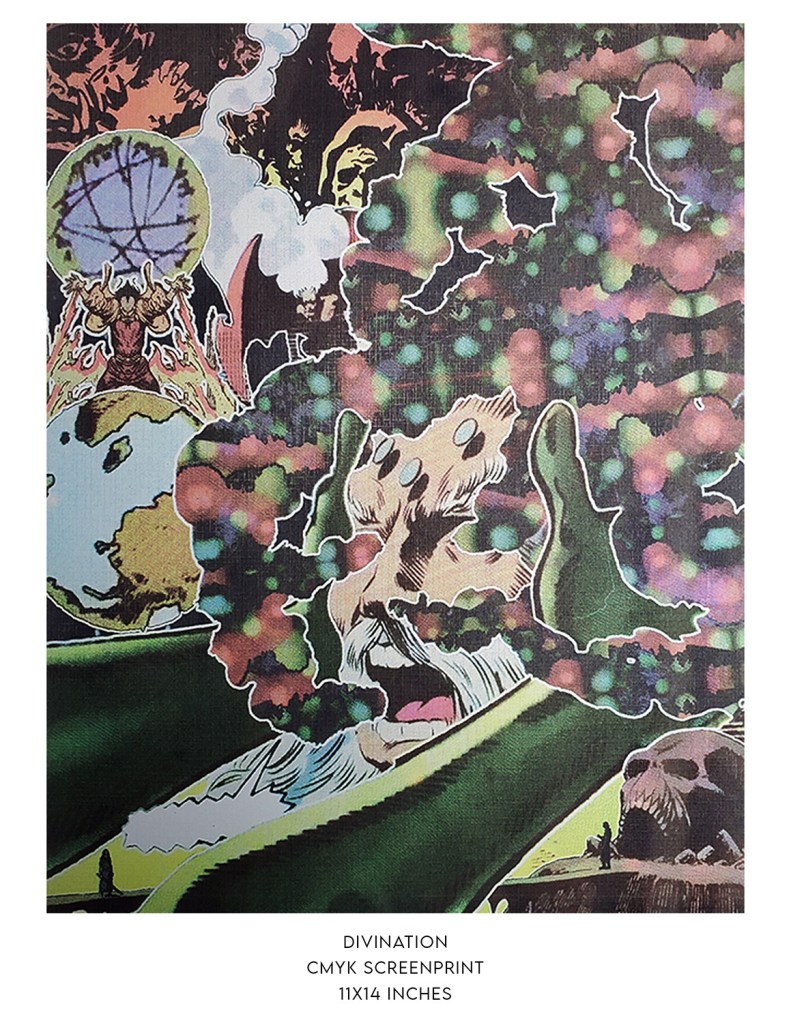
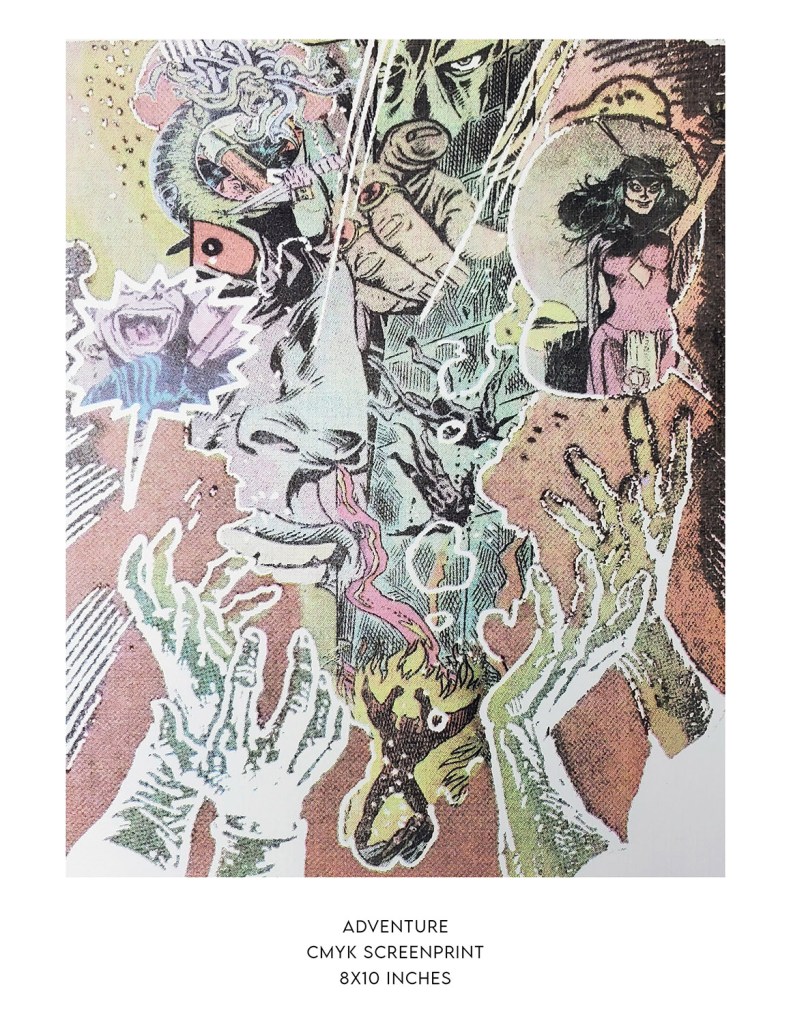
Mateo creates digital collages from a collection of comic books and turns those collages into CMYK screen prints, which allows the digital artwork to exist in the physical world, and not solely a digital one. Through the collage process, Mateo explores themes of personal reflection, anxiety, and religion all packaged in a halftoned world of horror, great adventure, and the supernatural.
Mateo shared their work on Instagram (@art.monsters.printmaking) and on their website (www.mateofuentes.com).
Did you grow up reading comics?
My relationship with comics didn’t start until I was an adult. When I was a kid, Saturday morning cartoons, video games, and trading cards were my primary points of access to comic characters and stories. I grew up in a conservative and religious household so my access was limited to trips to the store, staying the night at friends’ houses and hoping the antenna on the TV at home could find a good signal.
Growing up, my family moved between Arizona, Oregon, Washington and back to Arizona. Making connections with other kids my age, that also liked the same things as me, was a challenge. It was hard to make friends when it felt like we could be moving at any moment. Comics were also not a cool thing to be into when I was going through junior high and high school. I didn’t start collecting comics until I was well into my 20’s. Now, I like to purchase graphic novels or collect editions of the comic books I’ve wanted to read. This is my way of catching up on the classic and modern stories I’ve missed out on.
Have you ever felt embarrassed or ashamed about reading comics?
When I was growing up comics, and art in general, came pre-packaged with a sense of embarrassment or shame. It was a weird combination of celebrating the art and artists we like but also looking down on the artist’s career path. Is that a productive use of time? Comics or, “the arts” in general, weren’t seen as a way to get into college or get a job. I had the perception that time spent on artistic pursuits is wasteful, especially if it’s for an artistic career. This was a confusing message for me, as a kid who loved to draw, comes from a family of artists and musicians, and scored “Art/Artist” on my School Career Aptitude test. I felt like I was being nudged by the invisible hand of fate towards a career in art while being surrounded by negative voices saying otherwise.
It’s nice being able to reflect on that time and see just how wrong those negative voices were. Things have changed so much. The amount of diversity in the work being made and the creativity used to make all kinds of artwork is satisfying to see. It’s a different world and I think for some people, those old school hang-ups about art persist, but that noise has been drowned out by a flood of artistic progress.

Is there an important comic shop or friend who opened your eyes to comics?
Religious tracts and booklets were probably my earliest memories with anything resembling a zine or comic. As a kid, it was exciting to get handed one of these little booklets with crazy artwork. Fun, at church?! Unfortunately, even with the graphic visuals and morbid storytelling this little comic was, in fact, still church. This was obligation and fear parading as entertainment. And it said that just about every form of media would kill you. Weird how one seemingly unrelated thing can connect you to another later in life.
Outside of the church, I lived life on the razor’s edge. Losing myself playing Super Nintendo with my older brother, collecting DC and Marvel trading cards, and watching action movies. Despite our understanding of these religious tracts, it was worth the risk to indulge in these secular activities. Once I got into junior high and high school, the weight and pressure of being cool and fitting in was more important than anything else. Being the quiet kid already made me stick out enough. When I moved to West Virginia in 2006 I hadn’t stayed current with anything related to comics for close to a decade. My Brother-in-law and one of our good friends were the reason I got back into comics during that time. They would let me borrow stacks of comic books to read and let me know where the good shops were.

How do comics inspire or inform the work you make?
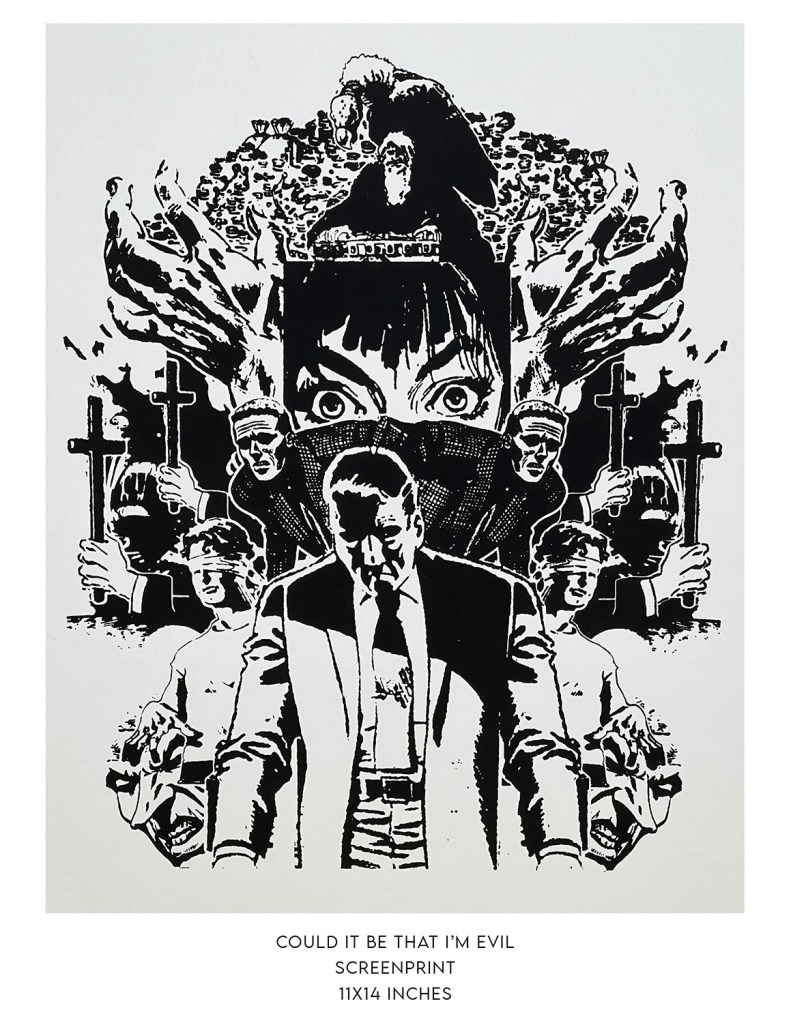
The cover art of comic books is a huge inspiration for me. Growing up, most of the time, the cover of a comic book was all I could see. An explosion of colors, characters and mystery. A gateway to a world I will never see, the perfect tease. Giving me just enough information to imagine what might come next. A hard lesson to learn as a kid was that covers were sometimes the best part of the entire comic book.
With my own work, I make covers for stories that will never have the next page, the ultimate tease. To do this I use comics from different decades, publishers, and artists. Combining them together to create new narratives. Since I came to comics later in life, there is a seemingly unlimited supply of under-loved and overlooked comics that offer an endless opportunity to explore characters, textures, text, and color. There are no barriers between the eras of comics because I missed most of them. Comic book imagery already comes loaded with its own past and there is a challenge to reinvent something new and exciting from the original source. I like to use “b-list” comic books for the images I create (Alien Legion, Hard Corp, Dreadstar, Alpha Flight, Thriller, Zero Patrol, Atari Force, and a lot of Horror themed comics), as many of those characters are lesser known they are free from pre-loaded content that would otherwise muddy or alter the new narrative we create together. These characters provide a blank canvas for the viewer to have an original visual narrative. This also offers the viewer an opportunity to see these characters in a new light.

Have you ever been afraid or worried about making artwork that references comics?
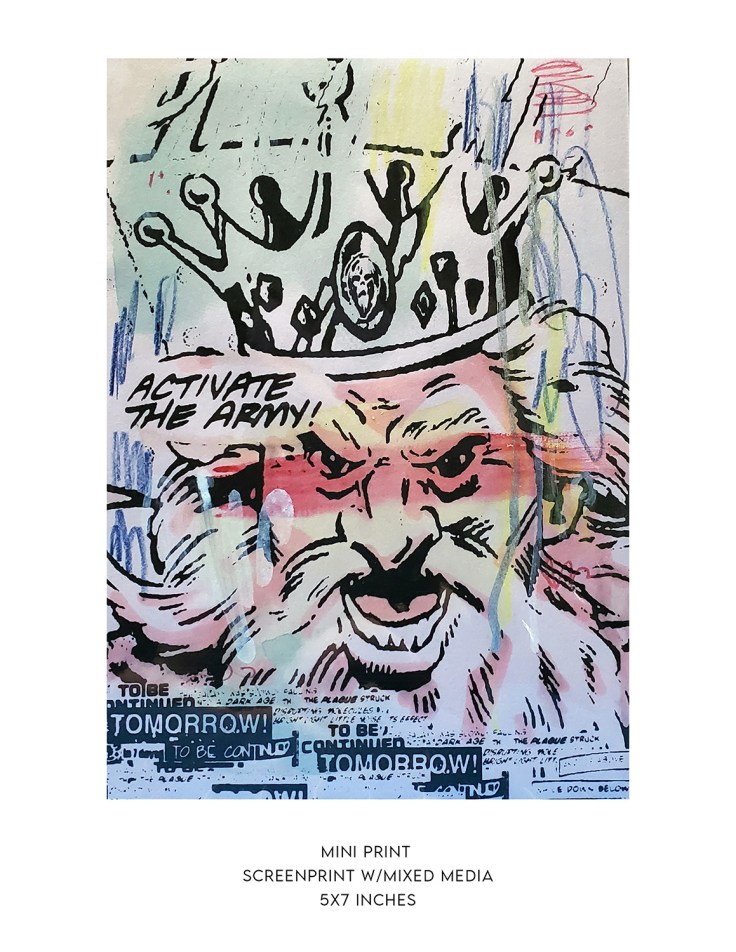
For the kind of work that I like to create you don’t have a choice but to proceed with some caution. There are a lot of factors in play: How much of the original source material is being used? How much has the original image been altered? Is the final image unique and original? I want to find a balance of respecting the source material but making it my own with the final print.
With my images there are a lot of subtle changes that happen to the original source material. This ranges from how well I scan the comic book, how much care I take when “cutting” out my images, how heavily I manipulate those images, converting halftones into halftones, and then finally the screen print that is pulled. The result of this process is the transformation of a wholly digital creation into a physical object.

 Not Approved by the Comics Code Authority...